Difference Microwave and Oven: A Practical Guide
Explore the difference microwave and oven, including heating methods, cooking tasks, energy use, and safety tips to choose the right tool for your kitchen. An analytical guide to help home cooks decide when to use each appliance.


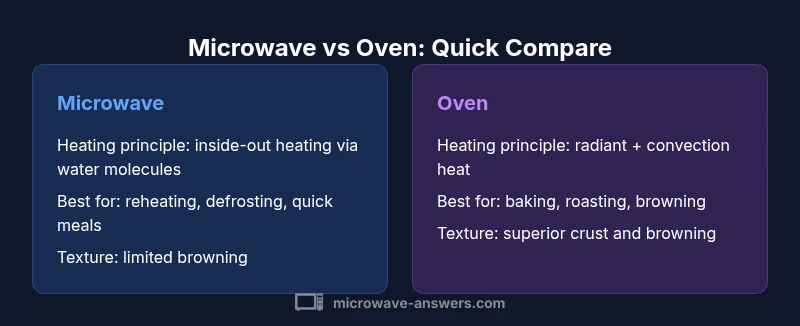
Microwave and oven serve different cooking goals. The microwave heats food quickly by exciting water molecules, making it ideal for reheating and defrosting. The conventional oven uses radiant (and often convection) heat to bake, roast, and brown foods, delivering texture and even browning. In short, choose speed for microwaves and texture/depth for ovens, and often use both in a balanced kitchen workflow.
difference microwave and oven: core concept
Understanding the difference microwave and oven starts with the heating mechanism, the tasks they're built for, and the results you expect. According to Microwave Answers, these two appliances address similar cooking needs in different ways: one uses electromagnetic waves to heat water molecules, the other uses hot air or radiant heat to cook food. In practical terms, the microwave is fastest for reheating, while the oven delivers baking texture and depth. This basic distinction shapes every cooking decision, from defrosting frozen meat to finishing a roasted chicken with a crisp skin. As you read, keep in mind how each method interacts with food structure, moisture, and browning potential.
How heating works: microwave vs oven
Microwave heating relies on dielectric heating: microwaves permeate the food and cause water molecules to vibrate, generating heat from the inside out. This rapid, volumetric transfer is excellent for small, uniform portions and defrosting. An oven heats differently: radiant heat from elements or a heated air stream transfers energy from the outside in, creating a robust crust and even browning. Convection adds a third dimension by circulating hot air for more uniform cooking. These mechanisms influence how foods behave—texture, moisture retention, and appearance become practical indicators of which appliance to use for a given dish.
Speed, texture, and cooking outcomes
Speed is the defining advantage of microwaves: reheating leftovers, softening butter, or defrosting meat happens in minutes rather than tens of minutes. However, microwaves often struggle with browning, crisping, or achieving an even finish on larger or layered dishes. Ovens, by contrast, excel at texture: a golden crust on bread, caramelization on vegetables, and the even browning associated with roasting. If you value mouthfeel and appearance, the oven is usually the better tool; if you prioritize speed and convenience, the microwave wins for many tasks. In practice, savvy cooks use both, selecting the appliance that best suits the goal rather than sticking to a single workflow.
Energy use, cost, and efficiency
Energy efficiency depends on task size and duration. For small portions and quick reheating, microwaves typically consume less energy overall because heating occurs rapidly and directly. Ovens can be less efficient for small jobs but become economical for large roasts, multiple dishes, or meals that benefit from steady, scheduled cooking. When comparing energy and cost, consider the task—if you need to finish a dish quickly, the microwave saves time; if you need texture and bulk cooking, the oven leverages its larger capacity and heat retention. The choice should reflect both energy awareness and the desired culinary result.
Size, space, and installation considerations
Microwave footprints are generally compact, making them suitable for small kitchens or apartment living. They also offer countertop and over-the-range designs for convenience. Conventional ovens range from freestanding ranges to built-in wall units, often occupying more space and requiring adequate ventilation and power supply. If you’re managing a tight layout, a countertop microwave or a microwave with convection mode can extend your capabilities without restructuring the kitchen. When planning placement, assess clearance around ventilation grilles, door swing, and proximity to heat-sensitive cabinets to prevent heat damage and ensure safe operation.
Safety considerations and best practices
Microwaves require simple safety checks—avoid metal objects in a microwave, use microwave-safe containers, and regularly inspect door seals for leaks. Ovens demand attention to preheating times, safe handling of hot trays, and careful monitoring to prevent overcooking or fires. Both appliances benefit from appropriate cookware. Glass and ceramic vessels are versatile, while nonstick pans safe for oven use can fragment when microwaved. Following manufacturer guidelines minimizes risk and preserves appliance longevity. In short, understand the limits of each device and respect safe handling norms for best results.
practical scenarios and decision guidelines
When deciding between microwave and oven, start with the dish goals: reheating a soup or defrosting chicken? A microwave delivers speed, while roasting a tray of vegetables or baking a casserole calls for an oven. For multi-dish meals, a hybrid approach may save time: preheat the oven for the main course and use the microwave for sides or reheats. If you routinely cook for a family or when entertaining, a larger oven with convection can replace multiple small devices and reduce kitchen clutter. The key is matching the tool to the outcome you value most: speed, texture, or capacity.
modern microwave ovens: a hybrid solution
Convection microwaves combine microwave heating with a built-in convection mode, offering a middle ground for cooks who want speed and browning in one appliance. These units can handle reheating and defrosting as well as baking and roasting, though their performance in high-volume scenarios may still differ from a full-size oven. If space or budget constraints exist, a high-quality convection microwave can cover many common tasks, especially in smaller kitchens. When choosing, compare wattage, convection capabilities, turntable vs. flat-surface interiors, and warranty terms to ensure it fits your cooking style.
common misconceptions debunked
A frequent myth is that microwaves “cook food from the inside out” and ovens “cook from the outside in.” In reality, microwaves heat water molecules inside the food, while ovens heat from the surface inward through conduction and convection. Another misconception is that microwaves can replace all baking tasks. While modern microwaves with convection or hybrid modes can handle some baking tasks, they often don’t replicate the texture and browning of a traditional oven for large or dense items. Recognize the strengths and limits of each appliance to avoid equipment misfit.
Comparison
| Feature | Microwave | Conventional Oven |
|---|---|---|
| Heating principle | Microwave radiation excites water molecules inside food | Radical heat transfer via radiant heat and convection |
| Primary uses | Reheating, defrosting, quick cooking | Baking, roasting, broiling, multi-dish meals |
| Texture outcomes | Soft texture, moisture retention, limited browning | Crisp crusts, deep browning, uniform exterior |
| Cooking speed | Generally faster for small tasks | Often slower; better for longer processes |
| Energy footprint | Typically lower energy for small tasks | Higher overall energy if used for small tasks but efficient for bulk cooking |
| Capacity and space | Typically compact; countertop or compact models | Larger interior; built-in or freestanding options |
| Cost range | Lower upfront cost for basic models | Higher upfront cost; longer-term value depends on use |
| Best for | Quick reheating and defrosting | Baking, roasting, and more complex cooks |
Advantages
- Fast reheating and defrosting
- Compact size suitable for small kitchens
- Lower upfront cost on basic models
- Convenience for quick meals and simple tasks
Cons
- Limited browning and texture compared to ovens
- Uneven heating for some foods unless using convection models
- Smaller interior capacity than many ovens
For most homes, use microwaves for speed and defrosting, and rely on ovens for texture and bulk cooking.
Microwaves excel in speed for small tasks, while ovens deliver browning and depth. When possible, combine both to maximize efficiency and quality in everyday cooking.
Common Questions
What is the main difference between a microwave and a standard oven?
The main difference is heating mechanism: microwaves use electromagnetic waves to heat moisture inside food, while ovens rely on radiant or convection heat from the outside. This leads to speed versus texture trade-offs in common cooking tasks.
The microwave heats food with electromagnetic waves for speed, while the oven uses radiant heat for texture and browning.
Can I replace an oven with a microwave?
Not for all tasks. Microwaves are great for reheating and defrosting, but most baking, roasting, and browning tasks benefit from a conventional oven. In some modern setups, a convection microwave can cover many tasks, but not every recipe will translate perfectly.
A microwave can handle reheating, but a traditional oven is usually needed for baking and browning.
Are convection microwaves better than traditional ovens?
Convection microwaves add a fan-assisted convection mode to microwave heating, improving browning and evenness for certain dishes. They are a compromise between speed and texture, but traditional ovens still outperform for large batches and deep browning.
Convection microwaves offer better browning than standard microwaves, but may not match a full oven for volume cooking.
Is energy usage higher for ovens than microwaves?
Ovens generally consume more energy for short tasks due to longer preheating and longer cooking times, while microwaves often use less energy for quick tasks. The total energy depends on duration and the dish being prepared.
Ovens usually use more energy for short tasks, microwaves save energy on quick reheats.
What tasks are best suited for microwaves?
Best suited for reheating leftovers, defrosting frozen foods, and quick cooking of small portions. For items requiring browning or crisp textures, use the oven or a convection option.
Microwaves shine for reheating and defrosting small portions.
How should I decide for a small kitchen?
In small kitchens, a compact microwave or a microwave with convection can cover many common tasks. If you bake or roast regularly, consider a model that combines microwave and convection or plan for a separate oven and microwave setup.
For small spaces, consider a convection microwave to cover most tasks.
Main Points
- Microwaves prioritize speed; ovens prioritize texture and depth
- Choose based on task, not just appliance type
- Hybrid models offer broader capabilities in small spaces
- Plan kitchen layout to allow for both devices if possible