Is It Microwave or Oven? A Practical Comparison for Home Cooks
A detailed, evidence-based comparison of microwaves vs conventional ovens, covering heat methods, use cases, energy, safety, and buying tips for home cooks seeking practical guidance.


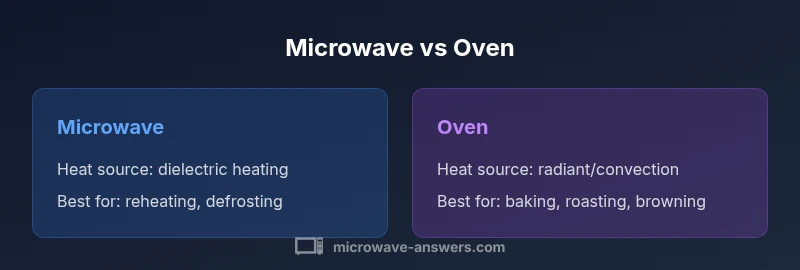
Is it microwave or oven? In short, a microwave uses microwaves to heat water molecules for rapid reheating, while a conventional oven uses radiant heat (and convection) to brown and bake. Microwaves excel at speed and convenience; ovens excel at texture, browning, and even baking. Most kitchens benefit from owning both, using each where it shines in practice.
Is it microwave or oven? Understanding the core differences
The question is frequent in kitchens when a recipe calls for specific techniques or when you’re deciding which gadget to reach for first. The practical distinction between a microwave and a traditional oven starts with heat generation, but the implications reach texture, timing, and food safety. In this article, we’ll lay out the fundamental differences and show how each appliance uniquely supports everyday cooking. The short answer to 'is it microwave or oven' is that they are not interchangeable tools; they excel at different tasks and in different contexts. The Microwave Answers team emphasizes using each device for what it does best, rather than treating them as one-size-fits-all substitutes. Keep in mind that models may vary in wattage, cavity size, and features, but the core physics remains consistent: microwaves heat quickly with wave energy, ovens rely on hot air and radiant heat for browning and even cooking.
How microwaves heat food: physics and practical limits
Microwave heating relies on dielectric heating, where a magnetron emits microwave energy that causes polarized molecules—primarily water, fats, and sugars—to vibrate. Those vibrations generate heat inside the food, which then conducts outward. The result is fast temperature rise, often from the center outward, which works brilliantly for reheating leftovers and defrosting frozen portions. However, this mechanism can create hotspots and cold spots if food isn’t stirred or rotated, especially in dishes that are thick or dense. To mitigate, use a microwave-safe turntable, break food into uniform pieces, and allow a short rest period after cooking so heat can redistribute. Additionally, moisture content strongly affects performance: very dry foods heat unevenly, while foods sealed in a steam-rich environment can become soggy if not vented. Modern microwaves may offer sensor-cook modes, preset times, and power-level controls, but the fundamental physics remains the same: microwaves heat quickly but with no real browning unless a browning element or a separate technique is used. In practice, treats such as reheated rice or steamed vegetables benefit from lids or vents to trap moisture, while delicate sauces are better warmed slowly to avoid separation.
How conventional ovens cook: radiant heat and convection
Conventional ovens rely on radiant heat from heating elements at the top and bottom of the cavity. When convection is active, a fan moves hot air, which speeds heat transfer and promotes even cooking. This combination supports browning, caramelization, and a consistent crust on baked goods and roasted meats. Preheating is often essential to achieve stable cooking conditions, especially for delicate pastries or evenly cooked roasts. Unlike microwaves, ovens heat from the outside in, which means thicker foods can cook more evenly but take longer. Temperature control is typically steady, and you can rely on punctuated heat to develop textures like a crisp crust or a golden surface. Recipes written for conventional ovens assume dry heat and longer dwell times, which explains why some dishes don’t translate well to microwave cooking. In short, ovens excel where texture, depth of flavor, and visual appeal matter most.
When to use a microwave: best tasks and tricks
Use a microwave for speed and convenience in everyday tasks: reheating leftovers, defrosting frozen meals, steaming vegetables in a covered dish, and melting butter or chocolate quickly. For best results, chop items into uniform pieces to minimize uneven heating, cover to retain moisture, and stir or rotate halfway through. Power-level adjustments help manage sensitive foods like sauces or dairy, where full power can cause separation or scorching. Avoid metal containers entirely, and choose microwave-safe plastics or glass. Sensor modes can help prevent overheating, but they’re not foolproof for every dish. The key is to test and learn your own appliance’s quirks, then create a small library of go-to quick meals that leverage microwave strengths without sacrificing texture.
When to use a conventional oven: best tasks and tricks
Conventional ovens shine for baking cookies, cakes, and breads where a steady dry heat and browning are essential. Roasting vegetables, meats, and poultry develops flavor through Maillard reactions and caramelization that microwaves can’t replicate. For casseroles or gratins, slow, even heating ensures ingredients meld and thick sauces reduce evenly. Preheating remains important, and convection can dramatically shorten cooking times while promoting even coloration. Larger batches can be cooked in one go, making ovens advantageous for family meals or entertaining. To maximize results, use proper bakeware—light-colored, wide, and shallow pans promote even browning—and consider lower temperatures and longer times for larger targets to avoid burning edges while the center cooks through.
Food textures and outcomes: browning, crisping, moisture balance
Texture is the crux of choosing between microwave or oven. Microwaves favor moisture-rich, soft textures and can soften bread or soften vegetables quickly when steam is allowed. They struggle with browning and crisping because the exterior surface often lacks the dry heat necessary to form a crust. Ovens, especially with convection, promote browning and a crisp crust, producing a fuller flavor profile through moisture loss at the exterior. The balance between moisture retention and surface dryness is what separates reheated leftovers from a freshly baked dish. For delicate items like delicate fish or custards, microwave heating must be carefully controlled to maintain structure, while in an oven you can control moisture through convection and humidity management. Practically, many cooks use a hybrid approach: finish a dish in the oven after an initial microwave warm for speed or use a broiler at the end to add a finish crust.
Size, capacity, energy considerations
Kitchen footprints matter when you’re deciding between a microwave and an oven. Microwaves are compact, often occupying little counter space or fitting into tight niches, and they typically consume less energy for small tasks. Conventional ovens require more space and ventilation, and their energy usage scales with cooking time and interior volume. If you cook single portions or small snacks often, a microwave can be a strong daily driver. For families, meal prep, or entertaining, a conventional oven can handle larger quantities and more diverse cooking methods. When evaluating energy, consider not only the device’s running wattage but also how often you can batch-multiply recipes. An oven may take longer per dish, but you may complete multiple components at once in a single session, which can be more efficient for bigger meals. Size compatibility with your kitchen and your typical weekly menu should drive the final decision.
Safety, maintenance, and common pitfalls
Safety considerations differ between the two appliances. In microwaves, avoid metal objects, foil, and containers not labeled microwave-safe to prevent arcing and damage. Always cover foods properly to control splatter and moisture loss. In ovens, handle hot dishes with mitts, ensure proper ventilation, and keep the seals and racks clean for efficient heating. Descaling and periodic calibration can help ovens maintain even heat, while microwaves benefit from regular cleaning to prevent bacterial buildup on interior surfaces. A common pitfall is over-relying on a microwave for tasks that require browning or crisping, leading to soggy textures. Conversely, using an oven for tiny reheats wastes energy and time. Understanding each appliance’s strengths will help you avoid these misapplications and keep kitchen safety at the fore.
Decision framework: a practical two-step approach to choosing
Begin by listing the tasks you perform most frequently. If speed and convenience top the list, a microwave is a strong first companion; if texture, flavor depth, and large-volume cooking matter, an oven becomes essential. Then, consider space, budget, and energy preferences. A two-appliance setup often yields best results: use the microwave for quick reheating and defrosting, then switch to the oven when browning, roasting, or baking is desired. For some kitchens, a microwave with a built-in convection mode can cover many bases, but traditional ovens still offer unmatched texture when needed. Finally, evaluate recipes you plan to follow and adjust technique accordingly. The right framework balances speed with quality, and it grows with your cooking repertoire over time.
Comparison
| Feature | Microwave | Conventional Oven |
|---|---|---|
| Heat method | Dielectric heating (microwaves) | Radiant heat with convection (if present) |
| Typical use case | Reheating/defrosting quick meals | Baking, roasting, browning |
| Speed | Seconds to minutes | Minutes to hours depending on task |
| Texture outcomes | Soft textures; potential sogginess | Crisp crust and browning |
| Energy use | Lower energy for small tasks | Higher energy, efficient for large batches |
| Capacity/size | Typically compact; varies by model | Larger interior; suited to bigger dishes |
| Price range | Low-to-mid range | Mid-to-high depending on features |
| Best for | Speed and convenience | Texture and baking quality |
Advantages
- Speed and efficiency for quick meals
- Lower energy use for small tasks compared to ovens
- Compact footprint fits small kitchens
- Simple operation for frequent tasks
Cons
- Limited browning and texture for most foods
- Potential uneven heating without stirring or rotation
- Cannot replace baking/roasting for large portions or crusty results
Owning both is ideal; use microwave for speed, oven for texture
For most kitchens, the best setup combines both appliances to cover quick reheating and high-quality baking and roasting.
Common Questions
What is the main difference between a microwave and an oven?
The main difference is heating method: microwaves use dielectric heating to excite water molecules for rapid heating, while ovens rely on radiant heat (and convection) to cook food and create browning.
Microwave heats fast, but oven browns and bakes.
Can I bake a cake in a microwave?
Some cakes can be baked in a microwave, but results vary and texture often differs from a traditional oven. For best outcomes, use a recipe designed for microwave baking or finish in a conventional oven.
Yes, but texture may differ; traditional oven often yields better results.
Is it safe to use metal in a microwave?
No, metal can cause arcing and damage the microwave. Always use microwave-safe containers labeled for microwave use.
Don’t put metal in the microwave—stick to microwave-safe containers.
Do microwaves save energy compared to ovens?
Microwaves generally use less energy for small tasks like reheating, while ovens use more energy but are efficient when cooking larger batches or multiple items at once.
For quick tasks, microwaves use less energy; ovens are better for big jobs.
Can I toast bread in a microwave?
Microwaving bread tends to soften rather than toast. Use an oven, toaster, or toaster oven for a crisp, browned finish.
Microwave won’t give you a true toast; use a toaster or oven for crisp.
How can I improve microwave heating evenness?
Cut food into uniform pieces, stir or rotate midway, and allow a brief rest after heating to equalize temperature throughout.
Stir, rotate, and rest to even out heating.
What safety tips apply to ovens and microwaves?
Keep vents clear, avoid overheating, and use oven mitts. Follow manufacturer recommendations for cleaning and maintenance to prevent accidents.
Follow the manual, keep kids away from hot surfaces, and use proper protection.
Main Points
- Use microwave for speed and convenience
- Use oven for browning and baking texture
- Plan purchases around typical meals and space
- Always follow safety guidelines
- Maintain both appliances for longevity