Are Microwave and Oven Different? A Practical Comparison
A practical, evidence-based comparison of microwaves vs ovens, covering heat methods, cooking results, energy use, and how to choose the right appliance for quick meals and home cooking.


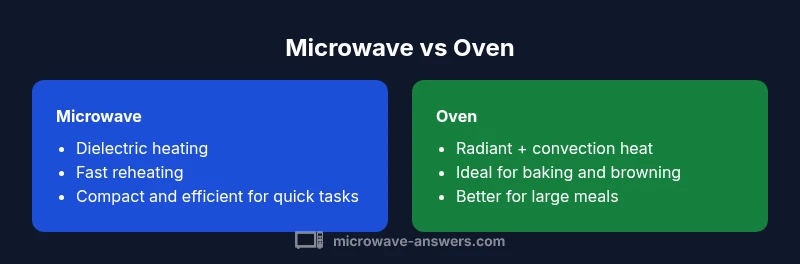
Are microwave and oven different? Yes—though both heat food, they operate by distinct methods: microwaves use dielectric heating to energize water molecules, while conventional ovens rely on radiant heat and convection to brown and bake. For most quick tasks, a microwave is faster and more energy-efficient, but an oven delivers superior texture, browning, and even cooking for larger dishes.
Are microwaves and ovens truly different? Core definitions
Understanding whether 'are microwave and oven different' is more than a semantic question; it guides how you approach daily cooking. According to Microwave Answers, the fundamental distinction lies in heat delivery. Microwaves heat food by exciting water molecules with dielectric radiation, which rapidly raises temperature from the inside out. Conventional ovens heat through radiant heat from coils or burners and, in many models, convection fans that circulate hot air around the food. This means the same recipe can yield very different textures depending on the appliance used. The phrase 'are microwave and oven different' captures a real distinction in efficiency, texture, and culinary outcomes that home cooks should understand for smarter meal planning.
For households juggling budget, space, and time, recognizing these differences helps you decide which tool to reach for first. The Microwave Answers team emphasizes that both appliances have a place in a well-rounded kitchen, but their optimal uses don’t always overlap. By mapping out the core contrasts—heat source, cooking dynamics, and expected results—you can build a practical framework for when to rely on a microwave versus a traditional oven.
Heat transfer mechanisms: microwave vs conventional oven
The core physics behind microwaves versus ovens explains most of the practical differences you’ll notice. In a microwave, dielectric heating activates water, fats, and sugars inside the food, leading to fast temperature rises with minimal moisture loss in some cases. The energy is concentrated and rapid, so small portions reheat quickly, and defrosting happens in minutes. A conventional oven, in contrast, browns and crisps through radiant heat, often aided by convection fans that move hot air. This causes slower, more uniform surface cooking and deeper browning. Understanding these mechanisms helps you predict texture—moist interiors with less browning in microwaves, and browned, chewy, or crisp results in ovens.
The practical takeaway: if you value speed for small items, the microwave wins; if you want texture and depth of flavor for larger meals, the oven shines. This primary difference is the deciding factor in most everyday decisions about which appliance to use for a given dish.
When to use a microwave vs an oven: practical scenarios
Consider a typical week of meals to see where each appliance excels. For quick reheating of leftovers, a microwave dramatically reduces time, sometimes by half, compared with an oven. For defrosting, microwaves can do the job in minutes rather than hours. If you’re baking cookies, roasting vegetables, or achieving a crisp crust on meat, the oven’s dry heat and browning are hard to beat. When you’re making a large casserole, the oven’s capacity and even heat help maintain consistency across portions. The phrase 'are microwave and oven different' becomes practical guidance here: use the microwave for speed and small portions; rely on the oven for texture, large batches, and dishes that benefit from browning.
If you have a modern microwave that includes a convection setting, you can sometimes bridge the gap by using the convection feature for certain bakes. Still, the texture won’t perfectly mimic a traditional oven for delicate pastries or large roasts. In those cases, you’ll want the oven to reach the level of browning and evenness that a microwave alone cannot provide.
Convection, radiant heat, and appliance types
Appliances come in several configurations: countertop microwaves, microwave ovens (which combine microwave and conventional oven features), and full-size traditional ovens. A standard microwave uses dielectric heating with little surface browning, making it ideal for reheats and simple tasks. A “microwave oven” with convection adds a fan and heating elements to circulate hot air, improving browning and more even cooking for some items. A traditional oven relies entirely on radiant heat from heating elements and hot air movement to bake, roast, and brown extensively. The result is a spectrum of capabilities: simple reheats in microwaves, enhanced browning in convection microwaves, and robust baking in traditional ovens.
For homes with limited space, a convection microwave can cover more bases than a vanilla microwave, but it still won’t match a dedicated oven for very large roasts or complex pastries. The key is to map your cooking needs to these capabilities and choose an appliance that aligns with your typical meals.
Common myths and misconceptions about microwaves and ovens
A number of myths persist about microwaves and ovens. Common statements like 'microwaves cook from the inside out' are simplifications; microwaves heat water molecules throughout the food, but cooking also depends on food size, moisture content, and container configuration. Another frequent myth is that microwaves ruin nutrients; while some nutrient loss can occur with any cooking method, microwaving can preserve nutrients in many cases due to shorter cooking times. Myths about safety—such as misuse of microwaves with metal or plastic—are legitimate concerns that require careful guidelines. Understanding the real physics and safety instructions helps separate fact from fiction and makes your kitchen choices more confident.
Safety considerations and energy efficiency
Safety guidelines for microwaves and ovens overlap in terms of basic practices: avoid metal inside microwaves, use microwave-safe containers, and never heat sealed containers. For ovens, use proper bakeware, avoid overheating oil or foods, and follow recipe temperatures. Energy efficiency varies by task: microwaves excel at short tasks with modest energy draw, while ovens can become a larger energy draw when used for long baking or roasting sessions. If you’re trying to minimize energy usage, prioritize microwaving for reheats and defrosting; reserve the oven for foods that need browning, texture, or even cooking on a larger scale.
How to choose between upgrading vs relying on existing appliances
If you’re deciding whether to upgrade or rely on your current setup, weigh your typical meals, space constraints, and budget. Do you frequently bake or roast large meals that require browning textures? If yes, a traditional oven still makes sense. If your priority is speed and small portions, a modern microwave with convection can cover many tasks. An honest cost-benefit analysis should consider the time saved, the energy used, and the quality of results you care about most. Microwave Answers recommends listing your most common cooking tasks, then mapping them to each appliance’s strengths to decide which configuration best fits your kitchen.
Quick tips to optimize results from both appliances
- Pre-plan: know which dishes benefit from browning versus quick reheating.
- Use appropriate cookware: microwave-safe glass or ceramic for microwaves, oven-safe bakeware for ovens.
- Leverage containers that enable even heating in a microwave, such as shallow, spread-out portions.
- For browning in a microwave environment, consider browning accessories or convection-enabled models.
- Clean and maintain seals, fans, and heating elements to preserve performance and safety.
Comparison
| Feature | Microwave | Conventional Oven |
|---|---|---|
| Heat source | Dielectric heating (microwave radiation) | Radiant heat + convection (hot air) |
| Primary cooking method | Heats water molecules inside food for rapid warming | Browns and bakes with outer heat and circulating air |
| Typical cook time | Fast reheating and defrosting for small portions | Longer cooking times for baking and roasting |
| Texture outcomes | Moist interiors, limited browning | Crisped exteriors, even browning, browning texture |
| Energy usage | Usually lower energy for quick tasks | Can use more energy for longer cooking |
| Size/capacity | Compact countertop options, limited capacity | Full-size capacity, versatile for large meals |
| Best for | Reheating, defrosting, quick snacks | Baking, roasting, browning, large batches |
| Price range | $50-$500 | $600-$5000 |
Advantages
- Fast results for small portions and reheating
- Lower upfront cost for many microwave models
- Compact footprint ideal for small kitchens
- Simple operation and minimal preheating
- Energy-efficient for short tasks
Cons
- Limited browning and texture development
- Smaller capacity for large meals
- Uneven heating in some microwaves without stir or turntable
- Requires separate appliance for most baking and roasting tasks
Microwave and oven serve distinct roles; neither is universally better
Choose the microwave for speed and efficiency on small tasks, and the oven for baking, roasting, and browning large meals. The best kitchen setup often includes both, used for different tasks.
Common Questions
What are the main differences between a microwave and an oven?
The main differences are heat source and cooking outcomes. Microwaves heat food quickly by dielectric heating, which is great for reheating and defrosting but limited for browning. Ovens use radiant heat and convection to bake and brown foods, offering better texture and larger-ccheduled meals.
Microwaves heat quickly by exciting water molecules, great for reheating; ovens provide browning and even baking for meals that need texture.
Can I replace an oven with a microwave for all meals?
No. Microwaves can handle many reheating tasks and some simple baking with the right tools, but they cannot replicate the browning, crusts, and even cooking of a full-size oven for most meals. Use the oven for baking and roasting when texture matters.
No—microwaves can’t fully replace an oven for most meals that require browning or large-batch cooking.
Is a convection microwave better than a standard microwave?
A convection microwave adds a fan and heating element to move hot air, improving browning and more even cooking. It can handle some baking tasks better than a standard microwave but still differs from a traditional oven in depth of browning and capacity.
Convection microwaves bake and brown more evenly than standard ones, but they aren’t a complete oven replacement for large or complex bakes.
Are microwave-safe plastics truly safe for heating foods?
Microwave-safe plastics are designed to withstand heating; avoid old or scratched containers and never heat fatty or acidic foods in non-approved plastics. When in doubt, use glass or ceramic containers.
Use microwave-safe glass or ceramic to be safe; avoid questionable plastics when heating food.
Which is more energy-efficient for daily tasks?
For short tasks like reheating, microwaves generally use less energy. For long cooking sessions, ovens may consume more energy but deliver needed texture and results that microwaves can’t replicate.
Microwaves are usually more energy-efficient for quick tasks; ovens cost more energy but excel at texture and large meals.
Main Points
- Choose microwave for quick reheats and defrosting
- Reserve oven for browning, baking, and large meals
- Convection microwaves bridge some gaps but aren’t a full oven replacement
- Match cookware and task to heat method for best results