Is Microwave Similar to Oven? A Practical Comparison
An analytical, practical comparison of microwave vs oven, covering heating methods, texture, speed, energy use, safety, and best-use scenarios for home cooks.


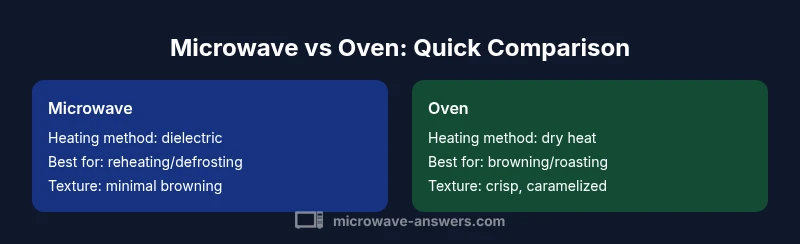
Is a microwave similar to an oven? Not exactly—the two appliances serve different purposes. Microwaves heat quickly by exciting water molecules, ideal for reheating and melting, but they don’t brown or crisp. Ovens use dry heat to cook through and develop textures like crusts and caramelization. In practice, many cooks reserve microwaves for reheating and ovens for baking or roasting.
Understanding the Heating Principle: Dielectric vs Dry Heat
The central difference between a microwave and an oven is how they apply heat. A microwave oven uses dielectric heating to agitate water molecules inside food, generating heat from the inside out. This mechanism produces rapid temperature rise and short cook times, which is why microwaves excel at reheating and defrosting. In contrast, a conventional or convection oven relies on dry heat, transferring energy from the outside of the food inward. This external heat source promotes browning, crust formation, and complex flavors through Maillard reactions. For those asking, is microwave similar to oven in mechanism? The short answer is no—the physics is different, and that difference shapes cooking outcomes.
Why it matters: if your goal is speed alone, microwave currents win; if you want texture, flavor depth, and even roasting, an oven is the better tool. This distinction underpins practical decision-making in daily cooking and meal planning.
wordCountInBlock": null},
bodyBlocks2
Texture and Browning: What You Can Expect from Each
Texture is often the deciding factor when choosing between appliances. Microwaves heat by disruption of water molecules, which heats pureed, hydrated, or liquid-rich foods swiftly but leaves bread and crusts pale. Baking or roasting in an oven triggers browning via surface reactions, creating crusts on chicken skin or a crisp top on casseroles. If you crave the roasted aroma of caramelized vegetables or a golden crust on pastries, the oven is the natural choice. That said, modern microwave models with convection or grill elements can simulate some browning effects, though results may still differ from traditional oven outcomes. For most households, the combination approach—microwave for quick heat and oven for finishing textures—offers the best balance.
wordCountInBlock": null},
bodyBlocks3
Practical Scenarios: Reheating, Defrosting, and Cooking
Reheating: A microwave shines here because it delivers rapid heat. However, uneven temperature zones can occur; stirring or turning food helps. Defrosting: Microwaves defrost quickly, but risk partial cooking if not monitored. Cooking: For most complete meals, use the oven for proteins and vegetables that benefit from browning and caramelization. A strategic approach is to start with the microwave to warm through, then finish in the oven to develop texture. If you have a convection microwave, you can approximate baking results more closely, but expect some differences from a dedicated oven. Understanding these nuances helps keep meals consistent and reliable.
wordCountInBlock": null}
bodyBlocks4
Containers, Safety, and Food Quality
One practical constraint is container compatibility. Only microwave-safe glass, ceramic, and certain plastics should go inside a microwave. Aluminum foil and metal-based cookware are off-limits unless explicitly designed for microwave use with clear manufacturer guidance. Oven cooking permits metal bakeware and roasting pans, enabling browning at high temperatures. When cooking in the microwave, cover foods to reduce moisture loss and splatter. In ovens, uncovered dishes promote browning but can dry out foods if not monitored. Food quality hinges on choosing the right tool for the task and ensuring safe, compatible cookware. This is a core reason many kitchens use both appliances in tandem rather than relying solely on one.
wordCountInBlock": null}
bodyBlocks5
The Role of Convection and Special Modes
Convection microwaves combine microwave heating with a fan-assisted hot-air cycle, often delivering more even cooking and some browning compared to standard microwaves. If your goal includes faster, more uniform heating with a hint of crust, convection mode is a useful middle ground. Traditional ovens with convection also distribute heat evenly and can reduce cooking times slightly while improving browning. When evaluating whether to use a microwave vs oven, consider whether your model offers convection, grill, or combo modes. These features expand capabilities and blur the line between the two appliances, though they rarely replace the distinct advantages of each device.
wordCountInBlock": null}
bodyBlocks6
Energy Use, Speed, and Kitchen Workflow
Energy efficiency and speed are practical factors in real kitchens. Microwaves typically consume less energy for small tasks, delivering fast results with minimal heat building in the kitchen. Ovens require longer preheat times and more energy, especially when cooking larger items or multiple dishes. A well-planned workflow leverages each appliance: reheat with the microwave, then finish in the oven for texture, or roast vegetables and proteins in the oven while using the microwave for quick mise en place tasks like melting butter or softening aromatics. A deliberate approach minimizes both time and energy while maximizing meal quality.
wordCountInBlock": null}
bodyBlocks7
Recipe Adaptation: Converting Oven Recipes for Microwave Use
Converting an oven recipe to microwave format involves more than reducing time. You must adjust cooking methods, temperatures, and vessel choices. Start with a lower power level and shorter time, then check for doneness frequently. For recipes requiring browning, plan to finish in a conventional oven or use a convection microwave with browning features. Note that not all oven recipes translate cleanly to microwaves, especially those reliant on dry heat to develop texture. Keep a flexible mindset and test smaller batches when trying new conversions.
wordCountInBlock": null}
bodyBlocks8
Common Myths About Microwave Cooking
Myth: Microwaves destroy nutrients. Reality: Nutrient loss depends on cooking time and temperature, not the appliance type alone. Overcooking is the bigger culprit. Myth: Microwaves are unsafe. Reality: When used according to guidelines, microwaves are considered as safe as other cooking methods. Myth: Microwaves can replace ovens for savory browning. Reality: Browning requires dry heat or specialized methods; microwaves alone rarely achieve crusts. By debunking these myths, you can make smarter choices about when to use each appliance in daily cooking.
wordCountInBlock": null}
bodyBlocks9
Building a Practical, Flexible Kitchen Workflow
The best approach isn't to pick one appliance for every task, but to design a workflow that leverages both. For example, start defrosting frozen proteins in the microwave, transfer to the oven to finish with browning, and use both appliances in tandem for multi-component meals. Invest in a few versatile cookware pieces and microwave-safe accessories that accommodate a range of tasks. Finally, establish a simple set of rules—use the microwave for rapid heating and defrosting, the oven for texture-building and larger roasts. Your efficiency will improve as you gain experience with each tool.
wordCountInBlock": null}
bodyBlocks10
Maintenance, Longevity, and Best Practices
Regular maintenance helps any kitchen appliance last longer. Keep the microwave interior clean and free of food residues to prevent odors and uneven heating. Use turntables or rotating racks when available to promote uniform cooking. Clean the oven glass door and racks to prevent heat loss and ensure safety. Periodically inspect seals and door latches, especially on older units. A well-maintained microwave and oven together form a resilient system that supports consistent results over time.
wordCountInBlock": null}
bodyBlocks11
Quick Decision Guide: When to Choose Microwave vs Oven
If speed is the top priority and you’re reheating or defrosting small portions, the microwave is your go-to. For texture, color, and robust flavor development, the oven remains indispensable. When possible, combine both—microwave to preheat or warm, oven to finish and brown. Keep in mind the limitations of each appliance and choose accessories and cookware designed for safe use. By applying this framework, you’ll maximize both efficiency and quality in everyday cooking and meal prep.
wordCountInBlock": null},
Comparison
| Feature | Microwave | Conventional Oven |
|---|---|---|
| Heating method | Dielectric heating that excites water molecules (rapid reheating) | Dry heat with convection and radiant heat (browning) |
| Best when | Reheating, defrosting, melting, quick snacks | Baking, roasting, browning, crispy textures |
| Texture outcomes | Minimal browning; moisture retained | |
| Speed | Very fast for small portions | Slower; longer preheating and cooking times |
| Energy use | Typically lower for small tasks | |
| Food compatibility | Works with microwave-safe plastics/glass/ceramics; metal not allowed | |
| Best practices | Stir, cover, rest after heating | |
| Maintenance | Easy surface cleaning; interior can accumulate odors | |
| Convection option | Convection microwaves offer some browning |
Advantages
- Microwave speed for reheating, defrosting, and quick melting
- Oven browning and crust development for flavor and texture
- Convection microwaves blend capabilities, expanding tasks
- Clear guidance on when to use each appliance improves kitchen workflow
- Compact footprints and affordable options fit many homes
Cons
- Microwave lacks natural browning and deep crust without special features
- Oven requires longer preheats and more energy for small tasks
- Microwave reheating can cause uneven heat without stirring
- Microwave safety relies on using microwave-safe containers and avoiding metals
- Convection microwaves add cost and complexity, not always a direct substitute for a traditional oven
Microwave and oven are complementary, not interchangeable.
Use the microwave for speed and convenience, and the oven for texture and browning. In practice, the best approach is to exploit both tools to maximize efficiency and quality in everyday cooking.
Common Questions
Is a microwavesimilar to an oven in terms of cooking results?
No. Microwaves heat food quickly from the inside using dielectric heating, which is great for reheating but does not brown. Ovens cook with dry heat from outside, producing browning and crusts. The two appliances therefore excel at different tasks, often complementing each other in a single meal.
No—microwaves heat from inside and don’t brown like an oven. They’re best for quick reheats, while ovens create crusts and flavor through browning.
Can I convert every oven recipe to a microwave recipe?
Not every oven recipe translates well to a microwave, especially those that rely on dry heat for textures. Some conversions work with convection microwaves, but you’ll typically need to adjust times, power levels, and finishing steps. Start with small batches and monitor closely.
Not every oven recipe converts cleanly to microwave. You often need to adjust times and add a finishing step in the oven or a convection option.
What foods brown in a microwave?
Browning in a microwave usually requires additional features, like a grill or convection element. Standard microwaves rarely brown; foods with a crisp topping or a crust don’t develop the same color or texture without finishing in a traditional oven or an air fryer/grill mode.
Browning is tricky in a plain microwave; use convection or grill features, or finish in the oven for color.
Is reheating leftovers safe in a microwave?
Reheating leftovers in a microwave is safe when food reaches a safe internal temperature and is heated evenly. Stirring or rotating helps avoid cold spots. Always use microwave-safe containers and avoid stacking stacked or tightly sealed containers.
Yes, microwave reheating is safe if you heat evenly and reach a safe temperature.
Do convection microwaves eliminate the browning gap?
Convection microwaves improve heating uniformity and can brown more effectively than standard microwaves, but they may still differ from traditional ovens in texture. If browning is essential, finish in a conventional oven or use a grill mode when available.
Convection helps browning, but the results can still differ from a real oven.
What’s the best workflow for a small kitchen?
Plan to use the microwave for quick tasks and the oven for texture-heavy steps. For larger meals, prepare components in parallel: reheat with the microwave and finish in the oven to achieve crispness and color. Keep smart cookware and safe containers on hand for efficiency.
Use the microwave for speed, the oven for texture, and combine steps when possible.
Main Points
- Use microwave for quick reheating and defrosting
- Reserve oven time for browning and roasting textures
- Consider convection microwave if you want closer oven-like results
- Always choose microwave-safe containers and avoid metals
- Plan meals to minimize double cooking and save energy