Why Would a Microwave Stop Heating? Quick Troubleshoot Guide
Learn why your microwave stops heating and how to troubleshoot safely. Quick checks, step-by-step fixes, and when to call a pro. Microwave Answers provides practical guidance for home cooks.


Very often, a microwave stops heating because the door interlock or latch fails, the high-voltage circuit is damaged, or a blown thermal fuse cuts power to the magnetron. Start with safe checks: unplug, inspect the door, and verify the outlet. If the problem continues, proceed to guided troubleshooting. Quickly ruling out obvious issues can save time and prevent risky tinkering.
Why Would a Microwave Stop Heating
When a microwave stops heating, the root cause is usually either a safety interlock, a power issue, or a fault in the high-voltage circuit. In 2026, many home repairs hinge on verifying basic safety steps before diving into more complex diagnostics. The keyword why would a microwave stop heating is more than a question; it signals a safety-first approach. Start by ensuring the unit is unplugged, the door is fully closed, and the power outlet is delivering electricity. If these basics are fine but heat is still not produced, the issue is likely in the microwave's internal components rather than the meal or cookware. Recognizing the patterns of failure helps you decide whether to replace a part or call a professional. This article from Microwave Answers combines practical steps with safety guidelines so you can diagnose issues confidently without risking harm.
Common Causes: What Fails and Why
The most frequent heating failures fall into a few categories. Door interlock or latch problems are the top culprit because the microwave won’t energize the magnetron if the door safety switch doesn’t register a proper shut. The high-voltage area, including the magnetron and diode, can degrade over time, reducing heat output or causing no heat at all. A blown thermal fuse or cooling fan failure can suddenly cut power to the heating circuit as a protective measure. Less common but possible are control-board malfunctions or loose wiring inside the cabinet.
Understanding relative likelihood helps you triage quickly. Start with the door latch and power supply, then consider the high-voltage components if heat still won’t come. Remember: some repairs require specialized parts and tools, so know when to stop and call a pro.
Quick Checks You Can Do Safely
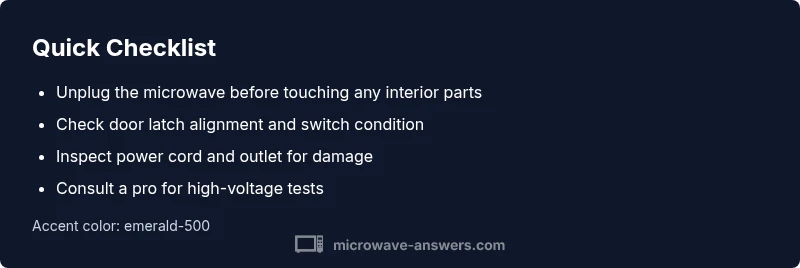
Before you dive into deeper diagnostics, perform these basics safely. Always unplug the unit before touching any internal parts. Check the door is fully closed and the latch engages with a solid click. Inspect the power cord for signs of wear or damage and test the outlet with another small appliance to confirm it has power. If your microwave shows error codes on the display, note them down—these codes can guide the next steps. Do not attempt replacements of high-voltage components unless you are trained to do so. If the unit has a recent burning smell, sparks, or buzzing, stop and seek professional help immediately to avoid electric shock or fire.
Diagnostic Flow: Symptom to Diagnosis
Symptoms drive diagnosis. If there is power but no heat, the likely causes are door interlock, HV circuit fault, or thermal fuse. If you hear a soft hum but no heat, the magnetron may be weak or failing. If the display functions but you get no heat, wiring or control board issues could be at play. For each symptom, follow a progressive checklist:
- Power verifies: outlet power and cord integrity
- Door interlock check: listen for a solid latch and correct door closure
- Safety fuse and thermal fuse: consider professional testing
- HV circuit: magnetron/module replacement if confirmed faulty
If the steps above don’t restore heating, the issue is probably in the HV components or control electronics. In many cases, a professional diagnosis is the safest path.
Step-by-Step: Fixing the Most Common Issue (Door Interlock)
- Power down: Unplug the microwave and wait 2 minutes to discharge any residual energy.
- Access the door interlock: Remove the outer casing only if you are comfortable and have unplugged the unit; otherwise skip to professional help.
- Inspect the latch and switches: Look for broken tabs, loose wiring, or signs of wear around the door switch.
- Test the switch continuity: If you have a multimeter, verify continuity when the door is closed; replace if readings are inconsistent.
- Reassemble carefully: Ensure all connectors seat properly and the door aligns flush with the frame.
- Test heating: Plug in and run a short test with a microwave-safe cup of water. If heat returns, you were likely dealing with a faulty interlock; if not, move to HV components or professional service.
Tip: If you’re not confident taking apart the door area, skip to professional service to avoid risk of electric shock or exposing live HV circuits.
Tips & Warnings While You Troubleshoot
- pro_tip: Always unplug before touching any interior components; even when unplugged, capacitors can hold a charge.
- warning: Do not attempt to replace HV components or the magnetron unless you are trained; improper handling can cause shock or fire.
- note: Document any error codes or unusual smells to help a technician diagnose faster.
- pro_tip: Keep the cavity clean and clear of food debris, which can insulate heat and affect cooling and safety features.
Prevention and Maintenance for Heating Reliability
Regular maintenance helps prevent heating failures. Wipe the interior after cooking to remove grease that can interfere with cooling vents and sensors. Inspect the door seal for damage and keep the latch area clean so it can engage correctly. Periodically check the power cord for wear and avoid using extension cords, which can reduce voltage and performance. If your unit is older, plan for a periodic professional check to catch degraded HV components before they fail.
When to Call a Professional
If you’re not comfortable with testing high-voltage components, loud buzzing, sparking, or any burning smell, power down the unit and seek professional help immediately. A qualified technician can safely test or replace the magnetron, high-voltage diode, thermal fuse, or control board. Professional service is also wise if error codes persist after basic checks. Prioritize safety and avoid DIY fixes that could put you at risk.
Steps
Estimated time: 30-60 minutes
- 1
Power down and prepare
Unplug the microwave and wait at least two minutes to discharge any stored energy. This safe start is essential before touching any internal parts.
Tip: Safety first—never work on a live high-voltage microwave. - 2
Inspect the door interlock
Carefully examine the door latch and switches for cracks or loose connections. A misaligned door can prevent the microwave from heating for safety reasons.
Tip: If you see damaged wiring, stop and call a pro. - 3
Check the door switch continuity
If you have a multimeter, test the continuity with the door closed. Inconsistent readings indicate a faulty switch that needs replacement.
Tip: Only perform electrical tests if you are comfortable with basic electronics. - 4
Verify the power path to the HV area
Ensure wiring harnesses and connectors near the HV area aren’t loose or burnt. Do not touch internals beyond your comfort level.
Tip: Avoid touching exposed components; many parts can shock even when unplugged. - 5
Assess the thermal fuse safety
A blown thermal fuse cuts power to the magnetron. Testing or replacement should be done by a technician.
Tip: If the fuse is blown, your microwave likely needs a service call. - 6
Test heating after reassembly
Reconnect all parts, plug in, and run a short test with water in a microwave-safe cup to verify heat output.
Tip: If there’s no heat, proceed to professional diagnosis rather than replacing parts blindly.
Diagnosis: Microwave won't heat when powered
Possible Causes
- highDoor interlock switch or latch failure
- mediumFaulty magnetron or high-voltage diode
- mediumBlown thermal fuse or cooling fan failure
- lowControl board or wiring failure
Fixes
- easyTest and replace door latch/switch if necessary
- hardInspect and replace magnetron or HV diode if confirmed faulty (professional required)
- easyCheck power supply, reset breaker, inspect cord/outlet for damage
Common Questions
Why won’t my microwave heat even though it powers on?
Common reasons include a faulty door interlock, a blown thermal fuse, or a failing magnetron. Start with safety checks and door latch, then consider the HV components if heat is still missing.
If it powers on but doesn’t heat, check the door switch and safety fuses first before moving to HV components.
Is it safe to troubleshoot my microwave at home?
You can perform basic safety checks when unplugged, but avoid working on high-voltage parts unless you are trained. If you’re unsure, contact a professional to prevent shock or fire.
Basic checks are fine when unplugged, but leave high-voltage parts to a technician.
Can a blown fuse cause the microwave to stop heating?
Yes. A blown thermal fuse or a failed high-voltage fuse can stop heating. Replacing these parts generally requires professional service.
A blown fuse can stop heating; consider professional replacement.
What should I do if the door latch is broken?
Replace the door latch or interlock assembly. If you’re not comfortable, have a technician handle the replacement to maintain safety.
Replace the door latch to restore safe operation.
How can I tell if the magnetron is failing?
No heat coupled with buzzing or a smell can indicate magnetron failure. This usually requires professional testing and replacement.
No heat with a buzzing sound may mean the magnetron needs service.
Watch Video
Main Points
- Unplug before any inspection
- Door latch issues are the top heater failure cause
- Only test HV components with proper training
- Call a pro for magnetron or HV fuse work