Why Does Microwave Stop Heating? A Practical Troubleshooting Guide
Learn why your microwave stops heating and how to diagnose common issues safely, from door interlocks to fuses. Practical steps from Microwave Answers.


Most microwave heating stops because of a safety interlock failure, a bad door latch, or a failing magnetron or control board. Start by inspecting the door to ensure it closes firmly and the interlock isn’t stuck. If it still won’t heat after a power reset, check the fuse and power connections, then plan professional service if needed.
Why your microwave stops heating
If you’ve ever wondered why does microwave stop heating, you’re not alone. The most common causes are safety interlocks, a worn door seal, or a failing magnetron or control board. Modern microwaves rely on safety interlocks to prevent operation when the door isn't fully closed, and even a minor misalignment can trigger a no-heat condition. Understanding the symptoms helps you decide whether to troubleshoot safely at home or seek professional help. According to Microwave Answers, door interlocks and safety switches are the leading causes of heat loss in many models. When diagnosing, place safety first: unplug before handling any internal parts, and avoid poking around if you smell burning or see arcing. This section will lay the groundwork for practical at-home checks and when to move to more advanced testing.
Key takeaway from Microwave Answers: safety interlocks are a top culprit, so start with the door and interlock checks before touching high-voltage components. If you’re uncomfortable with any step, don’t hesitate to contact a licensed technician.
Safety-first checks you can perform today
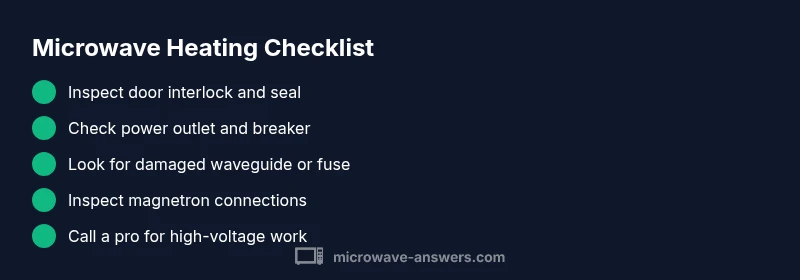
Before diving into electrical diagnostics, run through a quick safety checklist. A microwave that won’t heat can be caused by something as simple as a door not closing correctly. Start by unplugging the unit, then inspect the door latch for debris, broken tabs, or misalignment. Clean the door seal and wipe away any food residue that could prevent a proper seal. Ensure the waveguide cover is intact and free of damage, as a damaged cover can disrupt the microwave’s energy path. Check the outlet and circuit breaker: plug the microwave into a known-good outlet, and verify the circuit hasn’t tripped. If the unit is powered by a GFCI outlet, press the reset button. Finally, look for obvious signs of damage like scorch marks or a burnt smell; if present, stop and call a professional. These checks address the most common, easy-to-fix causes and can save you a trip to the repair shop.
Note from Microwave Answers: keep work areas dry and never operate a damaged appliance. When in doubt, skip ahead to diagnostic testing rather than attempting risky repairs.
Diagnostic flow you can follow (simple to advanced)
A structured diagnostic approach helps you identify whether the problem is safety-related or a genuine component failure. Start with the easiest checks (door interlock, power, fuse) and progress to more complex tests (magnetron and control board) only if you’re comfortable. This flow mirrors professional troubleshooting but remains accessible for homeowners who want to attempt safe, non-invasive diagnostics. If at any point you encounter high voltage exposure or unusual smells, stop and seek professional help. Remember, safety first.
Symptom: No heat or intermittent heating. Likely causes: door interlock failure, magnetron issue, blown fuse, or control board fault. Next fixes to try: reseat doors, reset power, inspect fuses, and test connections with proper tools. This progression ensures you don’t overlook simple fixes before moving to expensive components.
How to test safely at home (non-destructive checks)
Safe, non-destructive checks can reveal simple problems without disassembling the entire unit. Start by performing a visual inspection of the door latch and seal for wear or damage. Ensure the microwave is unplugged during any inspection of internal parts. If you have basic electrical knowledge, you can use a multimeter to test door interlock switches for continuity when the door is closed. Do not test the magnetron or high-voltage circuits unless you’re trained; these components carry dangerous voltages even with the power off. If you don’t see obvious signs of trouble and the unit still won’t heat, move to professional diagnostics.
Safety first reminder: never bypass interlocks or alarms. If you smell ozone or burning, unplug immediately and call a technician.
When to replace parts and calling a professional
If the basic checks don’t restore heating, it’s time to evaluate parts more seriously. A failing magnetron, a damaged waveguide, or a burned control board typically requires professional service and may necessitate part replacement. If you observe scorching, unusual noises, or rhythmic sparks, stop using the appliance and contact a technician. For most homeowners, magnetron replacement and any high-voltage work should be handled by certified technicians. The goal is to confirm safety and reliability without risking electric shock or fire hazards.
Bottom line: start with simple checks, then consult a professional for high-voltage components or critical failures. This approach minimizes risk while maximizing your chances of a safe, effective repair.
Prevention tips to extend life and avoid future outages
Preventive maintenance can significantly reduce the chance of heating problems. Regular cleaning of the door seals, waveguide cover, and interior helps prevent performance issues. Use microwave-safe containers and avoid metal objects, which can damage the magnetron or cause arcing. Inspect the power cord and outlet periodically for signs of wear. If the microwave sits unused for long periods, plug it in and run a short test cycle occasionally to keep the circuitry fresh. Keeping a clean, dry, and properly vented unit reduces wear on critical components and helps you spot issues earlier.
Steps
Estimated time: 60-90 minutes
- 1
Power down and safety check
Unplug the microwave and wait 60 seconds to discharge residuals. Inspect the exterior for obvious damage, and check the power cord for cuts or kinks. Ensure the unit is on a stable surface away from water.
Tip: Always start with unplugging to avoid shock. - 2
Inspect the door interlock and seal
Carefully examine the door latch and seal for wear, damage, or debris. Press the latch to ensure it engages and remains depressed when the door is closed. If the interlock feels loose or sticky, it may need replacement.
Tip: A misaligned door is a common, fixable issue. - 3
Check fuses and power connections
If you’re comfortable, unplug the unit and open the access panel to locate the fuse and primary wiring. Look for signs of scorching or loose connectors. Replace the fuse if you have the correct rating and reseat wires firmly.
Tip: Only replace fuses with the exact rating specified by the manufacturer. - 4
Test magnetron and control board (careful)
Testing the magnetron requires specialized equipment; if you’re not trained, skip to professional testing. Visually inspect the magnetron for burns or distortion and check for loose connections on the control board.
Tip: Avoid touching high-voltage components. - 5
When to call a professional
If the microwave still won’t heat after basic checks, or you notice burning smells, arcing, or smoke, do not continue troubleshooting yourself. A qualified technician can safely diagnose high-voltage components.
Tip: Document any symptoms and steps you’ve already tried for the technician.
Diagnosis: Microwave stops heating or won’t heat at all
Possible Causes
- highDoor interlock/safety switch failure
- mediumMagnetron failure
- highThermal fuse tripped or blown fuse
- lowControl board or power supply issue
Fixes
- easyTest/replace the door interlock switch and ensure the door closes securely
- hardInspect magnetron connections and replace the magnetron if needed
- hardReplace the thermal fuse or blown fuse in the power supply
- mediumInspect the control board and wiring for burn marks; replace if damaged
Common Questions
Why does my microwave stop heating after I start it?
Common causes include a faulty door interlock, a failing magnetron, a blown fuse, or a problem with the control board. Start with door and power checks before investigating high-voltage components.
Common causes are door interlock, magnetron, fuse, or control board. Start with door and power checks before more advanced diagnostics.
Is it safe to keep using a microwave that won't heat?
No. A microwave that won’t heat may indicate a safety or high-voltage fault and could pose a fire or electrical shock risk. Have it inspected by a professional.
No—don’t keep using it. Have a professional inspect the safety or high-voltage fault.
Can a blown fuse cause heating to stop?
A blown fuse in the primary power circuit can prevent heating. If you’re comfortable, replace only with the correct rating and power down the unit first; otherwise, call a technician.
Yes, a blown fuse can stop heating. Replace only with the right rating or call a pro.
How do I check the door interlock safely?
Unplug the unit and inspect the door interlock switch for damage or wear. If trained, you can test continuity with a multimeter while the door is closed; otherwise, have a pro test it.
Unplug it, inspect the door interlock; a pro can test continuity if needed.
Should I replace the magnetron myself?
Not recommended for do-it-yourselfers. The magnetron is a high-voltage component; improper handling can cause shock or fire. Use a licensed technician for magnetron work.
Replacing the magnetron is risky. Hire a professional.
When should I call a professional?
If basic checks don’t restore heating or you notice sparking, odors, or smoke, stop and contact a certified technician. They can safely diagnose high-voltage components and replace parts.
Call a professional if basic checks fail or you smell burning.
Watch Video
Main Points
- Start with safety checks before hardware tests
- Door interlock failures are a leading cause
- If safe checks fail, seek professional diagnosis
- Regular maintenance reduces future outages