What to Do If Your Microwave Is Smoking: A Practical Safety Guide
Learn immediate actions, causes, prevention, and safety tips when your microwave starts smoking. This Microwave Answers guide covers what to do, what not to do, and how to stay safe in kitchen emergencies.


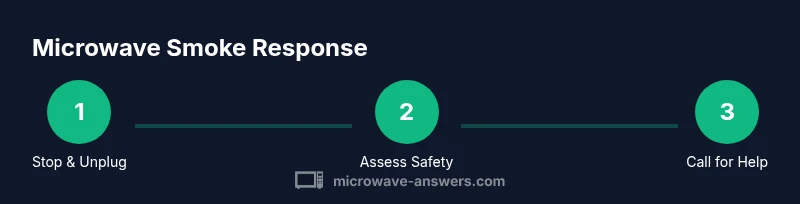
Stop the microwave at once, unplug if safe, and keep the door closed to limit oxygen. If flames are visible, evacuate and call emergency services. If only smoke, allow the unit to cool completely before inspecting or moving it. Do not drown a fire with water; use a fire extinguisher only if trained and the fire is small.
Immediate Safety Actions When You See Smoke
Smoke from a microwave is always a warning signal. According to Microwave Answers, smoke usually indicates overheating, a fault in the magnetron, or improper use (such as heating oily foods in non-microwave-safe containers). The first priority is safety: stop operating the appliance and treat the situation as potentially dangerous. If you can reach the plug safely, unplug the unit to cut power. If flames are visible, evacuate the area immediately and call emergency services. Do not try to fight a fire with water; instead, if a small, contained fire is accessible and you are trained, use a suitable fire extinguisher (class ABC or BC) and follow PASS. If there are only clouds of smoke without flames, keep the door closed to limit oxygen and allow the microwave to cool completely on the counter, away from combustibles. After the unit cools, inspect for damage before plugging back in.
Common Causes of Microwave Smoke
Smoke can begin for several reasons. The most common are overheating food in non-microwave-safe packaging, burnt popcorn, or spilled grease inside the cavity. Metal objects, foil, or metal trims accidentally placed in a microwave can arc and create smoke and sparks. A damaged door seal or failing magnetron may also produce smoke, along with electrical faults in the power cord or control board. Always consider the age and condition of the appliance; older models have higher risk of insulation breakdown. In any case, smoke should not be ignored; determine whether the cause is simple burnt food or a sign of a more serious fault.
Immediate Steps If Fire Is Not Occurring
If there is smoke but no visible flame, begin by turning off the microwave and unplugging it if you can do so safely. Do not open the door during the cooling phase; the interlock system can be compromised temporarily. Move combustibles away from the unit and ensure good ventilation by opening a window. Allow the microwave to sit undisturbed for 15-20 minutes to cool fully. After cooling, inspect the interior for melted plastic, charred residue, or burnt smells; if you detect damage or if the smell lingers, do not reuse the appliance.
Cleaning and Post-Incident Inspection
After the unit has cooled, unplug and remove any food or debris from the cavity using dry, non-scratching methods. Wipe the interior with a mild soap solution; never immerse or spray water directly into the microwave. Check the door seal for damage and ensure the turntable can rotate freely. If there is structural damage, cracking, or persistent odors, contact a qualified technician.
Preventive Measures for Future Use
To reduce risk of future smoking: use only microwave-safe containers; avoid metal or foil; don't heat oil or fatty foods for long times; cover foods loosely; clean spills promptly; run the microwave with food rather than empty; use appropriate power levels; keep a working fire extinguisher in the kitchen; maintain good ventilation around the appliance; periodically inspect the door seal and power cord for signs of wear.
Should You Repair or Replace After an Incident?
If the microwave shows visible damage, persistent smoking, a burning smell that won’t go away, or a cracked door seal, prioritize safety and replace the unit. Minor faults or overheating that are isolated to a single component may be repairable by a qualified technician. If the appliance is old or frequently malfunctioning, replacement is the safer long-term choice.
Quick Troubleshooting Checklist
- Is there active flame? If yes, evacuate and call emergency services.
- Can you safely unplug the unit? If not, evacuate and seek help.
- Is there oily residue or melted plastic inside? Do not reuse until inspected.
- Does the door seal show damage or gaps? Have it checked before reuse.
- Have you ensured proper use (microwave-safe containers, no metal)? Correct usage reduces risk of smoke.
Authority Sources
For safety standards and food safety guidance, consult credible sources such as:
- U.S. Food and Drug Administration (FDA): https://www.fda.gov
- Occupational Safety and Health Administration (OSHA): https://www.osha.gov
- National Institute of Standards and Technology (NIST): https://www.nist.gov
Tools & Materials
- Fire extinguisher (class ABC or BC)(Keep in kitchen reachable; know PASS technique)
- Heat-resistant oven mitts(Protect hands when handling hot components or moving the appliance)
- Dry, non-scratch cleaning cloth(For interior wiping after cooling)
- Microwave-safe container (for transferring food, if safe)(Only if you need to move items safely, otherwise leave them)
- Flashlight(Use to inspect cavity if visibility is poor)
Steps
Estimated time: 20-40 minutes
- 1
Stop operation and unplug if safe
Press the off button, and if you can safely reach the plug, unplug the unit to cut power. This reduces the risk of further electrical faults feeding the smoke.
Tip: If the outlet or cord feels hot, do not pull the plug; step back and call for help. - 2
Assess the situation for flames
Look through the microwave window only if the door is cool and there is no hissing or loud popping. If flames are present, evacuate immediately and call emergency services.
Tip: Do not open the door while flames are visible; opening can feed oxygen and intensify the fire. - 3
Use a fire extinguisher only if trained
If a small, contained fire is accessible and you are trained, use a regional class ABC/BC extinguisher following PASS (Pull, Aim, Squeeze, Sweep).
Tip: Stand at a safe distance and aim at the base of the flames. - 4
Ventilate and cool the unit
If there are no flames, keep the door closed and ventilate the area by opening windows. Let the microwave cool for at least 15-20 minutes before handling.
Tip: Avoid fan-blown circulation directly into the cabinet; the goal is gentle cooling and smoke clearance. - 5
Remove hot items only after cooling
If you must move anything, wear oven mitts and use non-metal utensils to transfer food to a safe plate, then inspect for damage.
Tip: Never attempt to remove hot items with bare hands when the interior is still hot. - 6
Inspect the cavity for damage
Check for melted plastics, scorch marks, or unusual smells. If you observe damage, do not reuse the microwave until serviced.
Tip: Document any damage with photos for your technician or warranty claim. - 7
Decide next steps (repair or replace)
If damage is minor and the unit is relatively new, a repair may suffice. If there is persistent smoke or a questionable seal, replacement is safer.
Tip: Consult a qualified technician before attempting any internal fixes. - 8
Return to safe use only after approval
Only reuse the microwave if a professional confirms it is safe, and follow all manufacturer guidelines for safe operation.
Tip: Keep monitoring for any unusual smells or heat after reuse;
Common Questions
Is it safe to use the microwave after it has smoked?
Not until it has been inspected for damage. Unplug the unit, let it cool, and have a technician assess any lingering smells or electrical issues before reuse.
If your microwave smoked, unplug it and have it checked by a professional before you use it again.
What should I do first if I see flames?
Evacuate immediately and call emergency services. If you are trained and the fire is small, use a fire extinguisher; otherwise, do not attempt to extinguish it with water.
If you see flames, leave the area and call 911. Use a fire extinguisher only if you're trained and it's safe.
Can burnt popcorn cause smoke even if the machine looks okay?
Yes. Burnt popcorn is a common cause of microwave smoke. Ensure the bag or container is microwave-safe and monitor cooking times carefully.
Burnt popcorn is a frequent culprit; make sure you use microwave-safe bags and set shorter times.
Should I replace or repair after smoking?
If there is visible damage or repeated smoking, replacement is often safer. Minor issues may be repairable by a certified technician.
If damage is extensive or it keeps smoking, replace it. Minor faults can be repaired by a pro.
What are common causes of microwave smoke?
Overheating food, metal in the cavity, a damaged door seal, or an aging magnetron can all cause smoke. Proper use and maintenance reduce these risks.
Usually overheating, metal, or a failing component cause smoke; correct usage helps prevent it.
Is it safe to use a microwave with a damaged door seal?
No. A damaged door seal can leak microwaves and fumes. Do not use the unit until a professional inspects and certifies it safe.
A damaged seal is a serious safety red flag; stop using it until checked.
Watch Video
Main Points
- Unplug safely and assess the risk immediately.
- Do not attempt an open-door fire fight; evacuate if flames appear.
- Only use a fire extinguisher if trained and the fire is small.
- Have the microwave inspected before reuse if smoke occurs again.
- Prevent future incidents with proper containers and regular cleaning.