If Microwave Catches Fire: A Practical Safety Guide
Learn how to respond quickly and safely if a microwave catches fire. This guide covers immediate actions, safe extinguishing methods, post-fire checks, prevention tips, and when to call for professional help.


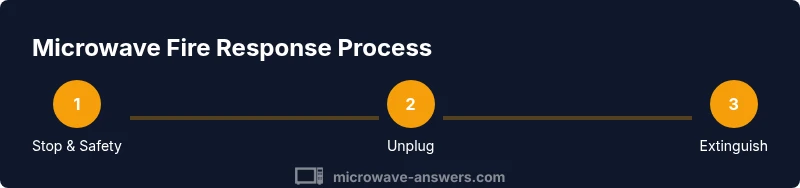
If microwave catches fire, act quickly but calmly: unplug the unit if safe, keep the door closed, and do not try to move or open it. If flames persist, use an appropriate fire extinguisher (ABC) and evacuate if needed. After the incident, have the appliance inspected or replaced. This guide walks you through steps to stay safe.
Understanding the Risk: If Microwave Catches Fire
According to Microwave Answers, the moment you notice smoke or flames from a microwave, your priority is safety. If microwave catches fire, stop cooking and move to a safe area. While microwaves are convenient, they can overheat, ignite food debris, or suffer electrical faults that spark or catch fire. The key is to recognize the signs early: smoke, a burning smell, or visible flames through the door. In this section we cover common causes, how fires start, and what makes an incident dangerous in a home kitchen. You will learn how to respond quickly and calmly, reducing risk to yourself and others and preventing a minor incident from becoming a larger emergency. Remember: even if the flames seem small, treat it as a potentially dangerous electrical fire and act with care.
Immediate Actions at the First Sign of Fire
If you see smoke or flames, your first move is to stop cooking and step back to a safe area. Do not try to move the appliance while it is on fire. Unplug the microwave from the wall outlet if you can do so safely, or switch off the circuit breaker if needed and accessible. Do not open the door; opening can feed oxygen and intensify the flames. If the flames persist, use a properly rated fire extinguisher (class ABC) to suppress the fire from a safe distance. After extinguishing, evacuate if you are uncertain about your ability to control the situation or if the room fills with smoke. Finally, call emergency services if the fire continues or if you cannot safely manage it.
Safe Extinguishing Techniques for Small Fires
Most microwave fires are confined to the interior of the appliance or to food debris. The safest approach is to unplug (if safe) and evacuate if needed, then use an extinguisher. Hold the extinguisher with a stable stance and aim at the base of the flames, sweeping side to side. Keep a safe distance and remain aware of steam and hot surfaces. If you cannot reach a fire extinguisher quickly, cover the opening with a metal lid or baking sheet to smother the flames—do not use water, as electricity and moisture create a shock risk. After the fire is out, do not reuse the microwave until it has been inspected by a professional.
After the Flames Are Out: Cleanup and Safety Checks
Even after the flames are extinguished, lingering heat, melted plastics, or damaged wiring can create a hazard. Allow the unit to cool completely before touching; unplug is ideal but not mandatory if the plug is damaged. Inspect the interior for soot, burnt food, or melted components and ventilate the area to clear smoke. Do not attempt to operate the microwave again until a qualified technician confirms that the safety switch, wiring, and magnetron are intact. If there is any damage to the outlet or circuit, turn off power to that circuit at the breaker and do not plug in any appliance until the outlet is repaired. Keep children and pets away during this period.
Prevention: Practical Tips to Avoid Future Fires
Prevention starts with clean, attentive cooking. Regularly wipe the interior, including the turntable and vents; crumbs and grease can ignite. Always use microwave-safe containers; metal or foil can cause arcing and fires. Never run the microwave empty, and monitor food closely, especially when heating fats or sugar-rich items. Keep flammables such as towels or paper away from the unit, and place the microwave on a stable, level surface with adequate ventilation. Consider placing a smoke detector nearby for early warning and practicing a quick evacuation plan with family members so everyone knows what to do in case of a fire. Based on Microwave Answers analysis, keeping the appliance clean and using correct cookware significantly reduces risk.
Choosing Safe Practices and Appliances
When shopping for a microwave, look for built-in safety features such as auto shutoff on overheating, child lock, and clear indicator lights. Read the user manual for recommended cookware and maintenance guidance. Establish a simple kitchen routine: check the door seal, clean the interior weekly, and keep the outlet area clear of clutter. By building good habits, you reduce the risk of an incident and protect your family. The Microwave Answers team recommends reviewing safety practices and keeping a fire extinguisher accessible in the kitchen.
Tools & Materials
- Fire extinguisher (ABC or BC class)(Keep accessible in kitchen and check expiry yearly)
- Dry towel or oven mitts(Heat-resistant; used to handle hot components if safe)
- Metal lid or baking sheet(Use to smother small flames if safe)
- Tongs or heatproof gloves(Useful for handling hot food or removing items from microwave)
- Phone to call emergency services(Call if the fire persists or you cannot safely control it)
- Flashlight(In case of poor lighting due to smoke)
Steps
Estimated time: 15-30 minutes
- 1
Stop cooking and move to safety
When you detect smoke or flames, immediately stop heating and step away from the microwave. Keep others at a safe distance and avoid leaning over the appliance. This initial action reduces your exposure to heat, smoke, and potential electrical faults.
Tip: Keep a clear exit path and alert others nearby. - 2
Unplug the microwave if safe to do so
If you can reach the plug without crossing the hot area or putting yourself at risk, unplug the unit. If the plug or cord is damaged, do not attempt to unplug—evacuate and call for help instead.
Tip: Unplugging removes the electrical power source, which reduces shock risk. - 3
Do not open the door
Opening the microwave door can feed oxygen to the flame and worsen the fire. Keep the door closed while you assess the situation and prepare to use an extinguisher if needed.
Tip: Door closed = oxygen restricted; it helps prevent flare-ups. - 4
Use a fire extinguisher if flames persist
Stand back, aim at the base of the flames, and sweep from side to side with a Class ABC extinguisher. If the fire is not controllable within a few seconds, evacuate.
Tip: Always maintain an escape path behind you when using a extinguisher. - 5
Evacuate and call emergency services
If the flames continue after attempting extinguishment or you feel unsafe, evacuate the area and call emergency services. Do not re-enter until responders declare it safe.
Tip: Your safety comes first; do not stay to watch the flames. - 6
Wait for cooling and assess damage
Allow the appliance to cool completely before touching or moving. Have a professional inspect the microwave and outlet before attempting future use.
Tip: Do not power it again until it’s been checked by a technician.
Common Questions
What should I do immediately if I notice smoke coming from the microwave?
Stop heating, unplug if safe, keep the door closed, and call for help if flames persist.
If you see smoke, stop cooking, unplug if safe, and call for help if flames persist.
Can I put out a microwave fire with water?
No. Water can conduct electricity and cause an electric shock. Use a fire extinguisher or cover with a metal lid if safe.
No. Water can cause electric shock; use a fire extinguisher or cover the flames if safe.
Is it safe to reuse the microwave after a fire?
No; have it inspected or replaced by a qualified technician before reuse.
No. Have a professional inspect or replace it before reusing.
What if I can’t unplug the microwave safely?
Evacuate and call emergency services; do not attempt to unplug or move the appliance if it risks your safety.
If you can’t unplug safely, evacuate and contact emergency services.
Should I cover the fire with a lid to smother flames?
If flames are small and you can do it quickly with a metal lid, you may cover; otherwise evacuate.
If safe, cover small flames with a metal lid; otherwise evacuate.
What are best practices to prevent microwave fires?
Keep the interior clean, use microwave-safe containers, avoid running it empty, and monitor cooking closely.
Keep it clean, use safe cookware, and don’t run it empty.
Watch Video
Main Points
- Unplug or switch off power and keep the door closed when a fire starts
- Use an ABC extinguisher for small fires; never use water on electrical fires
- Do not reopen the door during the incident; evacuate if you cannot control it
- Have the microwave inspected or replaced after a fire before reuse
- Prevention matters: clean interiors, use microwave-safe containers, and keep flammables away