What to Do If Microwave Sparks: Quick Safety Guide
Learn immediate safety steps, diagnose common causes of microwave sparks, and follow a clear plan to prevent recurrence. Find guidance from Microwave Answers on when to service the unit and how to handle sparks safely.


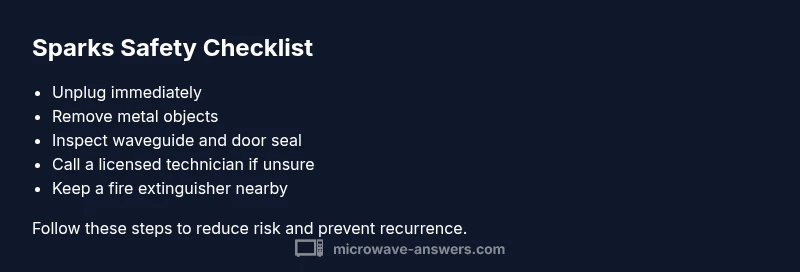
Unplug the microwave immediately and remove any metal objects from inside. Sparks usually point to a damaged waveguide, a warped door seal, or stray metal. Do not use the appliance until a qualified technician inspects and repairs it. If flames occur, evacuate and call emergency services. For safety, keep a fire extinguisher nearby.
Immediate Safety Steps
If you see or smell burning or hear a buzzing arcing sound, stop using the microwave immediately. Unplug it from the wall and keep a safe distance. Do not open the door repeatedly or try to operate the unit while sparks are present. Remove any metal utensils or aluminum foil from the cavity only after the unit is unplugged and cool. If you notice smoke or flames, evacuate and call emergency services. Even if the sparks seem to stop, do not reuse the appliance until it has been inspected by a licensed technician. According to Microwave Answers, prioritizing safety is essential, since arcing can cause fire or damage to the microwave’s internals. This guide will help you assess what to do if microwave sparks occur and how to proceed.
Why Sparks Happen in Microwaves
Sparks in a microwave are a form of arcing that signals a problem inside the oven cavity. The most common culprits are a damaged waveguide cover, a warped or damaged door seal, or foreign metal in the chamber. Food debris, spilled liquids, or splashed salt can also create hotspots that arc when microwaves hit conductive particles. Another factor can be a misaligned magnetron or control board, which sends inconsistent energy and leads to sparks. Knowing what to do if microwave sparks occur involves recognizing these symptoms and acting quickly to minimize risk. In many cases, sparks indicate a need for professional inspection rather than a DIY repair. Microwave Answers notes that early diagnosis improves safety and can extend the life of your appliance.
What to Check First (Before Opening the Door)
Before you inspect, ensure the unit is unplugged. Check for obvious signs of damage on the exterior and around the door latch. Look inside for trapped metal objects, fork tines, foil, or utensils that shouldn't be there. If the cavity is visibly scorched or you see melted plastic, stop and seek professional service. Do not try to test by plugging back in or running a damaged unit. This stage is about safe triage and avoiding further harm. Remember, the keyword here is what to do if microwave sparks: prioritize safety and call a pro when in doubt.
Diagnostic Flow: Symptom to Solution (High-Level)
Start with the symptom: actual sparking during operation. The most likely causes are a damaged waveguide cover (high), stray metal inside the cavity (high), or a faulty door switch/door seal (medium). Low-probability but serious causes include magnetron or control-board faults (low). For fixes, first remove metal objects and inspect the waveguide area. If the waveguide cover is cracked or visibly damaged, replace it. If the door seal shows wear, replace or service the door. If you still see sparks after these checks, contact a technician for advanced diagnostics.
Common Spark Scenarios and Safe Fixes
Scenario A: Small blue or white arcs with a visible metal piece nearby. Action: Power off, unplug, and remove the metal object. Inspect for damage and do not reuse until inspected by a pro. Scenario B: Spark when microwaving plastic or glass with metal trim. Action: Stop using the item and inspect for metal fragments that may be contacting the magnetron. Scenario C: Frequent sparking with no obvious debris. Action: Do not use the unit; consider replacing the waveguide cover or contacting a technician. In all cases, never operate a damaged microwave.
Safe Cleaning and Maintenance to Prevent Sparks
Keep the interior clean and dry; wipe spills promptly to avoid crusted residues that conduct electricity. Use only microwave-safe containers and utensils; avoid metal staples, aluminum foil, or decorative metal accents inside. Regularly inspect the door seal for cracks and deformation. If you notice browning, charring, or burnt smells, stop using the unit and seek service. Routine inspection reduces the risk of arcing and extends the life of the appliance.
When to Seek Professional Help
If sparks continue after removing any metal objects and checking for obvious damage, or if you observe scorching or a burnt smell, seek professional help. A licensed technician can inspect the waveguide, magnetron, door latch, and control board. If your microwave is under a warranty, contact the manufacturer for service options. Do not attempt complex internal repairs yourself. Quick prevention afterward includes addressing any underlying moisture ingress or misalignment issues.
Aftercare: Documentation, Warranty, and Disposal
Document what happened, including when sparks occurred and what you observed. If a professional repaired or replaced components, keep receipts and notes for warranty coverage. If the unit is old or beyond repair, consider safe disposal following local electronics recycling guidelines. When you resume cooking after a repair, run a simple test with a microwave-safe cup of water to ensure normal operation before using it for food.
Quick Prevention Plan for Home Cooks
Create a simple safety routine: never use metal containers, ensure the cavity is clean and dry, and check the door seal every 3–6 months. Keep a small fire extinguisher rated for electrical fires nearby and know how to respond if sparks occur again. Schedule an annual professional inspection if your microwave is heavily used or shows any signs of wear. By following these steps, you reduce the chances of sparks and improve overall kitchen safety.
Steps
Estimated time: 20-60 minutes
- 1
Power off and unplug
Immediately unplug the microwave to cut power and prevent further arcing. Do not rely on the child lock or power switch—unplug at the wall. Wait for the unit to cool before handling any components.
Tip: Keep the plug nearby in case you need to test after repairs. - 2
Remove metal objects
If the unit is unplugged and safe, remove any metal utensils, foil, or decorative metal pieces from the cavity. Metal inside a microwave is the primary cause of arcing and sparks.
Tip: Never try to wash or scrub the cavity while the power is connected. - 3
Inspect the waveguide area
Open the cavity (if you are comfortable and safe to do so) and look for scorch marks or a damaged waveguide cover. A cracked or burnt waveguide is a common spark source that requires professional replacement.
Tip: Do not operate the microwave if you see visible damage. - 4
Check the door seal and latch
Examine the door seal for cracks or deformation and ensure the latch engages properly. A faulty seal can cause arcing at the door. If damage is present, avoid using the microwave until repaired.
Tip: Avoid attempting door repairs yourself unless you are trained. - 5
Look for other internal issues
Scan for signs of moisture, burnt wiring, or melted insulation. Any of these indicate a more serious fault that requires a technician.
Tip: If you smell burning after inspection, stop and seek service immediately. - 6
Consult a professional
If sparks persist after basic checks, or you are unsure about any step, contact a licensed appliance repair technician or the manufacturer’s service line. Do not attempt dangerous repairs.
Tip: Keep model and serial numbers handy for faster diagnosis.
Diagnosis: Microwave sparks/arcs during operation
Possible Causes
- highDamaged waveguide cover or insulation
- highMetal objects or foil inside cavity
- mediumDoor latch or door switch defect
- lowElectrical fault in magnetron or control board
Fixes
- easyUnplug the unit and remove any metal objects from the cavity; inspect for obvious damage
- mediumIf the waveguide cover is cracked or damaged, replace it by a qualified technician
- easyInspect the door seal and latch; do not operate if misaligned or damaged
- hardConsult a licensed technician to diagnose magnetron/control board faults; repair or replacement may be required
Common Questions
Why does my microwave sparkle or arc when I use it?
Sparks usually come from metal inside the cavity, a damaged waveguide cover, or a faulty door seal. Another possibility is an electrical fault in the magnetron or control board. Unplug first and avoid using the unit until inspected.
Sparks usually come from metal inside, a damaged waveguide, or a faulty door seal. Unplug it and avoid using the microwave until inspected.
Is it safe to keep using a microwave that sparks occasionally?
No. Sparks indicate an arcing condition that could cause a fire or further damage. Stop using the microwave and have it inspected by a licensed technician before resuming operation.
No. Sparks mean arcing, which can cause a fire. Stop using it and get it inspected before using again.
What parts are most commonly involved in sparking?
The waveguide cover, door seal, and interior metal items are the most frequent culprits. A damaged magnetron or control board is less common but should be checked by a professional.
Common culprits are the waveguide cover, the door seal, or metal inside. If needed, have a pro check the magnetron.
Can I fix a damaged waveguide cover myself?
Replacing a waveguide cover is a specialized repair. It is best performed by a trained technician to avoid further damage or safety risks.
Waveguide fixes are best left to a trained technician.
When should I replace instead of repairing a sparking microwave?
If the unit is old, cost of repair approaches or exceeds replacement, or multiple components fail, replacement is often the safer and more economical choice.
If repairs are piling up or the unit is old, replacement is often wiser.
Does warranty cover spark-related repairs?
Warranties vary by model and issue. Check your warranty terms or contact the manufacturer to determine coverage for electrical arcing or component failure.
Warranties vary—check your terms or contact the manufacturer for coverage details.
Watch Video
Main Points
- Unplug immediately when sparks appear
- Identify common causes like damaged waveguide or metal in cavity
- Do not use a damaged microwave; seek professional service
- Document events and check warranty options after repair
- Prevent future sparks with routine maintenance