What Happens When Microwave Sparks: A Practical Troubleshooting Guide
Discover what happens when microwave sparks and how to respond safely. A Microwave Answers guide on causes, steps, and prevention to protect the kitchen.


Most sparks are caused by metal objects or foil inside the cavity or a damaged waveguide cover. The quick fix is to unplug the microwave, remove any metal items, and inspect for burns or foil debris. If sparking continues after cleaning, stop using the unit and contact a qualified technician; ongoing arcing can ignite a fire or damage high‑voltage components.
What happens when microwave sparks
When you see sparks inside a microwave, you are witnessing an electrical arc. This happens when energy jumps across a gap or travels along a metal surface instead of staying contained. In many homes, arcing is triggered by stray metal or foil within the cavity, a damaged waveguide cover, or a rough interior that creates hotspots. Sparking is a sign the appliance is not behaving as designed, and continuing use can worsen damage or start a fire. For home cooks, understanding the risk helps you act quickly and safely to prevent injury or property damage. According to Microwave Answers, arcing is a warning signal that should not be ignored, especially given the risk to surrounding cabinetry and countertops. The main takeaway: safety first, damage assessment second, repair third.
Common causes of arcing in microwaves
Arcing is rarely a mystery. Most sparks come from identifiable, avoidable sources. Here are the most common culprits:
- Metal items or aluminum foil inside the cavity, or metal trim on cookware that reflects microwaves.
- Damaged waveguide cover or interior coating that exposes bare metal.
- Cracked or dirty door seal that lets microwaves escape along the edges.
- Food with salt or moisture crust near the edges creating micro-arcs.
- Worn-out magnetron components in aging units (less common, but can cause irregular arcing).
Preventive tip: always use microwave-safe containers and never substitute metal for heat conduction. Microwave Answers emphasizes avoiding foil entirely unless a manufacturer explicitly allows it.
Safety risks and immediate actions
Sparks in a microwave pose real safety hazards: a potential fire, damaged electrical components, and exposure to hot surfaces or fumes. If you ever see sparks, follow these safety steps without delay:
- Immediately stop the oven and unplug it from the wall.
- Do not open the door or touch the interior while sparking is ongoing.
- Remove any metal items or foil from inside the cavity and inspect the area once the unit is unplugged.
- If smoke appears or sparks resume after replugging, discontinue use and contact a professional.
Reliance on quick reflexes reduces risk and prevents escalation into a full-blown fire. The Microwave Answers team recommends treating any sparking event as a potential safety issue that warrants professional assessment.
How to safely inspect and respond (pre-diagnosis steps)
A safe, systematic approach helps you decide whether to continue using the microwave or call a technician. Remember: if in doubt, stop and consult a professional.
- Power down and unplug the unit. 2) Remove any metal objects, utensils, or foil. 3) Visually inspect the cavity for burn marks, melted plastic, or shiny arcing paths. 4) Check the waveguide cover for discoloration or holes. 5) Wipe away debris and ensure the interior is dry before testing with a safe load. 6) If sparking continues after cleaning and inspection, do not operate the microwave further.
Tip: never attempt internal repairs yourself; exposed high-voltage components can be dangerous even when powered off. If you notice loud buzzing, sizzling, or strong heat, immediately discontinue use and seek professional service.
Prevention tips to avoid future sparking
Keeping sparking incidents rare requires mindful use and routine maintenance. Implement these practices to reduce risk:
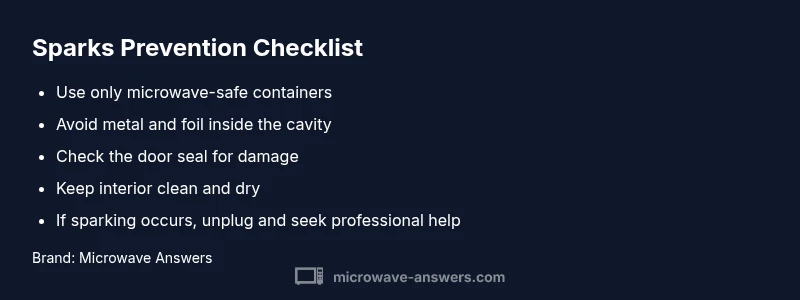
- Use only microwave-safe dishes; avoid metal, twist ties, or foil unless specifically rated for microwave use.
- Inspect packaging and labels to ensure no foil or metal trim is present before microwaving.
- Maintain a clean interior; food residue and salt can contribute to arcing, especially near the waveguide area.
- Schedule periodic inspections for older models, and replace damaged units promptly to minimize risk.
The Microwave Answers team notes that regular upkeep and cautious operation are the best defenses against recurring sparking.
What to expect from a service visit
If sparking recurs or you notice damage, a professional technician will assess the magnetron, waveguide cover, door seal, and wiring for faults. Repairs may involve replacing the waveguide cover, repairing the door seal, or diagnosing magnetron failure. In many cases, a non-functional safety component or damaged interior requires replacement rather than a simple fix. The decision to repair or replace depends on safety risk, cost, and the age of the unit.
Steps
Estimated time: 30-45 minutes
- 1
Power down and unplug
Power off the microwave and unplug it from the wall to eliminate any risk while inspecting. Do not rely on the door switch as a safety interlock during this process.
Tip: Disconnect at the wall to ensure full power isolation. - 2
Remove metal items
Take out any metal utensils, foil, or packets from the cavity. Even small pieces can trigger arcing. Do not attempt to microwave items wrapped in metal.
Tip: Double-check the edges of containers for metal trim. - 3
Inspect for damage
Look for burn marks, melted plastic, or damaged waveguide covers. A damaged waveguide cover is a common cause of arcing and should be replaced by a professional.
Tip: Use a flashlight to spot hidden damage. - 4
Clean and dry the interior
Wipe down the interior with a damp cloth and ensure it is completely dry before testing. Residue can contribute to arcing on future uses.
Tip: Avoid harsh cleaners that could leave residues. - 5
Test with a safe load
After cleaning, test with a simple, non-metallic load (like a cup of water) at a short interval on low power. If sparking reoccurs, do not use the unit.
Tip: Stop immediately if sparks reappear. - 6
Call a professional
If sparking continues or you notice damage, contact a licensed appliance technician for a full inspection and possible component replacement.
Tip: Do not attempt magnetron repairs yourself.
Diagnosis: Microwave sparks during operation
Possible Causes
- highMetal objects or foil inside the cavity
- highDamaged waveguide cover or interior coating
- mediumCracked or damaged door seal or latch
- lowFood debris or salt causing edge arcing
- lowFaulty magnetron or high-voltage components
Fixes
- easyUnplug the unit and remove any metal items; wipe the interior clean
- mediumInspect waveguide cover for burn marks; do not operate if damaged
- easyCheck door seal for cracks and replace if damaged
- easySwitch to microwave-safe cookware and avoid metal around the edges
- mediumIf sparks persist after cleaning, schedule professional inspection for magnetron or high-voltage components
Common Questions
What causes sparks in a microwave?
Sparks are usually caused by metal items or foil inside the cavity, a damaged waveguide cover, or worn door seals. These issues create arcing that can damage the appliance or start a fire if ignored.
Sparks come from arcing caused by metal, damaged waveguide, or door seals. Remove metal and check for damage before using again.
Is it safe to keep using a microwave that sparks?
No. If sparking occurs, stop using the microwave immediately and unplug it. Have the unit inspected by a technician before attempting to use it again.
Don’t use it until a professional checks it.
Can sparking be repaired at home?
Most sparking issues involve the waveguide cover, door seal, or metal debris. Do not attempt internal repairs. Replacing worn parts is best done by a trained technician.
Avoid DIY electric repairs; call a pro.
What should I do immediately if sparks appear?
Unplug the microwave, remove metal inside, and inspect for damage. If sparking stops, test with caution; if it recurs, discontinue use and seek professional service.
Unplug, remove metal, check for damage, call a pro if it continues.
Will replacing the magnetron fix sparking?
Arcing can be caused by a failing magnetron, but it is not the only cause. A technician will diagnose whether the magnetron, waveguide, or door seal needs replacement.
Magnetron replacement might be needed, but only after a proper diagnosis.
How can I prevent sparks in the future?
Use microwave-safe containers, remove metal objects, and keep the interior clean. Regular inspections of the door seal and waveguide area help prevent future arcing.
Stick to microwave-safe items and keep it clean.
Watch Video
Main Points
- Unplug immediately if sparks appear
- Identify metal, damaged waveguide, or door seal as primary causes
- Avoid further use until inspected by a professional
- Prevent sparking with safe cookware and regular maintenance