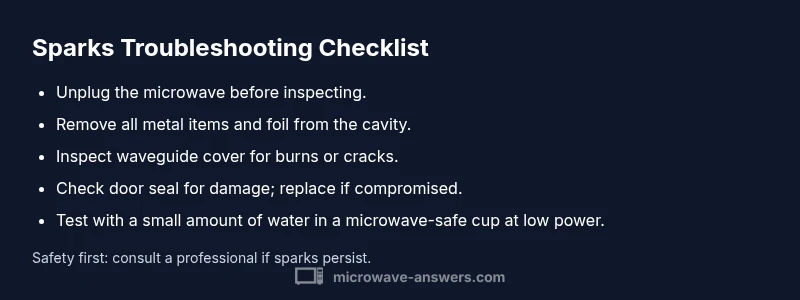
When Microwave Sparks: Quick Troubleshooting Guide
Learn how to diagnose and safely respond to sparks in your microwave, with practical steps, safety tips, and when to call a pro.


Immediate safety: when microwave sparks, stop using the unit, unplug it, and keep others away. The most common causes are metal or foil inside the cavity, damaged waveguide cover, or a failing magnetron. Do not operate with a cracked door seal or if you smell burning plastic. If sparks recur after removing foreign material, discontinue use and seek professional service.
What sparks mean and why they happen
Sparks in a microwave are a sign of an electrical arc, which occurs when electricity jumps across gaps or through conductive material inside the oven. The most frequent culprits are metal fragments or foil left in or on food, a damaged waveguide cover, or cookware with metallic trim. A spark can also originate from a failed magnetron, though this is less common in newer models. Regardless of the cause, arcing is a safety issue that warrants stopping use immediately. After you stop, unplug the unit and inspect the cavity only when you are sure the device is completely powered down. If you see metal, remove it carefully and dispose of the item if necessary. Clean any residue and look for signs of damage on the door seal and interior panels. Do not continue to operate the microwave if sparks return.
Immediate safety steps to take
- Stop the oven immediately and unplug it from the wall.
- Remove any dishes and check for metal objects in or on the food (foil, utensils, rings, or jewelry).
- Do not open the door if you still see sparks; allow the appliance to cool briefly and keep bystanders away.
- Inspect the interior for obvious metal fragments, scorch marks, or a damaged waveguide cover. If you spot damage, do not attempt to operate the unit again.
- If sparks stop after removing metal, reinsert only microwave-safe containers and run a short test on low power with no metal. If sparks return, discontinue use and call a professional.
Diagnose the likely causes
- Metal in the cavity or on cookware: This is the most common cause of arcing. Even a small speck of foil or a utensil edge can trigger sparks.
- Damaged waveguide cover: The waveguide directs microwaves; a damaged cover exposes conductive material that can arc.
- Faulty magnetron or high-voltage components: Less common, but these failures can cause sustained arcing and electrical smoke.
- Food with metal trim or magnetic sauce residues: Some processed foods contain metallic flecks or unusual packaging that can spark.
- Cracked or damaged door seal: If the seal is compromised, sparks and smoke can accompany thermal leakage.
Step-by-step fixes for the most common causes
- Remove all metal: Take out any foil, metal trim, or metal-containing dishes. Replace with microwave-safe plastic or ceramic containers.
- Inspect the waveguide cover: If you see scorch marks or damage, do not attempt a repair. A professional should replace the cover and inspect related components.
- Check the door seal and hinges: Look for cracks, gaps, or misalignment. If the seal is damaged, the unit should not be operated until repaired.
- Run a safety test: After clearing metal and confirming no obvious damage, run a short 30-second test at low power with a plain water-filled cup to observe normal operation. If any sparking or abnormal noises occur, stop and contact a technician.
- When in doubt, call a professional: Sparking can indicate serious internal problems. A trained technician can diagnose magnetron or HV transformer issues safely.
Prevention tips to reduce future sparking
- Use only microwave-safe containers and utensils; avoid metal trims and foil in all foods.
- Inspect cookware for damage or rough edges that could shave metal into the cavity.
- Keep the interior clean; crumbs and spills can cause uneven heating and arcing, especially near the waveguide opening.
- Do not operate the microwave if you notice burning odors, smoke, or visible damage; unplug and seek service promptly.
- Schedule regular servicing on older models to check the magnetron, diodes, and waveguide components before failures occur.
When to seek professional help and safety reminders
If sparks recur after cleaning and checking for obvious metal, or if you notice burning smells, smoke, or visible damage to the seal or interior components, stop using the microwave and call a qualified technician. Do not attempt internal repairs yourself, as high voltage components can cause injury. Until serviced, use alternative cooking methods and keep the unit unplugged when not in use. Safety first can prevent a potentially dangerous fire in your home.
Steps
Estimated time: 45-60 minutes
- 1
Power down and unplug
Immediately stop the microwave and unplug it from the wall. Remove any power source and wait a moment before inspecting. This reduces the risk of electric shock while you check for obvious hazards.
Tip: Never reach inside a powered microwave; wait until it is fully unplugged. - 2
Remove metal and inspect food
Take out the dish and check for foil, metal trim, or utensils. If found, remove and dispose. Wipe the cavity gently to remove any metal shavings that could trigger another arc.
Tip: Only use microwave-safe containers; avoid metal entirely. - 3
Check waveguide cover and door seal
Look for scorch marks or cracks on the waveguide cover and inspect the door seal for gaps. If you see damage, do not continue using the unit and arrange service.
Tip: A cracked seal can leak microwaves; do not bypass safety features. - 4
Test operation with water
After removing hazards, plug in and run a short 30-second test with a plain cup of water at low power. Observe for any new sparking, sounds, or unusual smells.
Tip: If anything seems off, power off immediately and unplug again. - 5
Call a professional
If sparks return or you notice burning odors, smoke, or visible damage, stop using the microwave and contact a qualified technician. Do not attempt to repair high-voltage components yourself.
Tip: Keep the model and symptoms handy when you call for service.
Diagnosis: Microwave emits sparks during operation
Possible Causes
- highMetal in cavity or on cookware
- mediumDamaged waveguide cover
- lowCracked door seal or damaged gasket
- lowFaulty magnetron or HV components
Fixes
- easyRemove all metal objects and foil; use microwave-safe containers only
- mediumInspect the waveguide cover for burns or cracks and replace if damaged
- easyCheck door seal and hinges for gaps; do not operate if damaged
- hardIf sparks persist, contact a professional technician for magnetron/high-voltage inspection
Common Questions
What causes arcing (sparks) in a microwave?
Arcing is typically caused by metal in or on food, damaged waveguide covers, or a failing magnetron. It can also be triggered by foil or metal trim on cookware. Always remove metal items and inspect the interior before using again.
Arcing is usually metal or component-related. Remove metal and inspect the interior before the next use.
Is it safe to use the microwave after sparks stop?
No. Sparks indicate possible internal damage. Unplug, inspect for hazards, and avoid use until a professional confirms it's safe. If any burning smells or smoke appear, call for service immediately.
No—unplug and have it checked before using again.
Can food cause sparking?
Yes, food with metal trim or foil, or utensils with metal can spark. Sugary sauces can also cause hotspots that look like sparks. Use only microwave-safe containers and avoid metal in foods.
Food can spark if it contains metal or foil. Stick to microwave-safe containers.
What should I do if sparks appear again after cleaning?
If sparks reappear after cleaning, unplug the unit and stop using it. Reinspect for metal fragments, damaged waveguide, or door seal. If the problem persists, contact a professional technician.
If sparks come back, unplug and call a technician.
When should I call a professional for sparking?
Call a professional if sparking continues after removing metal, or if you notice burning odors, smoke, or visible damage. Do not attempt high-voltage repairs yourself.
Persistent sparking requires a professional check.
Are there safer alternatives during a spark issue?
Yes. Use a conventional oven, stovetop, or toaster oven for heating while the microwave is serviced. Do not rely on the microwave during a sparking issue.
Use other cooking methods until serviced.
Watch Video
Main Points
- Unplug immediately when sparks occur and inspect for metal debris
- Sparks usually mean metal, damaged waveguide, or component failure
- Do not operate with damaged seals or after repeated sparking
- Professional service is required for persistent arcing