How to Handle Microwave Fire: A Practical Guide
Learn how to safely handle a microwave fire with actionable steps, safety tips, and prevention strategies for home kitchens. Quick actions, extinguisher use, and when to call for help.


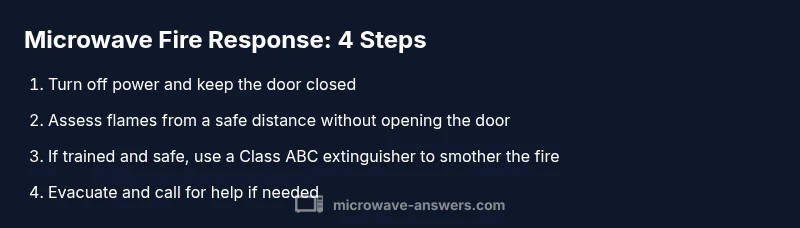
Goal: safely manage a microwave fire. Immediate actions include turning off power, unplugging if safe, keeping the door closed, and not opening the door while flames are present. If you have a Class ABC extinguisher, use it to smother the fire from a safe distance. If the fire grows or you’re unsure, evacuate and call emergency services.
What constitutes a microwave fire
According to Microwave Answers, a microwave fire typically occurs when overheated food, superheated liquids, or ignitable materials inside containers ignite due to trapped heat or arcing. In most home scenarios the flames are localized to the food or packaging and produce smoke rather than a spreading blaze. Understanding the basic signs—rapid smoke buildup, crackling sounds, or a visible flame through the door window—helps you respond quickly and safely. This section outlines the difference between a minor flare-up and a full-blown fire, and why acting promptly is essential to prevent injury, equipment damage, or evacuations. Always prioritize personal safety over saving cookware; if in doubt, evacuate and call for help.
Brand context note: The Microwave Answers team emphasizes that rapid recognition and calm action reduce risk. As fires evolve, your plan should rely on trained responses rather than improvisation.
Introduction to fire dynamics in microwaves also informs prevention strategies, such as avoiding metal or foil in a microwave and never running it empty with food, which can create dangerous arcing and heat buildup. By recognizing early indicators, you can stop a problem before it becomes a hazard.
Immediate actions: stop, assess, and respond
The moment you notice a potential microwave fire, cut power immediately. If safe to do so, unplug the appliance without standing in water or reaching into hot areas. Do not open the door while you see flames; opening can feed oxygen to the fire and intensify it. From a safe distance, assess whether the flames appear small and contained or large and spreading. If smoke is pouring out or you detect a strong odor of burning electrical components, evacuate everyone from the area and call emergency services. If the fire seems contained to the food and you have a rated extinguisher, stand back, aim at the base of the flames, and sweep in short bursts.
Key safety principle: only approach if you can do so from a safe angle without risking burns or electrical shock. If there is any doubt, prioritize escape over containment. A calm, systematic response reduces panic and improves outcomes.
Using a fire extinguisher safely: what you need to know
If you are trained and have a Class ABC (or BC) fire extinguisher, you can attempt to extinguish a contained microwave fire. Remember the PASS technique: Pull the pin, Aim at the base of the flames, Squeeze the trigger, Sweep side to side. Stand at a safe distance and keep your back to an exit. Do not tilt the appliance or shake the extinguisher to force discharge if it’s low. If the flames intensify or you are unsure of your ability to control the fire, evacuate immediately. After use, replace or repressurize the extinguisher according to the manufacturer’s instructions and ensure the area is ventilated.
Always prioritize personal safety: extinguishers are last-resort tools. If you smell burning plastic or see sparks, back away and call for help. Smoke from electrical fires can be more dangerous than it appears, and residual heat can re-ignite.
Microwave safety experts stress practice: know where your extinguisher is located, how to operate it, and when to evacuate rather than attempt combat. Maintenance checks and education reduce response time during an actual incident.
What not to do during a microwave fire
There are several common but dangerous errors people make during microwave fires. Do not ignore the problem or continue running the microwave, as this can fuel the blaze. Never pour water on an electrical fire; water conducts electricity and can cause a shock. Avoid lifting the microwave or sliding it out of the cabinet while flames are visible, as movement can feed oxygen to the fire or cause injuries. Do not attempt to remove the burnt food with bare hands while it’s hot or emits toxic fumes. If you suspect the electrical components are involved, do not disassemble the appliance. Instead, evacuate and contact emergency services.
Prevention-oriented behavior matters: staying calm reduces mistakes. If a fire is detected early but not controllable, it is safer to evacuate and allow professionals to handle the situation.
After the flames are out: safe cleanup and vents
Once the fire is extinguished and the area has cooled, ventilate the kitchen to disperse smoke and odors. Do not reuse the microwave until it has been inspected for damage. Wipe the interior with a damp cloth to remove soot, and inspect the vent and filters for blockages. If plastic melted onto the interior or if wiring smells singed, do not operate the unit; unplug it and arrange professional service. Keep a written incident log: date, time, what was cooking, actions taken, and any injuries. These notes help you identify patterns and prevent reoccurrence.
If you own a smoke alarm near the kitchen, ensure it remains operational. If you experienced smoke or heat exposure, seek medical advice for potential inhalation effects. A post-incident review of your kitchen layout and usage habits can guide safer replacements or safer cooking practices in the future.
Prevention strategies to minimize future incidents
Prevention starts with careful food choice and container handling. Avoid plastic containers that are not microwave-safe and never use metal or foil. Choose microwave-safe glass or ceramic dishes with loose lids to allow steam to escape. Cover food with a vented lid or microwave-safe paper towel to reduce splattering while allowing heat to escape. Avoid overheating foods; use appropriate power settings and short intervals, checking progress between cycles to prevent ignition. Regularly clean the interior to remove fat buildup or crumbs that can ignite. If your microwave is older or shows signs of wear—burnt smells, charring, or unusual noises—schedule servicing or replacement. An inspection can identify degraded wiring insulation or compromised components that pose future risks.
Microwave Answers analysis shows that consistent maintenance, proper container use, and mindful timing significantly reduce fire risk. Educational resources from reputable safety organizations recommend routine checks and a clear kitchen plan so family members know how to react in an emergency. By adopting a simple daily routine—check containers, stir or rotate foods, and monitor during high-risk tasks—you decrease the chances of a fire starting at home.
Building a simple safety plan for your kitchen
Create a short, multilingual safety plan for your household that includes: who to notify in an emergency, where fire extinguishers are located, how to reach the nearest exit, and when to call emergency services. Establish a 2-3 minute drill to practice shutting off power, assessing flames, and evacuating safely. Place a compact, easy-to-read checklist on the refrigerator and near the microwave that recaps the key steps: power off, door closed, assess from a distance, extinguish if trained, evacuate if unsure. Train family members on these steps so everyone can react quickly and consistently. Finally, bookmark reputable safety resources in your browser for quick reference during an incident.
The role of smoke detectors and ventilation
Proper ventilation helps reduce smoke buildup and improves safety during a microwave fire. Use the kitchen exhaust fan only after you confirm it won’t fan flames toward you. Smoke detectors in nearby areas should be tested monthly and replaced as recommended by the manufacturer. A connected home safety plan can alert you quickly if smoke is detected in the kitchen, which is critical if you are not nearby when a fire starts. Regular maintenance of detectors and proper kitchen ventilation minimizes exposure to smoke and reduces the risk of severe injuries. Integrating a clear plan with routine checks ensures you are prepared to act decisively when needed.
Tools & Materials
- Class ABC fire extinguisher(Keep within easy reach in the kitchen; ensure it’s charged and not past its expiration date.)
- Heat-resistant oven mitts(Thick, well-fitting mitts to protect hands when approaching hot surfaces.)
- Fire blanket (optional)(Useful for smothering small flames if extinguisher is unavailable.)
- Baking soda (optional)(Can help smother small flames; do not rely on this for larger fires.)
- Phone or emergency contact(Have a way to call for help quickly if needed.)
Steps
Estimated time: Total time: 5-15 minutes
- 1
Power off and secure the area
If safe to do so, turn off the microwave and unplug it. Keep bystanders away and avoid touching hot surfaces. This reduces the supply of energy to the fire and lowers the risk of electric shock.
Tip: Unplug only if you can do it without entering the hot zone. - 2
Assess flames from a safe distance
Stand back and observe whether flames are visible or if there is only smoke. Do not open the door while flames are present; opening the door can feed the fire with air.
Tip: If you can’t assess safely, evacuate immediately. - 3
Smother with a fire extinguisher (if trained)
If the fire is small and you are trained, use the extinguisher to target the base of the flames with a sweeping motion. Keep your back to an exit as you operate.
Tip: Aim at the base of the flames and sweep; short bursts are effective. - 4
Evacuate if the fire grows or you’re unsure
If flames intensify, smoke is heavy, or you cannot approach safely, evacuate and call emergency services. Close interior doors behind you to slow spread.
Tip: Do not hesitate to call for help; professional responders should assess any sign of danger. - 5
Ventilate and cool the area
After the flames are out, ventilate the area to clear smoke and odors. Allow the microwave to cool completely before inspecting for damage.
Tip: Do not reuse the unit until it’s inspected by a professional. - 6
Inspect and document the incident
Note what was cooking, the steps you took, and any injuries or damages. Use this record to adjust your safety plan and container choices for future use.
Tip: Keep a simple incident log for reference. - 7
Return to normal with safety enhancements
Replace damaged components, review safety tips with household members, and consider a kitchen safety drill to reinforce procedures.
Tip: Schedule regular checks and practice drills to maintain preparedness.
Common Questions
What should I do first when I notice a microwave fire?
The first action is to cut power and keep the door closed. Do not open the door if flames are present. If you can do so safely, unplug the microwave and assess whether it’s controllable with a Class ABC extinguisher. If not, evacuate and call emergency services.
First, cut the power and keep the door closed. If you can do so safely, unplug it and assess the flames. If unsure, evacuate and call for help.
Is it safe to unplug a running microwave during a fire?
Unplugging can remove the electrical supply, which helps reduce the risk of shock. Do this only if you can reach the plug safely without entering the hot area. If the flames are large or you cannot reach the plug safely, evacuate and seek emergency assistance.
Only unplug if you can do it safely. If not, evacuate and call for help.
Can I use water to put out a microwave fire?
No. Water conducts electricity and can cause a shock or spread the fire. Use a Class ABC extinguisher if you are trained; otherwise, evacuate and contact emergency services.
No—water is dangerous on electrical fires. Use an extinguisher if trained, or evacuate.
What if the door is sealed and flames are inside?
Do not force the door open. Leave the area and call for help if flames persist. Evacuate and rely on professionals to handle the situation.
Don’t force the door. Leave the area and call for help if flames stay.
When should I call emergency services?
Call emergency services if flames are spreading, smoke is heavy, or you cannot safely control the situation. Even if you think the fire is small, professional assessment is prudent.
Call emergency services if it’s getting bigger or you’re unsure how to handle it.
How can I prevent microwave fires at home?
Use microwave-safe containers, avoid overheating, and never put metal in the microwave. Regularly inspect the appliance and keep a simple safety plan for your household.
Prevent fires with safe containers, proper heating, and regular checks.
Watch Video
Main Points
- Act quickly: power off and keep the door closed during a microwave fire
- Use an extinguisher only if trained and safe; otherwise evacuate
- Never use water on electrical fires; call emergency services if in doubt
- Ventilate after the fire is out and inspect for damage before reuse
- Prevent fires by using microwave-safe containers and proper heating practices