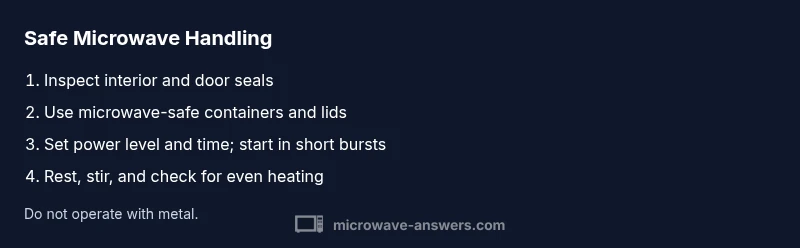
How to Handle Microwave Oven: Safe Use and Maintenance
Discover practical, safety-focused steps to handle microwave oven use, cleaning, and maintenance for everyday cooking. Includes setup, operation tips, safety checks, and troubleshooting.


This guide shows you how to handle microwave oven safely and effectively. You will learn proper setup, everyday operation, maintenance, and safety practices to prevent injuries and kitchen mishaps. By following these steps, home cooks can minimize fire risk, improve energy efficiency, and extend appliance life. The article also covers storage, cleaning, and troubleshooting common issues.
Safe Handling Fundamentals
Safe handling of a microwave oven starts with understanding its design, how heat is generated, and what can go wrong if rules are ignored. According to Microwave Answers, safety begins with proper installation, stable placement, and using the correct cookware. Always place the unit on a flat, non-slip surface with at least 6 inches of clearance on all sides to allow heat to escape. Check that the door seals are intact and that the turntable rotates smoothly. Before first use, read the manual and verify that your outlet can support the wattage. Regular checks of the cord and plug help prevent electrical hazards, and never operate the microwave if you notice stray odors, smoke, or unusual buzzing.
Containers, Covers, and Food Prep
Choose cookware labeled microwave-safe: glass, ceramic, or BPA-free plastic. Avoid metal, aluminum foil, or dishes with metallic trim, as they can cause arcing and damage the magnetron. Use vented covers or microwave-safe lids to trap moisture and prevent splattering; leave a small vent for steam. When wrapping food, avoid plastic wrap that touches the food; instead cover loosely with a lid or damp paper towel. Cut foods into evenly sized pieces for even heating and stir halfway through heating to minimize cold spots. Always remove containers carefully using oven mitts, and avoid overheating thin plastics that warp or leak chemicals. By sticking to microwave-safe materials, you reduce the risk of chemical transfer and uneven cooking.
Proper Setup: Placement, Ventilation, and Power
Position the microwave on a stable surface away from water sources and heat sources like stovetops. Allow at least 6 inches of clearance on all sides and 12 inches above where feasible to help heat escape. Use a grounded outlet; avoid extension cords that can overheat. Ensure the door seals are clean and undamaged; a compromised seal can leak microwaves and pose burns risk. If your unit has a rotating turntable, confirm it spins freely during operation. Always plug in and operate the microwave only when you are present to monitor it, and unplug before cleaning or moving it.
Operating Tips: Power Levels, Timing, and Food Arrangement
Most reheating tasks benefit from medium to medium-high power (about 70%). Start with short bursts (1–2 minutes) and check progress; continue in 30–60 second increments if needed. Stacking or layering food can block microwaves; spread food into a single, even layer and use a shallow, wide dish for better heat distribution. If the food contains varying moisture, consider covering with a vented lid to trap steam while avoiding soggy textures. Let hot foods rest for 1–2 minutes after heating to allow the heat to distribute evenly.
Cleaning and Maintenance Routines
Wipe the interior after each use with a damp, non-abrasive cloth to remove spills before they bake on. Use a mild dish soap solution or a mixture of water and vinegar for stubborn stains; avoid harsh chemicals that can disperse fumes. Remove the turntable and wash it separately in warm soapy water; dry thoroughly before reinstalling. Check the door seals and gasket for cracks or food debris monthly; clean them gently with a soft brush. Schedule a deeper clean quarterly, including vents and the exterior control panel, while the unit is unplugged.
Defrosting and Frozen Foods Safely
Defrost by weight using the microwave's defrost setting or a manual time lower than full power; check every few minutes and rotate items for even thawing. Frozen foods should be transferred to microwave-safe containers or plates as they thaw to prevent juices from leaking into the microwave. Avoid defrosting sealed packages; vent the packaging to prevent bursting. Once thawed, cook promptly to ensure safety and quality.
Avoid Common Microwave Mistakes
Never operate an empty microwave; energy has no food to absorb and can damage the magnetron. Do not seal containers tightly during heating; pressure buildup can cause containers to burst. Avoid heating eggs in shells, whole potatoes, or closed jars; vent or perforate to prevent pressure build-up. Do not rely on the microwave for sterilization; heat-sensitive items may be damaged, and food safety can degrade. Keep kids from pressing random buttons; use a simple, measured protocol.
Safety for Kids and Pets
Supervise children when using the microwave; teach them to place, cover, and check the time with an adult. Keep cords out of reach and avoid letting pets near hot dishes or the appliance when in use. Store cleaning products separately and never operate the microwave near flammable items. Encourage clean habits like wiping spills immediately and washing hands after handling hot foods to reduce burns risk.
Energy Efficiency and Cost Awareness
Microwave efficiency comes from minimizing cook time and avoiding standby energy waste. Use appropriate power levels, cut foods to uniform sizes, and cover dishes to reduce moisture loss and heating time. Unplug the microwave if you won't use it for extended periods; this reduces phantom draws and protects against electrical faults. In many kitchens, a well-maintained microwave saves time and energy compared with alternative cooking methods.
Troubleshooting Common Problems
If the turntable stops rotating, check the roller ring and track for obstructions and ensure the glass plate sits properly. Uneven heating may indicate uneven food placement, an overloaded dish, or a faulty magnetron; try spreading food more evenly and rotating mid-cycle. A burning smell or smoke signals an overheating issue—immediately stop, unplug, and inspect for spills, damaged seals, or burnt circuitry. If you hear buzzing or see sparks, discontinue use and consult a professional service; never operate a damaged microwave. For odor, clean interior with baking soda solution and ensure proper ventilation.
Storage, Replacement, and Extending Lifespan
Storing or moving a microwave requires careful lifting to avoid injury; bend knees, keep the back straight, and use two hands. Inspect the door seals and hinges yearly; replace worn gaskets promptly to maintain safety and efficiency. If the unit shows persistent electrical issues, frequent sparks, or persistent odors despite cleaning, consider replacement rather than risky repairs. Keep the exterior clean using a soft cloth and avoid moisture on control panels. Regular maintenance prolongs lifespan and reduces the risk of malfunctions.
Fire, Sparks, and Odors: Immediate Actions
If you see smoke or hear popping sounds, turn off and unplug the microwave immediately and keep the door closed to suffocate flames. Do not open the door during active flames; wait for them to subside before opening. If safe, use a fire extinguisher rated for kitchen fires (class ABC) or baking soda to suppress flames; call emergency services if the fire grows. Ventilate the room, remove combustibles, and check for lingering odors after the incident. After the event, have the unit inspected by a professional before reuse.
Disposal and Recycling
When an appliance is beyond repair, contact local recycling programs to determine safe disposal. Remove any magnetron shielding, unplug the unit, and transport to a certified e-waste facility. Do not dismantle or dispose of hazardous components in household trash. Check manufacturer guidelines for trade-in or take-back programs; if available, they offer the most responsible option for reuse or recycling.
Quick-Reference Safety Checklist
- Use microwave-safe containers only
- Do not operate empty
- Stir and rest for even heating
- Keep door seals clean and intact
- Do not heat sealed containers
- Avoid metal and foil
- Clean spills promptly
- Unplug before cleaning
Tools & Materials
- Microwave-safe cookware (glass, ceramic, or BPA-free plastic)(Label clearly; ensure items are microwave-safe)
- Microwave-safe lid or vented cover(Reduces splatter; leaves a small vent for steam)
- Dish towel or heat-resistant oven mitts(For handling hot containers and covers)
- Soft sponge and mild dish soap(For interior cleaning; avoid abrasive cleaners)
- Timer or kitchen clock(Precise timing helps prevent overcooking)
- Fire extinguisher (class ABC) or baking soda(For kitchen fires—keep accessible)
- Grounded outlet and proper wall outlet(Avoid extension cords; ensure adequate amperage)
Steps
Estimated time: 30-60 minutes
- 1
Inspect and clean the interior
Wipe the interior with a damp cloth and check the door seals for damage before loading food. Remove any food debris from the turntable track and ensure the plate sits flat. This prevents hotspots and mechanical wear during operation.
Tip: Clean spills immediately to prevent baked-on stains and odors. - 2
Choose proper cookware
Select microwave-safe dishes and lids; avoid metal or foil. Check labels and test unfamiliar items by microwaving a small amount of water for 10 seconds to verify heat resistance.
Tip: When in doubt, err on the side of glass or ceramic. - 3
Place food evenly
Spread food in a single layer on a shallow dish to maximize microwave exposure. Avoid stacking; use a larger plate or splitting portions if necessary. For liquids, use a wide container to reduce boiling over.
Tip: Stir or rotate halfway through heating for even cooking. - 4
Set power level and time
Begin with the recommended time and 70% power for reheats; adjust by 30-second increments. Use shorter bursts and check progress to avoid overcooking.
Tip: High-moisture foods may need lower power to prevent drying out. - 5
Start and monitor
Run the cycle, watching for unusual noises or smells. Do not leave the microwave unattended for long periods, especially with unfamiliar foods.
Tip: If you notice smoke, press the stop button immediately and unplug. - 6
Rest and check heat distribution
Let the food stand for 1–2 minutes after heating; heat redistributes, reducing hot spots. Check the center with a thermometer if safety matters for meat and leftovers.
Tip: Resting improves texture and safety. - 7
Clean after use
Wipe spills, clean the turntable, and dry all components before storage. Avoid leaving moisture on control panels to prevent corrosion.
Tip: Regular maintenance saves time and extends appliance life. - 8
Electrical care
Inspect the cord and plug for damage; do not use if frayed. Use a properly rated outlet; avoid running on damaged circuits or with extension cords.
Tip: Unplug before moving the unit to prevent shocks. - 9
Emergency readiness
Know how to respond to fire or sparks: unplug, keep the door closed, and evacuate if necessary. Have a kitchen-approved extinguisher ready.
Tip: Practice a simple, calm plan with all household members.
Common Questions
Is it safe to microwave metal or aluminum foil?
No. Metal reflects microwaves and can cause arcing, sparks, and damage. Small exceptions exist but avoid metal.
No. Avoid metal; it can cause sparks and damage.
How long should leftovers be heated in a microwave?
Times vary by food, quantity, and wattage, but start with 1–2 minutes, check, and stir; repeat in 30–60 second increments as needed.
Start with 1–2 minutes and check, stirring as needed.
Can I run the microwave empty to test it?
No. Running an empty microwave can damage the magnetron. If in doubt, consult the manual or a professional.
Avoid running empty; it can damage the microwave.
What should I do if the microwave sparks?
If sparks appear, stop the cycle, unplug, and inspect for metal or foil. If the issue persists, seek service.
Stop the cycle and unplug; inspect for metal or foil.
How often should I clean the microwave?
Wipe it down after use and do a deeper clean monthly to prevent odors and buildup.
Wipe after use, deep clean monthly.
What cookware is safe for microwaving?
Use glass, ceramic, or microwave-safe plastic; avoid metal, foil, and cookware with metallic trims.
Use microwave-safe materials like glass or ceramic.
Watch Video
Main Points
- Start with safe setup and containers
- Avoid metal and sealed containers
- Stir and rest for even heating
- Clean interior regularly to prevent odors
- Know how to respond to fire or sparks