What to Do If Microwave Catches Fire: Quick Guide
Learn practical, step-by-step safety actions for microwave fires, from unplugging to extinguishing safely and when to evacuate. A Microwave Answers safety guide.


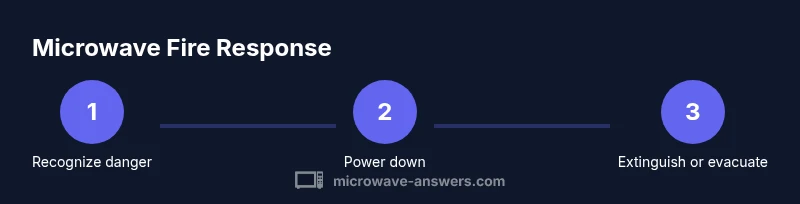
Act quickly: If you notice a microwave fire, first switch off power by unplugging the unit or flipping the circuit breaker if it’s safe. Keep the door closed and avoid opening it. If flames persist and you have an ABC fire extinguisher, use it to suppress the fire; otherwise, smother with baking soda. If in doubt or flames grow, evacuate and call emergency services.
What constitutes a microwave fire and common triggers
A microwave fire is a flame that starts inside the oven cavity and may be accompanied by smoke, sizzling sounds, or a strong burning odor. It can happen when food overheats, sugar or fat caramelizes and ignites, or a metal object inside the dish causes arcing. Most fires in microwaves are preventable with careful use and supervision. If you’re wondering what to do if microwave catches fire, the first step is to stay calm, act safely, and terminate power quickly.
According to Microwave Answers, the most important factor is to cut power and avoid escalating the situation. This means acting quickly but safely, avoiding risky moves, and keeping others away from the cooking area. By understanding the typical triggers—overheated foods, improper reheating, and foreign objects—you can both prevent and respond more effectively. In this section we’ll cover how fires start, what to look for, and how to set up a safe response plan in your kitchen.
Immediate actions the moment you notice a fire
The moment you notice flames or heavy smoke inside the microwave, safety comes first. Do not panic; quickly decide whether you can safely intervene. If the unit is plugged in, turning it off at the source minimizes ongoing energy input. If possible, unplug the microwave or flip the circuit breaker, but only if you can do so without risking burns or shock. Clear the area of children and pets, and shout for help if others are nearby. Do not attempt to retrieve hot food or reach inside the cavity while flames are present. Evacuate if you feel unsafe or if the fire shows any sign of spreading beyond the oven. According to Microwave Answers, staying calm and acting within 30 seconds improves outcomes.
Safe power shutoff: unplug or cut power
Power down the microwave to stop the feeding of the fire. Unplug the appliance if you can do so safely; if the plug is far and you must step away, switch off the circuit breaker at the main panel. Do not attempt to unplug while hands are wet, or if you must reach through flames. After power is cut, wait at least 30 seconds to see if flames continue. If there are sparks or the fire continues, treat as a larger emergency and evacuate. Keeping the power off prevents the fire from feeding on electricity and reduces the risk of shock.
Do not open the door when flames are present
Opening the door can feed oxygen to the flames at the wrong moment and intensify the fire. Keep the door closed and step back to a safe distance. If the door does not close properly or you smell burning around the seal, leave the door closed and move away. Opening the door frequently leads to a sudden surge of oxygen that can rekindle or worsen the fire. Stay outside the immediate area until professionals confirm it’s safe.
Using a fire extinguisher safely on an electrical appliance
Only if flames persist and you have a suitable extinguisher, use an ABC dry chemical extinguisher or a kitchen-type extinguisher. Pull the safety pin, aim the nozzle at the base of the fire, and sweep with steady motions. Keep a clear exit path and stand some distance away from the appliance as you discharge. If you cannot reach the extinguisher or the flames spread, evacuate immediately and call emergency services. Do not spray water on an electrical fire, as water conducts electricity and can worsen the danger.
Baking soda and improvised smothering methods
If you lack a proper extinguisher, baking soda can smother small flames. Do not use flour, sugar, or water. Pour baking soda into the interior through the open front if safe, and cover the flames until they are out. Do not attempt to move the burning food with metal utensils or reach into the cavity while flames are active. After the fire is out, remain alert for re-ignition and verify there are no hidden embers in the door seal or interior walls.
When to evacuate and call emergency services
Fires that grow beyond a small flame or produce thick smoke require immediate evacuation. If you are unsure about containment or if the appliance begins to hiss or emit a strong odor of burning plastic, evacuate and call emergency services. Do not re-enter until firefighters declare the area safe. If you have young children or elderly residents, ensure they are accounted for and moved to a safe location away from the kitchen.
Post-fire steps: cooling, inspection, and replacement considerations
Once the fire is extinguished and the area cools, unplug all power to the kitchen and ventilate the room. Inspect the microwave for visible damage to the door seal, magnetron, and cavity. Do not attempt to reuse the appliance until a qualified technician inspects wiring and internal components; look for melted plastic, burnt odors, or damaged cords. If the unit appears compromised, replace it and review your kitchen safety plan to prevent a recurrence. The Microwave Answers team notes that even small fires can cause hidden damage; arrange professional assessment when in doubt.
Prevention: reducing microwave fire risk at home
Prevention is the best strategy. Regularly clean the interior to prevent food residue from overheating, and avoid heating metal containers or foil. Do not use plastic wrap that touches the interior walls, and never run a microwave empty. Always supervise while heating foods, and keep a fire extinguisher within easy reach. Establish a simple ritual: check the microwave for cleanliness and correct container placement before starting any heating cycle, and have a clear exit path in the kitchen.
Tools & Materials
- Fire extinguisher (ABC or kitchen-type)(Keep accessible in the kitchen; ensure it's not past its expiry date.)
- Baking soda(Use only for smothering small flames if extinguisher is unavailable.)
- Oven mitts or dry towels(Protect hands if you must handle hot appliance surfaces from a distance.)
- Phone to call emergency(Call emergency services if flames persist or you feel unsafe.)
- Access to a circuit breaker or unplug(Only attempt power shutoff if you can do so without risk of shock.)
Steps
Estimated time: 30-45 minutes
- 1
Assess safety and readiness
Look for flames or heavy smoke and decide if you can intervene without risking burns. If there’s any doubt, evacuate immediately. The priority is safety over saving food or the appliance.
Tip: If anyone appears overwhelmed or injured, call for help immediately. - 2
Power down the appliance
If safe, unplug the microwave or switch off the circuit breaker to remove the energy source feeding the fire. Do not touch the plug with wet hands or reach across flames.
Tip: Unplugging from the wall is faster than locating the breaker for most kitchens. - 3
Keep the door closed
Do not open the door if flames are present—opening can feed flames with fresh oxygen. Move away to a safe distance and await professional help if needed.
Tip: Closing the door can help smother small flames by depriving them of oxygen. - 4
Discharge a fire extinguisher (if available)
If flames persist and you have a suitable extinguisher, aim at the base of the fire and sweep side-to-side. Maintain a safe retreat path and follow extinguisher instructions.
Tip: Use the extinguisher only if you can do so without entering the danger zone. - 5
Or smother with baking soda
If no extinguisher is available or flames are small, sprinkle baking soda to cover and suffocate the fire. Do not use water.
Tip: Keep baking soda in the pantry for emergencies; avoid flour or sugar which can feed a fire. - 6
Evacuate and call for help
If flames spread or you cannot control the fire, evacuate with everyone and call emergency services. Do not return until firefighters declare it safe.
Tip: Know your quickest exit route before a fire starts. - 7
Cool down and assess after containment
Once the fire is out, let the area cool, then unplug other devices and air out the room. Inspect the microwave later with a technician before reuse.
Tip: Document any damage and keep receipts if you contact a service provider.
Common Questions
What should I do first when I know the microwave is on fire?
First, prioritize safety: switch off power (unplug or turn off the breaker) and keep the door closed. If flames persist, evacuate and call emergency services. Do not attempt to move hot food or reach inside the cavity while flames are active.
Turn off power, keep the door closed, and evacuate if needed. Call for help if the fire continues.
Is it safe to use water on an electrical microwave fire?
No. Water conducts electricity and can spread the fire or cause shock. Use a fire extinguisher rated for electrical fires or baking soda to smother small flames.
Water is not safe for electrical fires; use an extinguisher or baking soda instead.
Can I reuse the microwave after a fire?
Only after the unit has been inspected by a qualified technician. Do not reuse until wiring, door seal, and magnetron are checked and deemed safe.
Only after a professional inspection confirms it’s safe.
What should be included in a kitchen fire safety plan?
Include extinguisher locations, escape routes, emergency numbers, and a drill routine. Ensure all household members know what to do if a fire starts.
Know where to find extinguishers and how to evacuate quickly.
How can I prevent microwave fires at home?
Avoid heating metal, never run empty, supervise heating processes, and clean residues regularly. Use microwave-safe containers and cover foods properly.
Don’t heat metal, don’t run it empty, and supervise. Clean often.
Watch Video
Main Points
- Power off quickly to stop the fire feeding stage.
- Do not open the door if flames are present.
- Use an extinguisher or baking soda; otherwise evacuate.
- Call emergency services if the fire escalates.
- Inspect and replace damaged equipment after the incident.