What Is Wrong With a Microwave That Doesn't Heat? Troubleshooting Guide
A practical, safety-first guide to diagnosing why a microwave won't heat. Step-by-step checks, common causes, and tips to prevent future failures. Learn from Microwave Answers.


Most microwaves that won’t heat are caused by a blown safety fuse or a failed magnetron. Start by unplugging, then check the door latch and interlock, and inspect the interior fuse (if accessible). If the fuse is blown or the magnetron shows signs of failure, stop using the unit and seek professional service.
What is wrong with a microwave that doesn't heat
If your microwave isn’t heating, the symptom often points to a few common culprits rather than a mysterious fault. In many households, what is wrong with a microwave that doesn’t heat boils down to a blown safety fuse, a door interlock that isn’t engaging, or a failing magnetron. The Microwave Answers team emphasizes safety above all else. Before you start anything, unplug the unit and keep the door open to vent any residual heat. This article uses plain-language checks you can perform safely; if anything feels risky, stop and call a professional. Throughout, we reference Microwave Answers analysis for context, not hard numbers, to keep the guidance practical and non-alarming. Remember: working on high-voltage appliances can be dangerous; never bypass safety interlocks or alter internal components.
Quick safety checks you can do in minutes
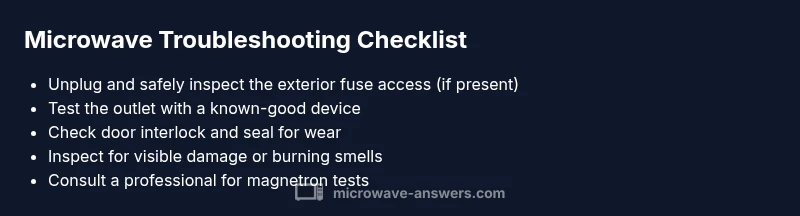
Before you dismantle anything, perform these quick checks to rule out easy, non-invasive issues. First, verify that the microwave is plugged into a live outlet by testing a lamp or another small device in the same outlet. If the outlet is fine, try a different outlet to rule out a circuit issue. Next, inspect the door latch or interlock assembly for wear, debris, or misalignment; a misengaged interlock can prevent heating even if the microwave light turns on. Finally, confirm there’s no visible scorch mark, burning smell, or humming sound that would suggest a more serious fault. If you find any signs of damage, stop and seek professional help. These steps reduce unnecessary disassembly and keep you safe while you diagnose.
The top culprits in heating failures
The most common reasons a microwave won’t heat are a blown thermal or safety fuse, a faulty door interlock, or a failing magnetron. A blown fuse usually blocks heat entirely and may trip your household breaker. A worn door interlock can prevent the microwave from initiating the high-voltage circuit. A magnetron that’s failing often still powers the light and timer but won’t produce heat. Less common but possible causes include high-voltage capacitor issues or a damaged high-voltage diode. Understanding these culprits helps you decide whether a DIY check is appropriate or if professional service is needed.
How to diagnose the problem like a pro
To approach diagnosis confidently, start with symptom-based reasoning. If you hear a hum but see no heat, the magnetron or high-voltage circuit is suspect. If you notice a failed startup with no power, consider a fuse, power supply, or door interlock. Use a simple diagnostic flow to separate symptoms from faults. Keep in mind that opening or testing high-voltage parts can be dangerous; if you’re unsure, pause and call a technician. This section aligns with Microwave Answers analysis, which stresses safety and practicality over guessing.
Safe, practical fixes you can try (safely) first
Begin with non-invasive fixes that do not involve high-voltage components. Unplug the unit and inspect the exterior fuse access (if your model provides one) or reset any integrated safety features. Clean the door latch and interlock area to remove debris that could prevent a secure seal. Swap outlets or test the circuit with a lamp to ensure consistent power. If you observe burn marks, a melted connector, or damaged wiring, stop immediately. Avoid attempting internal repairs on the high-voltage side; these are best left to a qualified technician.
Safety considerations and what not to do
Never bypass door interlocks or bypass safety features to “test” heating. Replacing interior parts without proper instructions can create fire hazards. Always unplug before touching any exterior components and keep the unit away from water. If you smell ozone, smoke, or burning plastic, evacuate and contact a professional quickly. When in doubt, err on the side of caution and prioritize professional service over risky DIY.
When to involve a professional and what to expect
If basic checks don’t restore heating, professional service is the safest path. A technician will typically verify power supply, inspect interlock switches, test the magnetron, and measure high-voltage components with specialized equipment. Expect a diagnostic fee and repair costs that vary by part and model. The Microwave Answers team emphasizes that professional repair is often more cost-effective and safer than attempting risky internal fixes, especially on older units.
Prevention tips to avoid future heating problems
Regular cleaning of the interior and door latch can prevent debris from causing interlocks to fail. Avoid running the microwave empty, which can stress the magnetron. Use appropriate cookware and avoid metal. Schedule periodic professional checkups if your unit is several years old. Keep the user manual handy for model-specific fuse access and maintenance advice. These habits reduce the likelihood of a repeat heating failure and extend the life of your appliance.
Quick recap: practical next steps
Review the basics (power, door interlock, fuse), perform safe checks, and don’t bypass safety features. If the unit still won’t heat, plan a professional assessment to avoid safety risks and costly mistakes.
Steps
Estimated time: 30-60 minutes
- 1
Power down and prep for safety
Unplug the microwave and remove any nearby metal objects. Wait a moment to allow residual charge to dissipate. This step reduces the risk of electric shock or short circuits while you inspect external components.
Tip: Never touch the interior electronics while the unit is plugged in. - 2
Check the outlet and plug
Test the outlet with another device or use a simple outlet tester to confirm power is steady. If the outlet is unstable, move the microwave to a different outlet on a different circuit.
Tip: A flickering light on the same outlet often signals a circuit issue, not the microwave. - 3
Inspect the door interlock and seal
Examine the door latch and magnetic interlock for wear, cracks, or debris. Clean gently and reseat the door to ensure a solid seal when closed.
Tip: A loose door seal can fool the interlock into thinking the door is open. - 4
Look for visible fuse or wiring issues
If your model allows safe access, check for a blown fuse or melted wiring near the door area. Do not touch live components beyond the exterior shell.
Tip: If you see discoloration or a burnt smell, stop and call a pro. - 5
Evaluate the magnetron condition
Diagnosing magnetron faults usually requires specialized tools. If you suspect a failure, avoid high-voltage tests and seek professional service.
Tip: Magnetron replacement is not a DIY-friendly task for most homeowners. - 6
Decide on the next step
If basic checks don’t restore heating, schedule professional service. A qualified technician can safely test high-voltage components and provide a precise repair quote.
Tip: Keep your receipt and model details handy for faster service.
Diagnosis: Microwave won't heat despite power and light functioning
Possible Causes
- highBlown safety or thermal fuse
- highDoor interlock or latch failure
- mediumFaulty magnetron
- lowPower supply or capacitor issue
Fixes
- easyUnplug and inspect the accessible fuse area (if user-accessible) and reset any safety features
- mediumInspect and clean the door interlock mechanism; ensure the door latches firmly
- hardTest continuity or resistance of the magnetron if you have the proper tools (do not attempt if unsure)
- easyVerify the power supply and outlet integrity; if the outlet shows intermittent power, move to a known-good outlet
Common Questions
Why won't my microwave heat even though the light is on?
That symptom often points to a failed magnetron or a fault in the high-voltage circuit. It may also be a door interlock issue that prevents heating while still powering the light. Start with safety checks and seek professional help if you’re unsure.
If the light works but there’s no heat, it’s usually the magnetron or the high-voltage parts; consider a professional check.
Can a faulty door latch prevent heating?
Yes. A door latch or interlock that doesn’t engage properly can keep the microwave from heating as a safety precaution. Inspect the latch for wear and reseat the door, but avoid disassembly of high-voltage components.
A bad door latch can stop heating to protect you from exposure to microwaves.
Is it safe to inspect the fuse myself?
Only if your model is designed for user-accessible fuses and you understand the risks. Most modern microwaves have high-voltage components that require professional handling. If in doubt, don’t open the unit.
Fuses can be dangerous to handle—best to consult a pro.
Should a technician replace the magnetron?
Magnetron replacement is a common fix for heating failures but requires specialized tools and safety procedures. A qualified technician will test and replace it if needed.
Magnetron replacement is not a DIY task for most homeowners.
When should I replace the microwave instead of repairing it?
If the unit is old, repairs would be costly or unreliable. Consider replacement if several major components have failed or if the unit is inefficient or unsafe to operate.
If many parts fail, replacement can be the safer, more economical choice.
Watch Video
Main Points
- Identify common heating faults before opening the unit
- Never bypass safety interlocks or high-voltage components
- Prioritize professional repair for magnetron or internal wiring issues
- Test power supply and outlets to rule out simple causes
- Follow a step-by-step plan to stay safe and organized