Why Your Microwave Isn’t Heating: A Practical Troubleshooting Guide
Urgent, practical guide to diagnose and fix why your microwave is not heating, with step-by-step checks, safety tips, and when to call a pro.


Most often, a microwave won’t heat due to a failed magnetron, a faulty door switch, or an unlatched door. Begin with quick checks: ensure the outlet has power, reset the breaker, verify the door latch engages fully, and confirm the turntable can spin freely. If these basics fail, don’t force repairs—seek professional service.
What it means when your microwave won't heat
When a microwave fails to heat, you may still hear the magnetron hum or the turntable spin, which can be misleading. The issue often lies in the power path or a component that interrupts the high-voltage circuit. According to Microwave Answers, safety-conscious troubleshooting starts with basic power checks before opening the unit. In this guide, we explain the most common failure modes for why microwave not heating and how to systematically test them without risking shock or further damage.
Common causes at a glance
There are several reasons a microwave may stop heating. From a simple power issue at the outlet to a failed high-voltage component, the possibilities vary in complexity and risk. In the realm of why microwave not heating, the most frequent culprits are a tripped circuit, a door interlock that won’t engage, or a magnetron that has reached the end of its life. A faulty cooling fan or blown thermal fuse can also cut heat off without obvious symptoms. Understanding these causes helps you decide between quick DIY checks and professional service.
Check the basics first (power, outlet, door, and turntable)
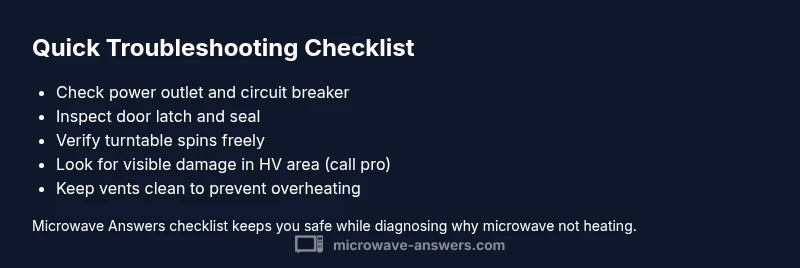
Start with the simplest checks before you reach for tools or disassemble panels. Ensure the microwave is plugged into a working outlet and that the circuit breaker hasn’t tripped. Test the outlet with a known working device. Then inspect the door; make sure the latch engages fully and the door seal isn’t damaged. A misaligned door can keep the interlock open, which stops heating even if the unit briefly powers on. Finally, verify the turntable spins freely—obstruction or a stalled motor can be mistaken for a heating problem because food sits in one spot and never heats evenly. If any of these basics fail, address them first; if they pass, move to more advanced checks.
Electrical faults and safety considerations
Heating elements inside a microwave operate at high voltage and current. Misdiagnosing a problem or attempting high-voltage repairs is dangerous and can cause electric shock, fire, or further damage. Do not open the magnetron housing or replace high-voltage components yourself unless you are a trained technician. When in doubt, disconnect the unit, avoid using metal cookware, and call a certified repair technician. Preventive steps include keeping vents clear, using the correct cookware, and avoiding overloading the magnetron with back-to-back heating cycles. Safety first protects you and your home.
How the magnetron and high-voltage system works
To troubleshoot why microwave not heating, it helps to understand the system’s basics. The magnetron converts electrical energy into microwaves that heat water molecules inside food. The high-voltage transformer, capacitor, and diode form a circuit that sustains that energy. If any link fails—such as the magnetron burning out, the diode shorting, or the capacitor losing capacitance—the oven can power on but fail to heat. Some units include thermal fuses that shut the system down if temperatures rise too high. These concepts guide safe, reasoned troubleshooting and help you explain symptoms to a technician.
Diagnosing with simple tests you can do at home
Try a few safe, low-risk checks to narrow down causes. Listen for the hum of the magnetron when you start a test bake; the absence of sound can indicate a faulty HV circuit. Check the light inside the cavity; if it stays dark when the microwave runs, that may signal a control or power issue rather than a heating element failure. Use a voltmeter to confirm the outlet provides the correct voltage (120V in many regions) and inspect the power cord for wear. If the unit passes these checks but still doesn’t heat, you’re likely facing a component that requires professional service.
When to replace vs repair and professional inspection
Some failures are economical to repair, others aren’t. Magnetron replacement can be costly, and many modern microwaves have compact, integrated assemblies that make repairs nearly as expensive as replacement. If your unit is older than, say, seven to ten years or the repair estimate approaches the price of a new model with similar features, replacement may be the smarter option. Always obtain a written assessment from a certified technician, and ensure that any quote includes safety checks, part warranties, and updated door interlocks if needed. Avoid DIY fixes on high-voltage parts; professional inspection minimizes risk and often clarifies the best path forward.
Preventing future heating problems
Prevention is better than cure with microwaves. Regular cleaning of the interior and vents helps maintain cooling efficiency and reduces arcing risk. Use microwave-safe containers and lids to minimize splatter and food debris. Keep the door seals clean and undamaged, and replace worn gaskets promptly. Avoid running the unit empty or with metallic objects inside, which can cause damage or sparks. Finally, schedule periodic professional checkups if your warranty requires service or if you notice any odd behavior, such as longer heat times or uneven heating.
Steps
Estimated time: 30-60 minutes
- 1
Verify power and reset
Unplug the unit, inspect the cord for damage, and plug into a known-good outlet. If the outlet is controlled by a switch, ensure it’s on. Reset any tripped breakers and test with a different appliance to confirm power stability.
Tip: Always unplug before handling internals to avoid shock. - 2
Check the door latch and interlock
Open and close the door firmly and verify the latch engages fully. If the door feels loose or the interlock seems stuck, the microwave may think the door is open and refuse to heat.
Tip: A quick visual inspection of door gaskets can reveal wear that interrupts sealing. - 3
Inspect the turntable and cavity
Remove the turntable, inspect for obstructions, and ensure the roller ring spins freely. Debris under the turntable can prevent even heating and mimic a heat failure.
Tip: Clean the cavity edges where food particles tend to accumulate. - 4
Test for magnetron-related signs
If the unit powers on but you hear no hum at all during a run, this could point to a magnetron or HV circuit issue. Do not disassemble high-voltage parts yourself.
Tip: Document any unusual smells, sounds, or smoke for the technician. - 5
Evaluate safety and basic checks
If the simple checks pass, consider professional inspection to confirm HV components, fuses, and control boards are healthy.
Tip: Avoid running the unit empty; it can cause damage when power is applied without load. - 6
Decide on repair vs replacement
If repair costs edge toward a new model with similar features, replacement may be wiser. Get a written estimate before committing.
Tip: Ask about warranties on parts and labor from the service provider.
Diagnosis: Microwave won't heat
Possible Causes
- highPower supply issue (outlet, cord, or circuit breaker)
- highDoor switch/interlock failure preventing high-voltage circuit
- mediumMagnetron failure or high-voltage component fault
- lowThermal fuse or overheating protection triggered
Fixes
- easyTest outlet with a known-working device and reset the circuit breaker; ensure direct wall outlet connection
- easyInspect door latch and interlock; replace if loose or faulty
- hardIf magnetron or HV components are suspected, do not DIY high-voltage repairs; contact a professional
- mediumCheck cooling fan and thermal fuse; if overheating, schedule service
Common Questions
What is the most common reason a microwave won't heat?
The most frequent causes are a door interlock failure or a blown magnetron, often accompanied by simple power issues. Start with power checks, then inspect the door and control mechanism before considering component repair.
The most common causes are door interlock issues or a magnetron failure. Start with basic power and door checks before deep repairs.
Can a microwave be repaired or is it safer to replace it?
It depends on the fault and cost. Magnetron replacements can be expensive and newer models offer better energy efficiency. Always obtain a written assessment from a technician to compare repair versus replacement.
It depends on the fault and cost. Get a written technician assessment to compare repair vs replacement.
Is it safe to use the microwave if the light works but it doesn't heat?
Yes, this often points to a door interlock or HV component issue rather than a simple power problem. Stop using it until inspected by a professional to avoid safety risks.
If the light works but it won’t heat, stop using it and have it inspected for interlock or HV component issues.
What maintenance helps prevent not heating?
Regular cleaning, checking door seals, and using microwave-safe containers reduce debris buildup and overheating risk. Schedule periodic professional checks if specified by your warranty.
Regular cleaning and proper use prevent heating problems; follow warranty guidelines for professional checks.
When should I call a technician?
If basic checks fail or you smell burning, see smoke, or hear unusual buzzing, unplug immediately and call a certified repair technician. Do not attempt high-voltage repairs yourself.
If basic checks fail or you smell burning or hear buzzing, unplug and call a technician.
Watch Video
Main Points
- Start with power basics before opening the unit
- Door interlock is a common heating failure culprit
- Avoid risky high-voltage repairs; call a pro when needed
- Prevention reduces future heating problems