If Microwave Is Not Heating Food: Quick Troubleshooting Guide
A practical, urgent troubleshooting guide for a microwave that won't heat. Learn common causes, safe checks, a diagnostic flow, and when to call a professional.


Most microwaves that stop heating, rather than warming, are due to a failed high-voltage circuit or door safety switch. Start with the basics: unplug the unit, check the door latch, and confirm the outlet is active. If the microwave still won’t heat, avoid opening the chassis and contact a licensed technician. Quick checks first.
Why your microwave isn’t heating
When a microwave seems to run but fails to heat, it’s typically a signal that the high‑voltage circuit or a safety interlock is not allowing power to reach the magnetron. The issue can stem from a worn door interlock switch, a blown fuse in the power circuit, a damaged power cord, or a capacitor/diode failure in the HV section. According to Microwave Answers, electrical safety is paramount; never bypass safety interlocks or attempt “quick fixes” that involve opening the service cabinet. Home cooks should prioritize safety and avoid touching exposed components. If you notice buzzing, burning smells, or smoke, stop immediately and unplug the unit. The microwave is a high‑voltage appliance, and mishandling HV parts can cause serious injury. This guide emphasizes safe diagnostics and when to involve a professional.
Common causes, in plain terms
There are several plausible culprits when a microwave won’t heat:
- Door safety switch or interlock failure: If the door interlock doesn’t sense the door is closed, the oven may run but not power the magnetron.
- HV diode or transformer fault: A failure here can prevent the magnetron from oscillating and delivering microwave energy.
- Blown fuse or damaged power cord: The main power path could be interrupted before the HV circuit even gets powered.
- Magnetron issues: A worn or damaged magnetron reduces heating or stops it entirely, but diagnosing this requires disassembly and professional testing.
The Microwave Answers team notes that most nonheating symptoms come from door interlocks or power delivery rather than the magnetron itself, especially in units that are still powering on normally. This block helps you distinguish between simple, fixable issues and components that require a technician.
Safe, practical diagnostic approach (before you call a pro)
Before touching any internal hardware, go through a conservative diagnostic routine:
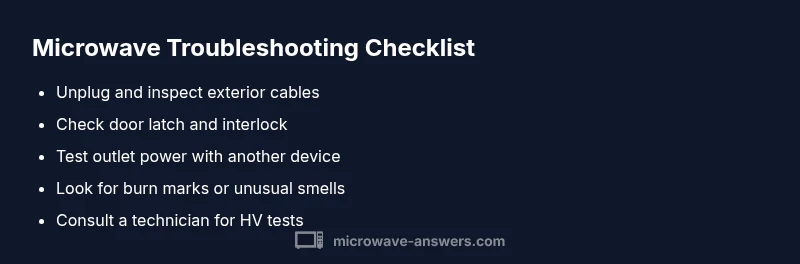
- Unplug the unit and inspect the exterior for obvious damage or frayed cords.
- Check the door latch and ensure the door closes fully and latches securely.
- Confirm the outlet is working by testing another device in the same outlet.
- Listen for abnormal noises or burning smells when the oven is running (if you hear buzzing or smell burnt plastic, power off immediately).
DIY testing should stop at door latch and outlet checks. If these basics do not restore heating, the issue is likely in the high‑voltage circuit or magnetron, which requires a qualified technician. As a safety note, do not attempt to measure HV components or replace a magnetron yourself. The Microwave Answers Team emphasizes protecting yourself from electric shock and avoiding hazardous operations.
Diagnostic flow and what it means for you
A systematic flow helps you map symptoms to likely causes without risking dangerous testing:
- Symptom: oven runs but does not heat → likely door interlock or HV power issue.
- Quick checks: door latch, power outlet, visible damage.
- If checks fail to identify a simple fix → escalate to professional inspection of HV diode, transformer, and magnetron.
- Outcome: either a safe repair, part replacement, or a replacement decision.
Microwave heat problems often conceal safety interlocks that prevent the HV circuit from energizing. The Microwave Answers team reiterates that any repair involving high voltage should be handled by a trained technician. This section helps you decide whether you can fix it safely at home or if professional service is needed.
Steps
Estimated time: 60-90 minutes
- 1
Power down safely and unplug
Begin by unplugging the microwave from the wall outlet. Wait a few minutes to let any residual charge dissipate. This basic step prevents electric shock while you inspect exterior components.
Tip: Always unplug before touching any exterior or exposed parts. - 2
Inspect the door latch and interlock
Close the door firmly and listen for a solid click. If the latch feels loose or sticks, the interlock switch may be failing. Do not bypass the interlock; replacement is needed if it’s faulty.
Tip: A sticky door or misaligned latch is a common, safe fix you can check visually. - 3
Check the power supply and outlet
Plug another appliance into the same outlet to confirm power. If the outlet or circuit breaker trips, resolve that issue before testing the microwave again. Faulty wiring or a tripped breaker can masquerade as a non-heating symptom.
Tip: If the outlet is controlled by a wall switch, ensure it’s in the ON position. - 4
Avoid HV components testing yourself
Do not attempt to test or replace high-voltage parts like the magnetron, diode, or transformer unless you’re a certified technician. Missteps here can cause severe injury or death. Document symptoms and prepare for professional service.
Tip: Keep the unit unplugged and note any unusual odors before calling a pro. - 5
Assess visible damage and odors
Look for burned components, melted plastics, or scorching around the HV area. Visible damage warrants immediate professional evaluation rather than home repair attempts.
Tip: If you smell burnt insulation, stop using the unit immediately. - 6
Decide on repair or replacement
If the technician quotes exceed the cost of a new unit or the magnetron is near end-of-life, replacement may be the most cost-effective option. Factor in safety, energy efficiency, and warranty status.
Tip: Check model price and long-term energy costs to weigh repair vs. replacement.
Diagnosis: Microwave runs but does not heat
Possible Causes
- highDoor switch or interlock failure
- mediumFaulty high-voltage diode/transformer
- lowBlown fuse in the power circuit
Fixes
- easyUnplug the unit and inspect the door latch; replace door switch if it feels loose or stuck
- easyTest the power outlet with another device and reset any tripped breakers; repair or replace the outlet if needed
- easyVisually inspect the power cord for wear; replace damaged cords only with a qualified cord and certified parts
- hardIf symptoms persist, schedule professional service to test HV components (diode, transformer) and magnetron
Common Questions
What are the most common reasons a microwave stops heating?
The door interlock switch or safety interlock often prevents heating. Electrical faults in the HV circuit, such as a failed diode or transformer, are also frequent culprits. A blown fuse or damaged power cord can stop heating before the HV circuit even powers up.
Common causes are a faulty door switch, HV circuit issues, or a blown fuse. If you suspect these, start with safety steps and contact a technician for HV testing.
Is it safe to open the microwave cabinet to diagnose?
No. Opening the cabinet exposes high-voltage parts that can cause severe shock. Only exterior checks are safe for most homeowners; internal HV diagnostics require a qualified technician.
Do not open the cabinet. HV components are dangerous; call a professional for inside diagnostics.
Can a damaged power cord cause heating problems?
Yes. A damaged power cord can interrupt power to the microwave or HV circuitry. Inspect for cuts or scorch marks and replace the cord with an OEM-compatible part.
A damaged cord can stop heating. Inspect and replace if damaged, with the unit unplugged.
When should I replace the microwave instead of repairing it?
If repair quotes approach or exceed the cost of a new unit, or if the magnetron is aging, replacement is often the safer, more energy-efficient choice.
If repairs are costly or the unit is old, replacement is usually best.
Will a turntable issue cause heating problems?
A misaligned turntable can affect cooking evenness, but not typically prevent heating. If the unit is heating unevenly, check the turntable and its support ring.
Turntable misalignment can affect cooking quality, not whether it heats.
Do I need professional service even for simple checks?
If basic checks don’t restore heating, or you hear buzzing/see smoke, stop using the unit and contact a licensed technician for HV testing and magnetron inspection.
If basic checks fail, call a licensed technician for HV tests.
Watch Video
Main Points
- Unplug before inspection and avoid high-voltage testing yourself
- Door interlocks are a common non-heating cause
- Confirm outlet power before suspecting internal faults
- Professional repair is recommended for HV components