Fix Microwave Not Heating: A Practical Troubleshooting Guide
Urgent guide to diagnose and fix a microwave not heating, covering common causes, safety checks, tests, and when to call a technician for professional repair.


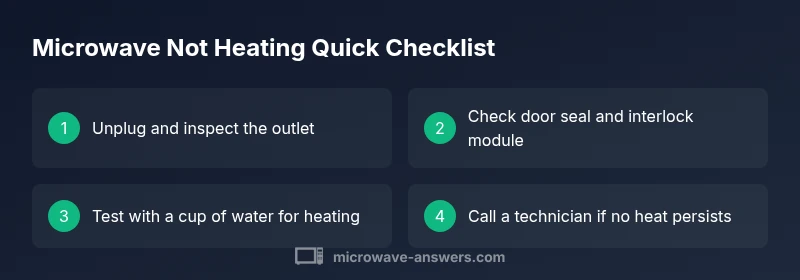
Unplug the unit and verify the outlet is working. Test with a microwave-safe cup of water on high for 60 seconds. If nothing heats, the issue is likely a door switch or a failed magnetron; check the door latch, hinges, and interlock. If not comfortable or magnetron is suspected, seek professional repair.
Why fix microwave not heating happens
If you want to fix microwave not heating, start with the basics. According to Microwave Answers, microwaves heat by energizing a magnetron to emit microwaves that agitate water molecules. When the magnetron burns out or the door interlock switch signaling fails, energy may stop reaching the cooking chamber. This guide helps you approach the problem safely and efficiently, focusing on simple checks you can perform before considering a replacement. By following prudent steps, you reduce risk and avoid unnecessary part replacements. The phrase fix microwave not heating is a clue that the problem is usually one of a handful of components that either fail with age or are triggered by a safety switch. Begin with the simplest checks and progress only if you feel confident. If ever in doubt, stop and call a professional technician.
Safety first: unplug and inspect
Safety always comes first when troubleshooting a microwave. Start by unplugging the unit from the wall outlet and removing any nearby power sources. Do not rely on a timer or the internal power switch alone. Inspect the exterior for signs of damage and check the outlet by testing another device to confirm it supplies power. If you notice burnt smells, smoke, or arcing, stop immediately. Keep the door closed and avoid opening the cabinet unless you are trained. At this stage, remove all cookware and never run the microwave empty. Regular inspection of the cord and plug can prevent shocks and electrical hazards. The Microwave Answers team emphasizes safety as the core of any repair plan.
Common culprits to check
There are several components that commonly fail and stop heat from reaching your food. The door interlock switch or latch is a frequent culprit; if the interlock does not engage when the door is closed, the microwave will not heat. The magnetron can fail over time and lose the ability to generate microwaves. A blown fuse, a faulty thermal fuse, or a bad high voltage diode or capacitor can also prevent heating. Burnt waveguides or damaged cooling fans can lead to overheating and shutdowns. Diagnose first by ruling out simple power issues, then proceed to targeted checks. Remember, complex repairs involving high voltage should be handled by trained technicians. Based on Microwave Answers analysis, you should suspect the door interlock or magnetron when heat is absent after basic power checks.
Diagnostic flow at a glance
When heat is absent, work through a logical flow to identify the problem without disassembly. Start by confirming power: outlet works and the microwave responds with any sound or light. Next, test with a cup of water to verify heating behavior. If there is no heat, check the door interlock switch and latch alignment. If the door signals are correct, the magnetron or high voltage components become likely suspects. If you hear arcing or see smoke, stop immediately and call a professional. The diagnostic flow is designed to minimize risk while narrowing down the root cause efficiently.
Prevention, maintenance, and when to replace
Preventive care extends the life of your microwave and reduces the chances of failure. Regularly clean the interior to avoid food debris interfering with vents and fans. Keep vents unobstructed and ensure the door seals are intact. Avoid operating the microwave with metal containers or aluminum foil, which can cause arcing and damage. If the unit is older than seven to ten years and requires frequent fixes, the cost and risk may outweigh replacement. In that case, the Microwave Answers team recommends considering a newer model with a warranty to improve safety and performance. Consistent maintenance and cautious use are the best defenses against future heating problems.
What to do next if it still won't heat
If you have followed the steps above and the microwave still won't heat, it is time to seek professional help. A qualified technician can perform precise tests on the magnetron, diodes, and capacitors, and they can safely replace faulty components. Do not attempt high voltage repairs yourself, as the risk of shock is significant. Keeping a record of symptoms and any sounds or smells can help the technician diagnose faster. For ongoing cooking needs, consider a short-term replacement or a service plan that covers microwave repairs. The aim is to restore safe operation with minimal downtime and maximum safety.
Steps
Estimated time: 30-60 minutes
- 1
Disconnect power and prepare workspace
Unplug the microwave and move it to a clear, dry work area. Ensure your hands are dry and you are wearing insulated gloves if necessary. Remove the outer cover only if you are trained to avoid contacting high voltage components.
Tip: Never touch internal components with the unit plugged in. - 2
Test the outlet and basic responsiveness
Plug in a different device to confirm the outlet is functioning. If the outlet is dead, resolve power issues before continuing. Observe any lights, beeps, or display activity from the microwave when you press a few basic buttons.
Tip: Power issues are a common reason for a microwave not heating. - 3
Check door seals and interlock mechanism
Inspect the door gasket for damage and ensure the door closes firmly. If you hear a click but the door interlock seems loose or unusual, it may not signal correctly. Use a multimeter if you know how to safely test the interlock switch.
Tip: A faulty interlock is a common and safety-critical failure. - 4
Inspect high voltage components visually
Only perform this step if you are trained and comfortable. Look for obvious signs of damage on the magnetron, capacitor, and diode. Do not touch these parts; only professionals should handle replacements.
Tip: High voltage components pose serious shock risk. - 5
Assess the magnetron condition
If the magnetron shows visible damage or you are sure it is not energizing, this typically requires replacement. This component is a common reason for no heat, especially in older units.
Tip: Magnetron replacement is not a DIY friendly task for most users. - 6
Decide on professional service or replacement
If the issue persists after testing basic power, door interlock, and magnetron suspicion, contact a certified technician. They can verify proper safety protocols and replace faulty parts. Consider a modern replacement if repairs exceed a threshold cost.
Tip: Professional assessment ensures safety and proper function.
Diagnosis: Microwave won't heat food
Possible Causes
- highDoor interlock switch or latch failure
- mediumFaulty magnetron or related high voltage components
- lowBlown fuse or thermal fuse or bad capacitor/diode
Fixes
- easyInspect the door latch alignment and interlock switches for continuity if you can access them safely
- hardReplace the faulty interlock module or magnetron only with professional service
- easyCheck the main fuse and thermal fuse for continuity and replace if open
Common Questions
Why won’t my microwave heat even though it powers on?
Most commonly the door interlock switch or magnetron has failed. Check that the door closes properly and the interlock signals the controller. If the magnetron is damaged, heating will not occur and professional service is required.
Usually a door interlock or magnetron issue if it powers on but won’t heat.
Can a blown fuse cause no heat in a microwave?
Yes, a blown fuse or thermal fuse can prevent heating even if the unit lights up. Check fuses safely and replace only with the correct part and procedure. If you’re unsure, consult a technician.
A blown fuse can stop heating; check and replace safely.
Is it safe to test the door interlock switches myself?
Testing interlock switches requires careful handling of high voltage components. If you don’t have proper tools and training, avoid opening the cabinet and contact a licensed technician.
Testing interlocks is risky if you’re not trained; best to hire a pro.
When should I repair versus replace my microwave?
If repairs exceed half the cost of a new unit or the magnetron is involved, replacement may be more cost effective and safer. Consider model efficiency and warranty when deciding.
If repairs are costly, a replacement may be wiser.
Will testing components void safety or warranties?
Opening the unit can affect warranty coverage if done improperly. Always check the warranty terms and consider professional service to preserve protection.
Check warranty terms; professional service protects coverage.
Watch Video
Main Points
- Unplug and test power before inspecting components
- Door interlocks and magnetron are the most common failure points
- Avoid high voltage repairs; call a pro if magnetron or diodes are suspected
- Regular cleaning and proper usage prevent heating issues
- Document symptoms to speed up professional diagnosis