Why Would a Microwave Not Heating? Troubleshooting Guide
Urgent, practical guide to diagnosing why a microwave not heating. Learn common causes, safe checks, and when to call a pro for magnetron or control-board issues.


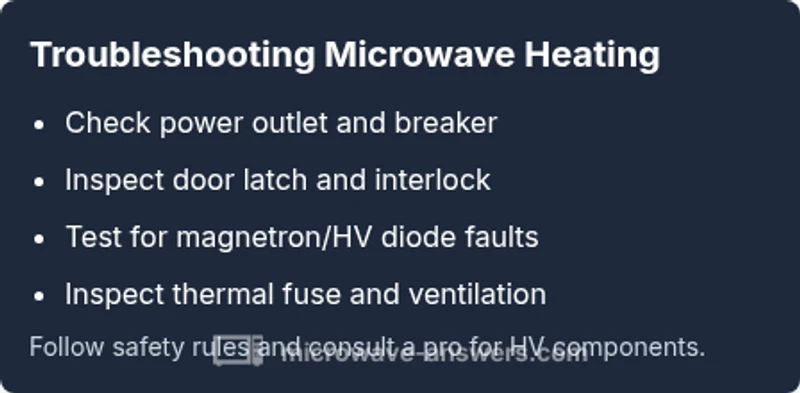
Most likely issues are a blown fuse, door switch, or magnetron fault. Start by checking the power outlet and circuit breaker, then inspect the door latch for proper closure. If the unit hums but won’t heat, the magnetron or high-voltage diode may have failed. If basic checks don’t fix it, unplug, wait five minutes, and call a technician for safety-critical parts.
Understanding the problem: why would a microwave not heat
If your microwave won't heat, you may feel a jolt of frustration, especially when you rely on quick meals. This problem is not always dangerous to attempt fixes yourself, but it can indicate serious electrical faults. According to Microwave Answers, the most common non-heating symptoms are: the unit runs but does not produce heat, or it makes unusual buzzing or sparking without warming the food. Understanding the root cause helps you choose safe next steps. In many households, 'why would a microwave not heating' comes down to power delivery, door sensing, or the high-voltage components inside. Start with simple checks before assuming a major repair. Safety should always come first; unplug the appliance when testing and avoid opening the chassis unless you’re trained. By systematically narrowing the possibilities, you can save time and prevent accidental damage to the microwave or to yourself. This guide focuses on practical, reliable steps you can take in a typical kitchen, with clear safety boundaries and when to seek professional help.
Common causes at a glance
Most non-heating issues fall into a few broad categories. Knowing them helps you triage quickly.
- Power issues: an overloaded circuit, a tripped breaker, or a blown fuse can keep the oven from heating even if the display is on.
- Door switch or latch failure: if the microwave does not sense that the door is closed, it will refuse to heat as a safety precaution.
- Magnetron or high-voltage components: faults here can stop heating entirely; symptoms include buzzing, sparking, or no heat at all.
- Thermal fuse or overheat protection: if the internal temperature gets too high, the microwave will cut power to protect itself.
- Control board or keypad faults: user inputs may not be registered, or the device may not execute the heating cycle.
- Wiring or capacitor problems: degraded connections can interrupt the high-voltage path.
If a symptom repeats after reset or cleaning, it’s usually a sign that a component needs testing or replacement.
Safety first: what not to do
- Do not operate the microwave with the door open or removed; microwaves can cause severe burns and exposure.
- Do not attempt to bypass door switches or safety interlocks; that is dangerous and could violate electrical codes.
- Do not poke around inside the cabinet unless the unit is unplugged and you have proper insulated tools.
- Do not use the microwave if you notice smoke, a burning odor, or unusual noises beyond normal hum; discontinue use immediately and unplug.
- Do not assume all problems are quick fixes; some high-voltage components can hold lethal charges long after unplugging.
Quick checks you can do safely
-
Confirm the power source: plug another device into the outlet, or try a different outlet to rule out circuit problems.
-
Check the circuit breaker or fuse panel; reset tripped breakers and replace blown fuses as needed.
-
Inspect the door latch and switch: ensure the door closes firmly and the latch engages; listen for an audible click when closed.
-
Wipe away obstructions around the vent and turntable: a blocked vent or tangled roller ring can cause overheating and shut down heating.
-
Test with a simple load: place a microwave-safe plate with water in it and run a short 30-second cycle to listen for heat and humming; if there is no heat, move to the next checks.
-
If the display shows error codes, consult the user manual for specific codes and reset procedures.
Diagnostic path: how to approach this
Start with symptom: the microwave runs but does not heat. Stepwise diagnosis (as a decision tree) helps identify the fault without unnecessary disassembly:
-
If power checks fail (outlet, breaker OK), suspect door switch or latch.
-
If the door is functioning, but there is no heat and you hear buzzing, suspect magnetron or high-voltage components.
-
If there was smelling or spark, or overheating warnings, suspect thermal fuse or capacitor.
-
For each suspected fault, list the likely causes and recommended tests you can perform safely. If you are unsure about high-voltage testing or disassembly, stop and call a pro.
When to call a professional
More complex issues like a failed magnetron, high-voltage diode, or control board require specialized tools and know-how. If basic checks don’t resolve the problem, or you notice sparks, smoke, or mysterious smells, contact a licensed appliance technician. A pro can perform insulation checks, HV checks, and capacitor tests safely with proper equipment.
Maintenance to prevent future issues
Regular inspection of power cords, clean interior and seals, and keeping vents clear can reduce heating failures. Schedule periodic checks if your microwave is several years old, replace worn components promptly, and avoid running the unit empty or with metal objects inside. Proper usage and gentle handling extend the life and reliability of your microwave.
Steps
Estimated time: 25-40 minutes
- 1
Verify power source
Unplug the microwave, try a different outlet, and inspect your circuit breaker. A tripped breaker or dead outlet is the most common fix and requires no tools beyond a replacement outlet or breaker reset.
Tip: Use a non-contact voltage tester to confirm presence of power safely. - 2
Check door switch and latch
Close the door firmly and listen for the latch engaging. If you don’t hear the click or the door won’t stay closed, the safety interlock may be faulty.
Tip: Never force the door; damaged interlocks require professional service. - 3
Inspect fuses and thermal protection
Some units have internal fuses that blow or thermal fuses that open when overheating. If you’re comfortable, unplug and locate accessible fuses for a quick visual check; never operate with a blown fuse.
Tip: If you must open the enclosure, ensure the unit is unplugged and surfaces are insulated. - 4
Assess magnetron and HV components
Buzzing, sparking, or no heat with a hum can indicate magnetron or HV diode failure. These parts require specialized equipment and high-voltage safety practices.
Tip: Do not attempt HV testing unless you are trained. - 5
Evaluate the control board
If inputs are not registered or cycles misbehave, the control board or keypad may be faulty. Testing often needs service-level diagnostics.
Tip: Document error codes to expedite service. - 6
Final test or replacement decision
After checks, run a short test cycle with a safe dish. If heat returns inconsistently or not at all, plan for professional repair or replacement.
Tip: Consider total cost vs. new unit when troubleshooting a decade-old microwave.
Diagnosis: Microwave won't heat but runs
Possible Causes
- highPower delivery issue (outlet, circuit, fuse)
- highDoor switch or latch failure
- mediumFaulty magnetron or high-voltage diode
- mediumThermal fuse or overheating shutdown
- lowControl board or keypad fault
- lowWiring or capacitor problems
Fixes
- easyTest outlet with a known-working device; reset circuit breaker; replace fault fuses if present
- easyInspect door switch and latch for proper engagement
- hardIf magnetron or HV diode suspected, do not discharge capacitors; contact a pro
- mediumCheck thermal fuse and cooling; replace if open or degraded
- hardTest/replace control board or keypad with professional service
- mediumInspect internal wiring for loose connections; reseat or replace damaged wires
Common Questions
Why is my microwave running but not heating?
That usually means either a power delivery issue, a faulty door switch, or a failing magnetron. Begin with power checks, then door latch tests, and consider professional testing for HV components.
If your microwave runs but won’t heat, it’s most often a power, door switch, or magnetron fault.
Can a blown fuse cause no heating in a microwave?
Yes. A blown fuse or tripped circuit can prevent heating even when the display shows operation. Check the fuse and reset the breaker before pursuing more complex fixes.
A blown fuse can stop heating; check fuses and breakers first.
Is it safe to test the microwave with the door open?
No. Operating a microwave with the door open is dangerous and violates safety rules. If you suspect a safety interlock issue, stop and consult a professional.
Never operate the microwave with the door open.
Can a magnetron be repaired or replaced safely?
Magnetron failures usually require replacement and proper HV testing. This work should be done by a qualified technician due to high-voltage risk.
Magnetron issues typically need replacement and HV testing by a pro.
What maintenance helps prevent heating issues?
Keep vents clear, avoid running empty, and inspect cords regularly. Promptly address any unusual noises or odors to stop minor faults from becoming major problems.
Regular cleaning and careful use can prevent heating problems.
When should I replace my microwave instead of repairing it?
If repairs cost more than a new unit or the microwave is several years old, replacement is often the safer, more economical choice.
If repair costs near a new unit, consider replacement.
Watch Video
Main Points
- Diagnose safely: start with power, then door systems.
- No-heat symptoms often point to electrical safety components.
- Avoid unsafe HV work; call a pro for magnetron/diode tests.
- Regular maintenance reduces future heating issues.
- Weigh repair vs replacement for older units.