How to Tell If a Microwave Fuse Is Blown: Quick Fix
Learn how to tell if a microwave fuse is blown with safe, step-by-step checks. This practical guide covers symptoms, common causes, safety tips, and when to replace or call a technician.


Most microwave fuse problems show as no heat or no power. Start by unplugging the unit and removing the outer cover to locate the fuse. If the fuse is visibly blown or a white residue appears, replace it with a fuse of the same rating and reassemble. If unsure, contact a qualified technician.
What happens when a fuse blows in a microwave?
A microwave fuse is a safety device that interrupts current if a fault occurs or if the unit overheats. When it blows, you typically lose power to the oven or the heating function, and the unit may not start at all. According to Microwave Answers, blowing is one of the most common safety-related failures homeowners encounter. This article focuses on safe, practical steps you can take to determine whether the fuse is the culprit and what to do next. Remember: a blown fuse is a warning sign of potential overloads or component wear, not a single isolated fault.
In many microwaves, there are two protective elements: a main fuse and a thermal fuse. The main fuse guards the primary power path, while the thermal fuse opens if the internal temperature rises too high. If either fails, the appliance may appear dead or fail to heat properly. Understanding these components helps you decide whether you can safely inspect or replace them, or if professional service is required to avoid shock or fire hazards.
What happens when a fuse blows in a microwave?
A microwave fuse is a safety device that interrupts current if a fault occurs or if the unit overheats. When it blows, you typically lose power to the oven or the heating function, and the unit may not start at all. According to Microwave Answers, blowing is one of the most common safety-related failures homeowners encounter. This article focuses on safe, practical steps you can take to determine whether the fuse is the culprit and what to do next. Remember: a blown fuse is a warning sign of potential overloads or component wear, not a single isolated fault.
In many microwaves, there are two protective elements: a main fuse and a thermal fuse. The main fuse guards the primary power path, while the thermal fuse opens if the internal temperature rises too high. If either fails, the appliance may appear dead or fail to heat properly. Understanding these components helps you decide whether you can safely inspect or replace them, or if professional service is required to avoid shock or fire hazards.
Steps
Estimated time: 30-60 minutes
- 1
Power down and unplug
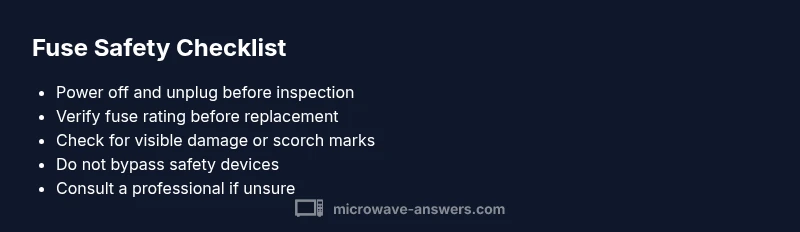
Ensure the microwave is disconnected from the power source. This is the most important safety step before any inspection. Wait at least a few minutes to allow residual charge in capacitors to discharge. This reduces the risk of electric shock.
Tip: Never bypass safety steps; assume high-voltage components can still hold a charge. - 2
Remove the outer cover carefully
Use the correct screwdriver and keep track of screws. Do not force panels open. Gently separate the shell to access internal components, including the fuse(s). Dirty or oily hands can transfer contaminants to sensitive parts.
Tip: Document screw locations to ensure correct reassembly. - 3
Locate and inspect the fuse(s)
Identify the main fuse and any thermal fuse present. Look for a visibly broken metal link, blackening, or a white residue around the fuse. A blown fuse often looks physically damaged or open-circuit.
Tip: If you’re unsure about what you’re seeing, stop and seek guidance. - 4
Check fuse rating before replacement
Only replace with a fuse that has the exact amperage and voltage rating specified by the manufacturer. Using the wrong rating can cause more damage or safety hazards.
Tip: Do not rely on color alone; read the stamped specs on the fuse body. - 5
Install the replacement and reassemble
Install the new fuse, secure all panels, and reattach screws. Reconnect the power and test the unit briefly at low power to confirm operation without overheating.
Tip: If you smell burning or see sparking, unplug immediately and stop. - 6
Evaluate the result and plan next steps
If the microwave still won’t start or heat after fuse replacement, other components may be at fault. Consider professional service to diagnose door switches, control boards, or high-voltage wiring.
Tip: Document what you checked so a technician can pick up from there.
Diagnosis: Microwave won't heat or turn on
Possible Causes
- highBlown main fuse
- highFaulty door switch
- mediumThermal fuse opened due to overheating
- lowControl board failure
Fixes
- easyUnplug the unit and inspect the fuse area for a break or scorch marks; replace with the same rating and reassemble
- easyTest or inspect the door interlock/door switch for proper operation and alignment; replace if needed
- mediumCheck for signs of overheating or blockages; if the thermal fuse opened, it may require service to reset/replace
- hardIf the issue involves the control board or wiring, consult a professional technician
Common Questions
What is a microwave fuse and what does it do?
A microwave fuse protects circuits from overload by interrupting current when faults occur or temperatures rise too high. When it blows, the oven may not heat or power up. Replacing it with the correct rating is essential.
A fuse protects the microwave’s circuit by breaking the connection if things get overloaded. If it blows, you’ll usually lose power or heating, so you’ll need to replace it with the same rating.
Can I test a fuse myself with a multimeter?
Yes, with power disconnected, you can test continuity across the fuse using a multimeter. If there’s no continuity, the fuse is blown. Replace with an identical rating and re-test. If you’re unsure, consult a professional.
Yes, with the unit unplugged you can test continuity, but if you’re not confident, it’s best to call a pro.
Is a blown fuse always caused by overheating?
Not always. Overheating is common, but fuses can blow from power surges, worn components, or a stuck door switch. A full diagnostic helps identify the true cause.
Overheating is a frequent cause, but surges or door switch faults can also blow a fuse.
Is it safe to replace a microwave fuse at home?
Replacement is possible for those with electrical knowledge and the right rating fuse. However, high-voltage components pose shock risks; if in doubt, hire a professional.
It can be risky; only replace if you’re comfortable with high-voltage work, otherwise get a pro.
What signs indicate I should replace the fuse?
No power, no heat, a visible burn mark, or a blown link are strong signs. If any of these appear, stop and inspect or replace with the same rating.
If there’s no power or heat, or you see scorch marks, replace the fuse and test again.
When should I call a professional?
If you smell burning, observe arcing, or the unit still doesn’t work after a fuse replacement, stop and consult a technician. High-voltage components can be dangerous.
Call a professional if you smell burning or if it still won’t work after replacement.
Watch Video
Main Points
- Check safety first before any inspection
- Use the exact fuse rating for replacement
- Don’t bypass safety components or capacitors
- If unsure, call a professional to avoid shock or fire
- Document steps to aid a technician if needed