How to Fix Microwave Door: Step-by-Step Guide
Learn how to diagnose and fix common microwave door problems safely. This comprehensive guide covers latch alignment, hinge wear, interlock switches, and when to replace the door—so you can restore microwave safety and performance.


According to Microwave Answers, fixing a damaged microwave door is a practical, safety-conscious repair you can perform at home when the issue is a misaligned latch, worn hinges, or a loose door switch. This quick guide gives you the essential steps, tools, and safety checks to diagnose common door problems and decide whether a DIY fix is appropriate or if professional service is warranted.
Understanding the microwave door mechanism
The microwave door is more than a simple lid; it is an integrated safety system that coordinates several moving parts to ensure safe operation. The core components are the door latch, the hinges, the door interlock switches, and the door seal. When you close the door, the latch engages a striker on the cabinet, while the interlock switches ensure the magnetron only powers when the door is properly seated. The door seal provides a tight seal to prevent microwave leakage. If any piece becomes worn, bent, or misaligned, you may notice poor sealing, intermittent starts, or the oven failing to run altogether. During inspection, look for visible wear on the latch pawl, loose hinge screws, or a cracked door panel. A quick, safe assessment will guide whether a DIY fix is feasible or if you should contact a professional.
Common symptoms that indicate a door issue
Common symptoms include: the door not closing fully or sealing, the oven failing to start even when it seems shut, visible gaps around the gasket, or a door that feels loose or wobbly when opened and closed. You might also hear repeated clicks from interlock switches or feel a warm or humming sensation near the door area if a safety switch is faulty. If you observe arcing, sparks, or charring near the door area, stop using the unit immediately and unplug it. These signs point to safety-related problems that require careful handling and, in some cases, professional service.
Safety precautions before attempting a repair
Safety first: unplug the microwave and disconnect power at the circuit breaker before any disassembly. Do not operate the unit with the cabinet open, and avoid work if you notice arcing, melted insulation, or a strong burnt smell. Wear insulated gloves and eye protection, work in a dry area, and keep metal tools away from live circuits. Use a flashlight to inspect hidden areas and avoid bending or prying on components beyond what is necessary. If the model uses a complex interlock system, or you’re unsure about any step, it’s safer to seek professional help rather than risking a shock or fire.
Troubleshooting scenarios: loose latch, misaligned door, failing latch switch
- Loose latch: Tighten mounting screws and ensure the latch pawl engages cleanly with the striker. If the latch is bent, replace it rather than attempting a bend repair.
- Misaligned door: Check that the hinges sit flush against the frame and that all screws are tightened. Gaps between the door and frame should be eliminated by realigning the hinge or, if needed, shimming the hinge side slightly.
- Failing latch switch: Use a multimeter to test interlock switches for continuity. If a switch fails, replace it according to the model’s service instructions. Avoid bypassing interlocks, as that creates a serious safety risk.
- General note: After any adjustment, reassemble only when confident there are no loose parts, and never power the unit with open panels. This careful approach helps prevent arcing and microwave leakage.
When to replace the door or call a professional
If the door panel is cracked, the gasket is torn beyond repair, hinges are damaged, or the interlock assembly shows wear that cannot be safely corrected, replacing the door or enlisting a professional is the prudent choice. Visible warping, persistent misalignment after adjustments, or recurring safety interlocks faults indicate a more complex issue that requires authorized service parts and tooling. In these cases, relying on a trained technician helps ensure continued safety and compliance with manufacturer specifications.
Maintenance to prevent future door problems
Regular inspection and gentle handling go a long way. Clean the gasket with a damp cloth and check for cracks or nicks. Tighten screws on hinges and latches on a routine basis, but avoid overtightening, which can crack plastic components. Avoid slamming the door, which accelerates wear on hinges and latches. If you notice unusual resistance or grinding when opening or closing, stop and reassess before continuing. A proactive maintenance routine can extend the life of the door interlocks and preserve safety.
Tools & Materials
- Phillips head screwdriver (#2)(For hinge screws and latch mounting)
- Flathead screwdriver(Useful for prying without damage on older models)
- Torx driver set(Some models use Torx screws)
- Multimeter(Check continuity on interlock switches)
- Replacement door latch(Only if latch is worn or bent)
- Replacement interlock switch(Only if tested faulty)
- Replacement door hinges(Only if hinges show visible wear)
- Safety gloves(Protect hands during disassembly)
- Safety glasses(Eye protection from metal splinters)
- Flashlight(Illumination for hard-to-see areas)
- Soft cloth(Cleaning gasket and surfaces)
Steps
Estimated time: 30-60 minutes
- 1
Power down and unplug
Unplug the microwave from the wall outlet and switch off power at the circuit breaker. Confirm there is no residual charge and wait 60 seconds before touching any internal parts. This ensures safety when handling door components and interlocks.
Tip: Always verify power is off with a non-contact tester before touching the unit. - 2
Access the door components
Remove the outer cabinet screws only if you are comfortable and can keep track of each fastener. Gently separate the front panel to access the door latch, hinges, and interlock area. Do not force parts; note how everything is oriented for reassembly.
Tip: Take photos from multiple angles to aid reassembly. - 3
Inspect latch and hinges
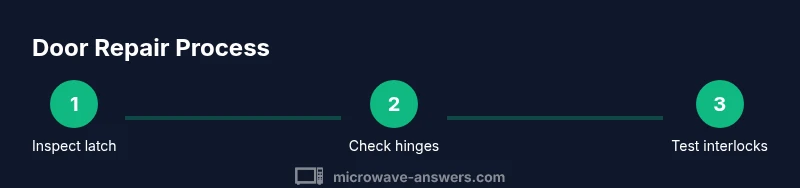
Check the latch pawl for wear or bending and examine hinge screws for looseness. If the latch doesn’t engage cleanly with the striker, test with the door closed to see if the latch returns fully. Tighten screws if needed and replace any visibly worn parts.
Tip: If the latch pawl is bent, do not try to bend it back; replace it. - 4
Test interlock switches
With the door open, test interlock switches using a multimeter for continuity when the door is closed. A lack of continuity or intermittent readings indicates a faulty switch that should be replaced. Do not bypass safety interlocks.
Tip: Document switch positions to ensure correct wiring during replacement. - 5
Realign or replace parts
Realign the door if gaps remain between the door and frame. Refasten hinges and latch mounting screws securely. If parts are worn beyond repair, install replacement latch, hinges, or interlock switches according to the model’s service instructions.
Tip: Avoid over-tightening screws; this can crack plastic housings. - 6
Final reassembly and test
Reassemble the cabinet, reconnect power, and test the door with a microwave-safe test load. Ensure the oven starts only when the door is fully closed and seals properly. If you observe leaks or arcing, disconnect power and seek professional help.
Tip: Run a short test without food to verify safety first.
Common Questions
Is it safe to fix a microwave door myself?
DIY fixes can be safe if you unplug the unit and follow the manufacturer's guidance. Avoid tampering with interlock switches and seek professional help if you’re not confident.
Yes, but unplug first and avoid altering safety devices. If unsure, consult a professional.
What are the most common door problems?
Latch misalignment, hinge wear, and faulty interlock switches are the typical culprits behind door issues.
Most door problems come from latch misalignment or interlock faults.
Do I need special tools to fix the door?
A basic screwdriver set and a multimeter are commonly sufficient; some models may require Torx or specialty sockets.
You may need a screwdriver and a multimeter; check your model.
When should I replace the microwave door?
If the door is cracked, the gasket is torn, or alignment remains poor after adjustments, replacement or professional service is advised.
If the door is severely damaged or won’t seal after fixes, replacement is safer.
Can a door issue affect cooking results?
Yes. A door that won’t seal can lead to uneven heating and safety risks; address the issue promptly.
A loose or broken door can cause uneven heating and safety concerns.
Watch Video
Main Points
- Identify root cause before disassembly
- Always unplug and follow safety steps
- Use proper parts rather than makeshift fixes
- Test the door thoroughly after any repair
- Consider professional service for structural damage