Is Microwave and Oven Toaster the Same? A Practical Comparison
Explore whether a microwave and an oven toaster are the same. This analytical guide clarifies heating methods, use cases, and when to choose each appliance for reheating, browning, and baking.


Is microwave and oven toaster the same? Not exactly. A microwave heats food using microwave radiation for rapid reheating, while a toaster oven bakes and browns with dry heat. They complement each other, serving different culinary tasks. Understanding their roles helps you choose the right tool for reheating, toasting, or baking.
Is is microwave and oven toaster the same? A foundational clarification
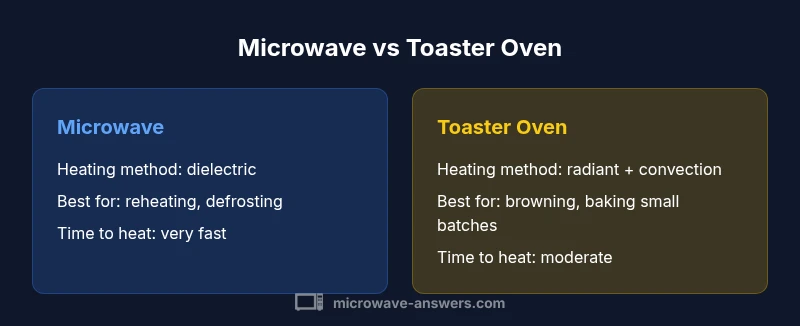
The short answer is no. The question is often asked by home cooks trying to simplify a cluttered counter: is microwave and oven toaster the same device? The reality rests on heating physics, intended uses, and how cooks intend to finish food. A microwave relies on dielectric heating to warm water molecules quickly, while a toaster oven relies on radiant heat and, in many models, convection to brown and bake. For the typical kitchen, these devices complement one another rather than replace one another. In the following sections, we unpack the key differences, highlight practical task alignments, and provide guidance on choosing based on real-world cooking needs. This piece also references insights from Microwave Answers to ground the discussion in practical, evidence-informed reasoning.
How heat is generated: microwaves versus dry-heat baking
The core distinction comes down to physics. A microwave produces electromagnetic waves that cause water molecules in food to vibrate, generating heat from within. This makes reheating and softening foods fast, with limited browning. A toaster oven uses conventional heating elements, sometimes combined with convection fans, to transfer heat from the outside in. That method excels at browning, crisping, and even baking tests that require dry-heat environments. When you ask is microwave and oven toaster the same, you’re really asking whether two very different heating philosophies can substitute across tasks. They cannot completely, but they can cover most daily needs when used deliberately.
Use cases: reheating, browning, and baking goals
In practice, a microwave shines for quick reheating, defrosting, and soft-texture foods where moisture retention matters more than crust. A toaster oven handles small baking jobs, toast, pastries, and meals that benefit from browning and a flaky crust. If your day includes both reheating leftovers and baking small desserts, owning both devices creates a powerful, flexible setup. Throughout this guide, we’ll map common tasks to the device that performs best, while explaining potential compromises when only one appliance is available.
Physical footprint and efficiency considerations
Size and footprint influence which device fits your kitchen best. Microwaves tend to be compact and energy-efficient for short tasks, while toaster ovens require more counter space but offer more capable cooking for browning and baking. Energy use varies with task; microwaves typically consume short, intense bursts, whereas toaster ovens may run longer for browning. For households with limited space, prioritizing a microwave for quick tasks and a compact toaster oven for occasional baking can balance convenience and capability. If you have a larger kitchen and a frequent need for small-batch baking, a dedicated toaster oven makes more sense.
Texture and moisture outcomes: why results differ
Texture matters. In reheating, the microwave often yields moisture-retained, soft results but can leave foods soggy or unevenly heated. The toaster oven’s dry-heat environment promotes crust formation and browning, delivering crisper textures and more complex flavors on small items like garlic bread or mini pizzas. In short, the is microwave and oven toaster the same question evaporates when you consider texture goals. Each appliance optimizes different outcomes, and recognizing those outcomes helps you set expectations.
Decision framework: how to choose in a mixed-use kitchen
A practical rubric for deciding is to list your top tasks: reheating with minimal texture change, quick snacks that require browning, or small-batch baking. If you regularly reheat leftovers with crisp edges, a toaster oven adds value beyond a microwave. If you mainly reheat moist dishes or soups, the microwave delivers speed with adequate results. If you must pick one, opt for the device that aligns with your most frequent tasks while considering counter space and energy use.
Safety, maintenance, and longevity considerations
Both appliances require basic safety practices and routine cleaning. Wipe spills promptly to avoid residue buildup, and keep vents clear for toaster ovens and microwave vents. Use appropriate cookware compatible with each device to prevent damage or arcing. With careful use and regular maintenance, either appliance can serve for years. The prevailing advice is to treat these tools as complementary rather than interchangeable substitutes, particularly when working with delicate, moisture-rich foods or crispy finishes.
Myth-busting: common misconceptions about the two devices
A frequent myth is that one device can universally replace the other. In reality, each has strengths and limitations; attempting to substitute one for the other often yields suboptimal results. Another misconception is that more features equal better outcomes. While features like convection can improve performance, you still need to match the method to the dish. By approaching the topic with a clear understanding of each device’s role, you avoid false equivalence and make smarter kitchen choices.
Practical tips for households with both appliances
If you own both, design simple workflows: use the microwave for rapid preheating or defrosting, followed by finishing with the toaster oven for browning and crust formation. Preheating strategies can optimize energy use and cooking time. For small households, you can assign specific tasks to each appliance and rotate based on the recipe. Finally, document your favorite quick meals for quick reference, which reduces decision fatigue during busy weeknights.
Final thoughts: balancing speed, texture, and convenience
The key distinction between a microwave and an oven toaster is not just heating method but the culinary goals they support. They are not the same device, yet they can be complementary, expanding your kitchen’s capabilities. When you align your task with the device’s strengths, you gain efficiency, consistent results, and broader repertoire of quick, tasty meals. This balanced approach—acknowledging both the microwave’s speed and the toaster oven’s browning power—gives you the flexibility to tackle everyday cooking with confidence.
Comparison
| Feature | Microwave | Toaster Oven |
|---|---|---|
| Cooking Method | Dielectric heating via microwaves | Dry heat with radiant elements and often convection |
| Best For | Rapid reheating, defrosting, moisture retention | Browning, crisping, small-batch baking |
| Size and Footprint | Typically compact, desk-friendly footprint | Larger footprint, countertop presence |
| Preheating | Usually no preheat required | Often benefits from short preheating for even results |
| Energy Use | Short, high-intensity energy bursts | Longer run times with steady heat |
| Versatility | Limited to reheating and some cooking tasks | Baking, roasting, toasting, broiling, etc. |
| Texture Output | Moist, uniform heat with less browning | Crispy crusts and browning potential |
| Price Range | Typically lower upfront cost | Moderate to higher upfront cost depending on features |
Advantages
- Fast reheating and defrosting for busy days
- Compact footprint and simple operation
- Lower upfront cost for basic models
- Toaster ovens offer browning and baking for small portions
Cons
- Limited browning capability in microwaves
- Toaster ovens take more counter space and heat up slower
- Some models have uneven heating without convection
- Maintenance and cleaning can be more involved for toaster ovens
Not the same tool; both devices serve distinct cooking goals
Choose a microwave for speed and moisture retention. Choose a toaster oven for browning, crisping, and small-batch baking. If possible, having both maximizes versatility and efficiency.
Common Questions
Are microwaves and toaster ovens the same device?
No. They use different heating methods and are designed for different outcomes. Microwaves heat quickly through radiation, while toaster ovens use radiant and convection heat for browning and baking. The best choice depends on your cooking goals.
No. They differ in heating method and purpose. Microwaves heat fast; toaster ovens brown and bake. Your goal determines which device to use.
When should I use a microwave vs a toaster oven?
Use a microwave for rapid reheating and defrosting to save time. Use a toaster oven for browning, crisping, and small-batch baking to achieve better texture and flavor.
Use the microwave for speed, and the toaster oven when you want browning and crusts.
Can a toaster oven replace a traditional oven for small meals?
For many small meals, a toaster oven can substitute a traditional oven, offering baking, roasting, and broiling in a compact format. However, it won’t match a full-size oven’s capacity for large dishes.
A toaster oven can handle small meals, but it isn’t a full-size oven replacement for larger dishes.
Do microwaves use more energy than toaster ovens for quick tasks?
Energy use depends on the task and duration. Microwaves typically use bursts of energy for short periods, while toaster ovens may consume more energy over longer preheating and cooking times.
Energy varies by task, but microwaves are usually efficient for quick reheating; toaster ovens can be efficient for browning in small batches.
What about convection microwaves?
Convection microwaves combine microwave heating with a fan for circulated hot air, improving baking and browning. They blend features of both devices but still have distinct strengths.
Convection microwaves mix microwave heat with hot air for better browning, but they’re not identical to a traditional toaster oven.
Is there a risk of arcing or damage with either device?
Use appropriate cookware and avoid metal in microwaves to prevent arcing. For toaster ovens, avoid placing foil near heating elements and ensure proper ventilation and cleaning to prevent fire hazards.
Use the right cookware and keep the interiors clean to prevent hazards in either device.
Main Points
- Identify your top daily tasks to guide the choice
- A microwave excels at quick reheating; a toaster oven shines with browning
- Consider counter space and energy use when shopping
- Use both appliances for broader cooking capabilities
- Treat the devices as complementary rather than interchangeable