Difference Between Microwave and Toaster Oven: A Practical Comparison
Explore the difference between microwave and toaster oven, including heating methods, performance, energy use, safety, and buying tips. Learn how to decide which appliance fits your kitchen, with practical guidance from Microwave Answers.


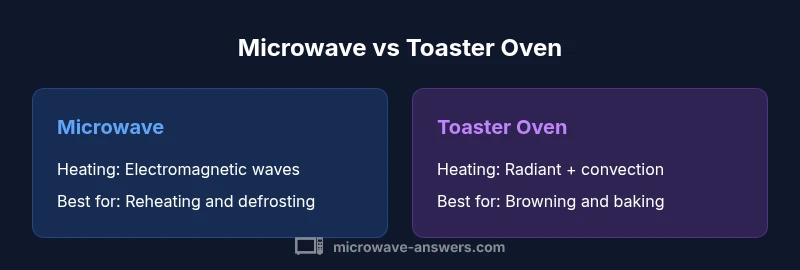
Microwave vs toaster oven: the core difference lies in heating method, performance, and best-use scenarios. Microwaves heat food quickly with moisture retention through electromagnetic waves, making them superb for reheating and defrosting. Toaster ovens use radiant heat (and sometimes convection) to brown, crisp, and bake, delivering better texture and flavor in small batches. Your choice depends on speed, texture you want, and kitchen space.
Understanding the Core Difference
The difference between microwave and toaster oven centers on heating method, expected results, and typical use cases. While both appliances live in many kitchens, they excel at different tasks. The Microwave Answers team emphasizes that understanding these core distinctions helps home cooks decide which device to rely on for everyday meals and which to keep on standby for special tasks. In practical terms, this means recognizing that a microwave primarily heats food quickly with moisture retention, while a toaster oven uses radiant heat to brown, crisp, and bake with more even texture over a longer period. The phrase difference between microwave and toaster oven highlights the core decision everyone faces when designing a small-kitchen setup: speed versus texture, convenience versus versatility, and upfront cost versus long-term value. According to Microwave Answers, many households benefit from a clear mental model: treat microwaves as fast reheaters and defrosters; treat toaster ovens as compact baking companions. By focusing on your cooking routines, available counter space, and energy goals, you can choose the right tool for most tasks. This article aims to be practical, evidence-based, and free of hype, so you can rely on real-world guidance rather than marketing claims.
Heating Mechanisms and Heat Distribution
Microwaves heat food with dielectric heating: electromagnetic waves cause water molecules to vibrate, producing internal heat that travels outward. This results in rapid temperature rise but can create unevenness, especially with thicker items or uneven food shapes. Toaster ovens rely on radiant heat from insulated coils, sometimes augmented by convection fans. Radiant heating browns the surface and creates crisp textures, while convection circulates hot air for more even browning. The combined effect is that toasting, baking, and broiling tasks take longer in a toaster oven, but the results often resemble traditional oven outcomes. The choice between these mechanisms hinges on your priorities: speed and moisture retention vs. crust formation and browning.
Cooking Performance: Speed, Evenness, and Texture
In practical terms, a microwave excels at speed: reheating leftovers, defrosting frozen portions, and quick meal prep with minimal preheating. You’ll notice some variability in texture; moisture-rich foods can become tender or slightly steamed rather than browned. A toaster oven tends to deliver more even browning, stronger crusts, and consistent browning on top, especially for bread, pastries, and small pizzas. However, it requires preheating and longer cook times. For home cooking, this means you can optimize recipes by starting with a microwave for speed and finishing in a toaster oven for texture, or simply choose the appliance that aligns with the dish’s texture profile.
Use Cases: When to Reach for Each Appliance
Quick Reheating and Defrosting: If your goal is to get leftovers back to serving temperature fast, the microwave is usually the best tool. Snacks, beverages, and soft foods reheat efficiently without long wait times. Small-Batch Baking and Browning: For items like toasting bread, crisping ingredients, or baking small portions, a toaster oven provides crust and browning that microwaves struggle to achieve. Mixed-use meals benefit from a hybrid approach: reheat in the microwave and finish in the toaster oven for texture. When space is tight, consider how often you prioritize texture over speed and whether you’ll benefit from a single multi-function device or a dedicated unit for each task.
Food Quality: Texture, Moisture, and Flavor Development
Texture plays a critical role in perceived quality. Microwaves heat through moisture, which can help retain juiciness in some foods but may leave crisp surfaces lacking. Sauces or gravies may heat unevenly if not stirred. Toaster ovens promote Maillard browning and crust formation, improving flavor depth and texture, especially for bread, pastries, and roasted vegetables. The result is a different sensory experience: microwaved meals can be tender and uniform, while toaster oven-cooked dishes offer a toasted crust and more robust exterior. For nutrients, the differences are less about loss and more about how cooking time and surface reactions alter texture and taste.
Energy Efficiency and Running Costs
Short-duration tasks favor microwaves as energy-efficient options because they heat directly and require minimal preheating. However, for items that demand browning or baking, toaster ovens can be more efficient than firing up a full-size oven, especially for small batches. The overall energy cost depends on task type, duration, and the appliance’s wattage. Microwave Answers analysis shows that using the appropriate appliance for the right task is the most reliable path to minimizing energy use, rather than chasing universal efficiency labels. Consider the typical meals you prepare and calculate approximate energy draw for the most common tasks.
Safety Considerations and Common Pitfalls
Safety is essential in any kitchen appliance discussion. Microwaves avoid open flames and high exterior temperatures during standard operation, but can pose risks if metal is introduced or if containers aren’t microwave-safe. Toaster ovens have hot exterior surfaces and heating elements that can cause burns if touched. Always use microwave-safe cookware and avoid metal in the microwave. For toaster ovens, preheat with proper cookware and avoid overcrowding to prevent uneven heating. Never operate appliances when empty and follow manufacturer instructions regarding tray materials and maximum load. Regular cleaning reduces fire risk and helps maintain consistent performance.
Cleaning, Maintenance, and Longevity
Cleaning frequency and method vary by appliance. Microwaves are generally easier to wipe clean and rarely require disassembly, but splatters can bake onto the interior if not cleaned promptly. Toaster ovens benefit from occasional deep cleaning because crumbs and grease can accumulate in the crumb tray and around the interior walls. Protect surfaces by using mats and avoid harsh abrasives. Routine checks should include inspecting door seals and hinges for wear. Proper maintenance extends the life of either device and keeps performance consistent over years.
Shopping Guide: Features to Look For
When evaluating these appliances, consider wattage, interior capacity, and available cooking modes. A microwave’s wattage correlates with heating speed, with higher wattage typically offering faster reheating. A toaster oven’s features—broiling, convection, adjustable temperature, and a dedicated bake mode—determine its versatility. Size matters: measure counter space and door clearance to ensure the unit fits your kitchen layout. Look for easy-clean interiors, sturdy racks, and a turntable or flat-bake surface based on your preferred cooking style. Energy efficiency, warranty length, and brand reliability should influence the final decision.
Practical Tips and Quick Demos
If you must choose one unit, start by listing your everyday tasks: reheating leftovers, baking small items, toast, and crisping. Then map tasks to best-performing appliance. For example, reheating soup in a microwave followed by a quick crisp in a toaster oven can yield a better texture than using either appliance alone. When stacking tasks, set realistic expectations: microwave for speed; toaster oven for texture. Try simple experiments like reheating a slice of pizza first in the microwave then finishing in the toaster oven to compare crust texture and moisture.
Common Myths Debunked
A frequent misconception is that microwaves are universally quicker and always inferior for texture. In reality, the best results depend on the dish and cookware. Some foods benefit from microwave-assisted browning with consumer-safe browning dishes, while others require radiant heat for crust. Another myth is that toaster ovens are bulky and impractical; many compact models fit under cabinets and deliver excellent small-batch performance. The key is to match the cooking goal with the appliance’s strengths rather than assuming one device does everything.
Final Considerations for a Busy Kitchen
If your kitchen works best with one device, choose based on your most common tasks: speed or texture. If you regularly reheat and defrost, a microwave is essential; for crisping, baking small portions, or broiling dishes, a toaster oven proves valuable. For many households, having both yields the most flexibility and reliability across everyday meals and weekend projects. The right balance depends on your cooking routines, counter space, and energy priorities.
Comparison
| Feature | Microwave | Toaster Oven |
|---|---|---|
| Heating Method | Electromagnetic waves (dielectric heating) | Radiant heat with optional convection |
| Best For | Quick reheating, defrosting, moisture retention | Browning, crisping, small-batch baking |
| Texture Outcomes | Moist heating; surface browning is limited | Crisp crusts; even browning on surfaces |
| Cooking Speed | Very fast for small portions | Slower; depends on preheating and mode |
| Energy Use | Often lower for small tasks | Energy use varies; convection can be efficient for some tasks |
| Capacity | Typically compact; smaller interior | Typically larger interior; can handle bread and small pizzas |
| Maintenance | Fewer moving parts; easy interior wipe-down | More components; requires regular cleaning of racks and trays |
| Price Range | Lower upfront cost (basic units) | Moderate to higher cost depending on features |
Advantages
- Microwave offers rapid reheating and defrosting
- Toaster oven delivers browning, crisp textures, and baking in small batches
- Compact models fit apartment or dorm kitchens
- Simple operation and minimal preheating for quick meals
Cons
- Microwave textures can be soggy and uneven for some foods
- Toaster ovens require preheating and take longer for small tasks
- Toaster ovens can be bulky and require more countertop space
Microwave wins for speed; toaster oven wins for texture and baking in small batches
Choose microwave for fast reheats and defrosting. Choose toaster oven for browning, crisping, and small-batch baking. For a well-rounded kitchen, many households benefit from owning both.
Common Questions
What is the main difference between microwave and toaster oven?
The main difference is heating method: microwaves heat food quickly using electromagnetic waves, while toaster ovens rely on radiant heat to brown and bake. Microwaves are best for reheating; toaster ovens excel at texture and small-batch baking.
The microwave uses electromagnetic waves for quick heating, while the toaster oven uses radiant heat to brown and bake small batches.
Can you use the same cookware in a microwave and toaster oven?
Generally, metal cookware is not safe in a microwave, while toaster ovens can accept metal trays when used safely. Always check manufacturer guidance for materials and maximum temperatures.
Avoid metal in the microwave and follow the toaster oven's safety guidelines for metal trays.
Which appliance uses less energy for quick tasks?
Microwaves typically use less energy for short reheating tasks, since they heat quickly without preheating. Toaster ovens may use more energy for small items due to longer preheating and heat-up times.
For quick reheats, the microwave usually saves energy; the toaster oven can use more energy for small bakes due to preheating.
Is a toaster oven better for crispy foods than a microwave?
Yes. Toast bakeries and crisping tasks in a toaster oven generally yield better texture and browning than a microwave, which tends to produce softer surfaces.
Toaster ovens usually give better crispiness and browning than microwaves.
Do you need both appliances?
Not strictly. If your typical cooking is quick reheating, a microwave may suffice. If you bake, brown, or crisp often, a toaster oven adds valuable capabilities. Many households do both for maximum flexibility.
You don’t always need both, but having one for speed and one for texture can be very useful.
Are toaster ovens safe for kids?
Toaster ovens require supervision and careful handling of hot surfaces. Teach kids to use appliance controls safely, keep hands away from hot racks, and follow manufacturer instructions.
As with any hot appliance, supervise kids and teach safe use of controls.
Main Points
- Understand each appliance's heating method and results
- Match your cooking tasks to the appliance that excels at them
- Consider counter space and energy use when deciding
- Plan for potential future needs (browning vs speed)
- Know when to combine devices for best results