Why Does Microwave Stop Working? A Practical Troubleshooting Guide
Learn urgent, practical steps to diagnose why your microwave stops working. From power checks to door interlocks, Microwave Answers guides you through safe troubleshooting and when to call a pro for complex repairs.


Most microwaves stop working due to power supply issues, door interlocks, or thermal overload. Start with the basics: verify the outlet and cord are intact, inspect the door latch, and reset any overloaded safety fuses. If it still won’t run, consider professional service for delicate components like the control board or magnetron.
Why a Microwave Stops Working
A microwave can stall for several reasons, but the most frequent culprits are power-related problems and safety interlocks. According to Microwave Answers, the chief offenders are a faulty power outlet or plug-in cord, or a tripped circuit breaker. The second big category is the door interlock/door switch that detects when the door is fully closed. If either safety feature fails, the microwave may refuse to start or shut down mid-cycle. Less common but critical are overheating cutoffs and worn control boards. Recognize that a failed magnetron will usually show itself as no operation plus poor heating, which still requires certified service. Understanding these common failure points helps you triage quickly and prevent further damage.
Safe First: Power and Outlet Basics
Safety is the first concern. Always unplug the unit before touching any internal parts. Check that the outlet works by plugging in another device, then test the microwave in a different outlet if possible. If the breaker trips, reset it after ensuring no other loads are present. Use a dedicated circuit where available and avoid fragile power strips; a loose connection can mimic a failure. If the cord appears damaged, do not use it; replace it or have a technician assess compatibility with the unit. The Microwave Answers team emphasizes starting with these basics, since most outages trace back to power issues rather than expensive internal faults.
Interpreting Symptoms: What Your Microwave Is Telling You
When the display is blank but the outlet is fine, the problem could be the control board or a blown fuse. A humming sound with no action may indicate a seized mechanism or a failed door interlock. Sparking or burning smells point to wiring insulation problems or a damaged magnetron—seek professional help immediately. By mapping symptoms to potential causes, you can decide whether a simple fix is possible or if a replacement is wiser.
When to Call a Pro and What to Expect
If safety concerns arise or you encounter high voltage components, professional service is the safest path. A certified technician will test high-voltage circuitry, inspect interlocks, and verify the magnetron and control board functionality using proper equipment. They can replace worn parts, restore safety systems, and ensure your unit meets current electrical standards. The cost and feasibility of repair versus replacement depend on age, model, and symptom complexity.
Prevention: Simple Habits to Extend Your Microwave’s Life
Regular cleaning, avoiding metal objects, and letting the unit cool between uses reduce overheating risks. Keep the vent clear and dust-free, and don’t run empty cycles for extended periods. Schedule periodic inspections if you rely on the microwave heavily, and store accessories in a dry area to prevent moisture-related issues. With routine care, you’ll minimize the odds of random outages or performance dips.
Steps
Estimated time: 60-90 minutes
- 1
Power and outlet check
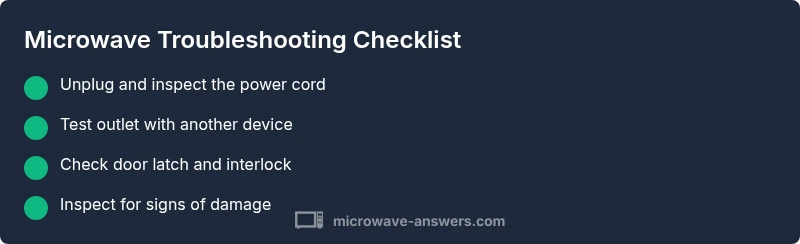
Unplug the microwave, inspect the power cord for visible damage, then plug it into a known-good outlet. If the outlet still fails, try another wall outlet and a different appliance to confirm the circuit is active. This basic check often reveals simple faults.
Tip: Always unplug before touching any wires. - 2
Reset the circuit and breaker
If the unit doesn’t respond, check your home’s circuit breaker or GFCI. Reset the breaker and test again. A tripped breaker is a common cause of no-start issues.
Tip: Turn off all loads on the circuit before resetting. - 3
Inspect the door interlock
Carefully examine the door latch and seal; ensure the door closes fully and the interlock engages properly. If you hear a click but the unit still won’t start, the interlock or wiring may be faulty and require professional testing.
Tip: Do not force the door; use gentle pressure and check for misalignment. - 4
Check for visible damage or overheating
Look for scorch marks, melted plastic, or a burnt smell. These signs suggest internal damage or a blown fuse. Do not attempt to operate the microwave; contact a technician for further diagnosis.
Tip: Avoid running the unit empty; it can overheat internal components. - 5
Decide on repair versus replacement
If the door interlock, control board, or magnetron shows wear, assess repair costs against replacement. In many cases, if the unit is older or the required parts are scarce, replacement may be more economical.
Tip: Keep receipts and model information handy for the technician. - 6
Document symptoms for the technician
Make a quick log of what happens, including when it started, any noises, smells, or error codes. This helps the professional pinpoint the fault faster and can prevent unnecessary parts replacement.
Tip: Note the model, age, and recent usage patterns.
Diagnosis: Microwave won't start or run
Possible Causes
- highPower supply issue (outlet, cord, circuit breaker)
- mediumFaulty door interlock/door switch
- lowBlown thermal fuse or overheated safety cutoff
Fixes
- easyTest outlet with another device; inspect/replace damaged power cord; reset circuit breaker
- easyInspect door interlock mechanism and door switch alignment; replace if worn
- hardConsult a qualified technician to test high-voltage components or replace control board or magnetron
Common Questions
Why won't my microwave start even when the outlet seems fine?
The issue is often power-related: a faulty cord, a tripped breaker, or a loose outlet. Verify by testing with another device and try a different outlet. If the problem persists, a professional inspection may be needed.
The issue is often power-related. Test the outlet and cord, and consult a technician if it persists.
What is a door interlock, and how can it fail?
The door interlock detects whether the door is closed. If the switch wears out or the wiring is damaged, the unit may refuse to start even when the door looks shut.
Door interlocks ensure the door is closed; a faulty switch stops the microwave.
Can a blown thermal fuse stop the microwave from working?
Yes. Overheating can blow a safety fuse that cuts power to the control board. A technician must replace the fuse and inspect for overheating causes.
A blown thermal fuse disables the microwave; replacement by a pro is needed.
Is it safe to open the microwave and inspect wiring myself?
No. Internal components store high voltage even when unplugged. Avoid touching wires, and contact a qualified technician for an in-depth inspection.
Don’t open the cabinet yourself; high voltage parts can seriously injure you.
How long do microwave components typically last?
Lifespan varies by part and usage; magnets and control boards can fail after many years, or with heavy use. If symptoms escalate, consider replacement guidance.
Parts wear out over time; if symptoms worsen, plan for evaluation.
When should I replace the microwave instead of repairing?
If repair costs approach or exceed replacement value, or safety concerns exist, replacing the unit is often the smarter choice.
If repairs are costly or risky, consider replacement.
Watch Video
Main Points
- Start with safe power checks before any inspection.
- Door interlocks are common failure points that require professional help.
- Only a trained technician should handle high-voltage components.
- Regular cleaning and safe usage prevent future outages.