When Microwave Doesn't Heat: Essential Troubleshooting
If your microwave won't heat, follow this urgent, practical troubleshooting guide to diagnose power, door interlock, and component issues. Learn safe steps, common causes, and when to call a professional from Microwave Answers.


When microwave doesn't heat, start with quick checks before any disassembly. Ensure it’s plugged into a live outlet, the door closes firmly, and the turntable spins during a test run. If these basics fail, the fault is likely a faulty door interlock or magnetron, which requires professional service. This guide from Microwave Answers helps you act fast and stay safe.
Understanding the symptom and immediate implications
When microwave doesn't heat, it can feel urgent. Home cooks rely on quick reheats, defrosting, and meal prep, so a non-heating microwave disrupts plans fast. In most cases, the problem isn’t a dramatic failure but a safety or power-related issue that you can identify with a few careful checks. This section explains what 'not heating' means in practical terms, how heat transfer normally works inside a microwave, and what your first observations tell you about the underlying cause. If the unit hums but produces no heat, or if it trips a breaker, note these details as you continue the troubleshooting journey. According to Microwave Answers, a methodical approach helps you stay safe while narrowing down the culprit. In this 2026 guide, we emphasize safe steps and clear benchmarks so you can decide whether a quick fix is possible or a professional visit is needed.
Quick checks you can perform in minutes
- Power and outlet: Confirm the microwave is plugged into a live outlet. Test the outlet with another device or try a different outlet on the same circuit. If the outlet is controlled by a wall switch, ensure it’s ON.
- Door interlock: The door must latch securely for heating to occur. If the latch feels loose or the door doesn’t close firmly, the interlock switch may prevent heat as a safety measure.
- Turntable: Remove the dish and run 30–60 seconds on medium power to verify the turntable spins. A stuck turntable can give the impression the unit isn’t heating evenly, even if the heater works.
- Visible damage: Look for burnt smells, scorch marks, or melted plastic around the cavity. Any visible damage means stop and do not use the unit until inspected by a professional.
- Audible cues: A steady hum without heat can indicate a high-voltage issue or magnetron fault. Note the sound and timing for comparison in later steps.
- Water test: Heat a microwave-safe cup of water for 60–90 seconds. If the water heats normally but no heat is delivered to food, the issue may be related to the cavity or magnetron rather than basic power.
Common causes in order of likelihood
- Door interlock switch failure (high): The interlock prevents power to the magnetron when the door is not fully closed. A faulty switch is a very common reason a microwave won’t heat.
- Magnetron failure (high): The magnetron is the core heating element. If it fails, you’ll likely hear a hum but no heat.
- Thermal fuse or high-voltage fuse blown (medium): A blown fuse can cut power to the heating circuit, stopping heat but sometimes leaving other functions intact.
- Control board/relay fault (low): Electronic control faults can prevent heating even when power is present.
- Loose or damaged wiring (low): Wires inside can suffer from wear or heat cycling, causing intermittent heat or no heat.
If you’re unsure about opening the cabinet or testing high-voltage parts, skip ahead to professional service. The goal is to narrow down the cause without risking injury or further damage.
Safety first: when to unplug and call a pro
- Always unplug before inspecting internal components beyond the accessible exterior. Do not touch high-voltage parts or attempt to bypass interlocks.
- If you see visible damage, a burning smell, or melted insulation, stop using the unit immediately and contact a licensed technician.
- Do not operate the microwave with the door open or while wiring appears damaged. High-voltage components can cause severe injury.
- If your microwave is under warranty, consult the manufacturer or authorized service center to avoid voiding coverage. Electric shocks or fires are not worth the risk.
- For safety, limit DIY troubleshooting to power, door alignment, and non-invasive checks. More complex repairs should be handled by a professional.
Diagnostic flow: symptom → diagnosis → solutions
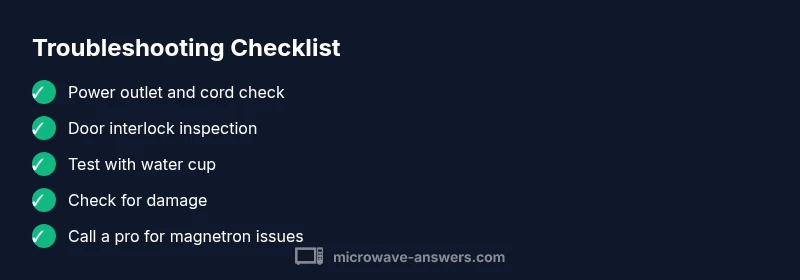
- Symptom: when microwave doesn’t heat consistently across test runs. 2) Check for simple power issues (outlet, switch, circuit breaker). 3) Assess door interlock and latch behavior. 4) Test with a water cup to gauge magnetron activity. 5) If heat still doesn’t occur, consider magnetron or control board failure. 6) Decide on repair vs replacement based on cost, age, and warranty. Following this flow keeps you safe and increases the chance of a correct, timely diagnosis.
Step-by-step repair guide for the most common cause
- Confirm power and outlet integrity. Unplug, then plug into a known-good outlet. 2) Verify door closure and interlock operation using the door switch; ensure the door latches securely. 3) Run a short water-heating test to see if any heat is generated. 4) If no heat and no power at the magnetron, stop and consult a professional. 5) When a professional is called, provide the observations (outlet tested, door behavior, noises) to speed diagnosis. 6) If you’re considering replacement due to age or frequent issues, compare energy use, capacity, and warranty coverage. Safety first always.
Prevention and maintenance to extend microwave life
- Regular cleaning: Wipe the cavity after spills to prevent arcing and keep the door seals clean for proper interlock function.
- Use approved cookware: Only microwave-safe containers. Avoid metal or foil which can cause arcing and damage.
- Vent and filter checks: Clean the vent area and replace any filters if applicable to maintain cooling and air flow.
- Gentle use: Avoid running when empty for long periods, and never bypass interlocks or safety features.
- Professional service intervals: If your unit is aging, schedule periodic professional checkups to catch magnetron or control-board wear early.
Steps
Estimated time: 30-60 minutes
- 1
Check power supply
Unplug the unit, inspect the cord for damage, and plug into a known-good outlet. Test the outlet with another device to confirm it’s supplying power. This step isolates simple power issues from internal faults.
Tip: If the outlet fails, do not use the microwave until power is confirmed elsewhere; avoid plugging into an extension cord on older circuits. - 2
Inspect door interlock and latch
Close the door firmly and listen for the latch engaging. If you feel loose slack or the latch doesn’t engage, the interlock switch may be faulty and prevent heating as a safety feature.
Tip: Do not bypass interlocks; a faulty interlock is a safety risk and may allow operation with the door open. - 3
Run a water-heating test
Place a microwave-safe cup with water and run on medium for 60–90 seconds. If the water heats, the magnetron at least partially operates; if not, the issue may be in the high-voltage circuit or control system.
Tip: Use a proper microwave-safe cup; avoid plastics that can warp at high temperatures. - 4
Check for obvious damage
Look for burn marks, melted insulation, or unusual smells around the cavity and control panel. Visible damage means service is needed before further use.
Tip: If you see damage, unplug immediately and contact a professional; do not continue testing. - 5
Consider magnetron and fuse status
If simple checks pass but heat still won’t occur, the magnetron or high-voltage components may be failing. These parts require professional diagnosis and replacement.
Tip: Do not attempt high-voltage testing without proper equipment and training. - 6
Decide on repair vs replacement
Using cost, age, and warranty information, decide whether a repair makes sense. If the unit is older or has recurring issues, replacement may be more economical in the long run.
Tip: Keep receipts and warranty info; compare service costs with new-unit pricing.
Diagnosis: Microwave won't heat
Possible Causes
- highDoor interlock switch failure
- highMagnetron failure
- mediumThermal fuse or high-voltage fuse blown
- lowControl board fault
Fixes
- easyTest and replace the door interlock switch if basic door closure isn’t reliable
- hardReplace the magnetron only if you are trained; this is a major repair
- mediumCheck and replace any blown thermal fuse or fuse in the high-voltage circuit with a pro
- mediumInspect the control board for obvious damage or corrosion and seek professional service
Common Questions
What is the first thing I should check if my microwave doesn't heat?
Start with power and door checks. Ensure the unit is plugged in, the outlet works, and the door interlock engages properly before proceeding with any internal inspection.
First, check power and door interlock. Make sure it's plugged in and the outlet works, then verify the door interlock is engaged.
Can I fix a microwave that doesn't heat by myself?
Only safe, non-invasive checks can be performed by most homeowners. Internal repairs, especially involving high voltage components, should be handled by a licensed technician.
You can do basic checks, but internal repairs should be left to a licensed technician.
What is a common non-safety reason for no heat in microwaves?
Door interlock failure and magnetron issues are the most common non-safety causes behind a microwave that won’t heat.
Door interlock or magnetron problems are the usual suspects when there’s no heat.
When should I replace rather than repair a microwave?
If the unit is old, frequently malfunctions, or repair costs approach the price of a new model, replacement is often the wiser choice.
If it’s old or frequently breaking, replacing it is often the better choice.
Is it safe to operate a microwave that doesn’t heat after a basic check?
Do not operate if basic checks reveal safety concerns (damaged cord, loose door, signs of arcing). If in doubt, stop and call a professional.
If you see damage or arcing, stop using it and call a professional.
Watch Video
Main Points
- Start with power, door, and turntable checks.
- Most heat-related failures involve the door interlock or magnetron.
- Safety first: unplug before any inspection and call a pro for high-voltage work.
- Maintain the microwave with regular cleaning and proper cookware.