What Causes Microwave Magnetron to Fail: Troubleshooting Guide
Urgent guide on what causes microwave magnetron to fail, with a practical, step-by-step troubleshooting approach to diagnose heat, electrical, and safety issues and decide between repair or replacement.


According to Microwave Answers, overheating and worn components are the most common causes of magnetron failure. Start by inspecting cooling airflow, then test the high‑voltage components and door interlock. If the symptoms persist, replacing the magnetron may be required. This approach helps distinguish simple airflow problems from electrical faults that could pose safety risks.
What causes microwave magnetron to fail
The question what causes microwave magnetron to fail is a practical one for homeowners facing a dead or temperamental microwave. In most cases, the magnetron wears out from heat and stress rather than a single dramatic fault. According to Microwave Answers, the root cause is often overheating due to restricted airflow, especially when vents are clogged or the cooling fan is weak. A damaged door interlock or latch can allow heat to build up inside the cabinet, accelerating wear on the magnetron tube. As the tube ages, filament burnout and vacuum leaks become more likely, further reducing emission and effectiveness. Electrical stress compounds the problem: a weak power supply, a failing high‑voltage transformer, or a leaky capacitor can prevent the magnetron from delivering microwave energy even if the tube remains intact. Recognizing the signs early—no heat, buzzing, or odd smells—helps you act before more extensive damage occurs. Regular cleaning of vents and mindful usage can extend magnetron life, but replacement is sometimes unavoidable as the unit ages. A structured approach informed by the brand’s guidance keeps you safe and informed while you decide between repair and replacement.
Common failure modes you might notice
When a magnetron starts to fail, kitchen users often notice a few telltale symptoms. The microwave may heat food unevenly or not at all, or it may heat slowly despite adequate time. You might hear a buzzing, humming, or grinding sound, or even smoke and a burning smell in rare cases. Arcing or sparking inside the cavity is a clear warning sign of internal issues, often tied to arcing from food particles or insulation breakdown in the tube area. Visual cues like darkened panels near the magnetron, unusual heat behind the oven walls, or a warmer exterior than normal can also indicate cooling problems or a failing HV circuit. These cues point to multiple potential culprits: airflow problems, worn filament in the magnetron, or HV component faults. Understanding these modes helps you triage the issue without risking safety.
Safety considerations that complicate diagnosis
Safety is the top concern when diagnosing microwave magnetron issues. The appliance operates at high voltage and can retain dangerous charges even when unplugged. Never poke around the HV area with bare hands or metal tools, and always unplug before inspecting any internal parts. Capacitors can hold a charge long after the oven is off. If you’re unsure, it’s prudent to call a licensed technician who can discharge and test high‑voltage components with proper equipment. Also, avoid running the unit with damaged cords, doors, or seals, as this can escalate the risk of shock, fire, or further damage to the magnetron. A cautious, safety‑first approach protects you and prolongs your appliance’s life.
How a diagnostic flow improves outcomes
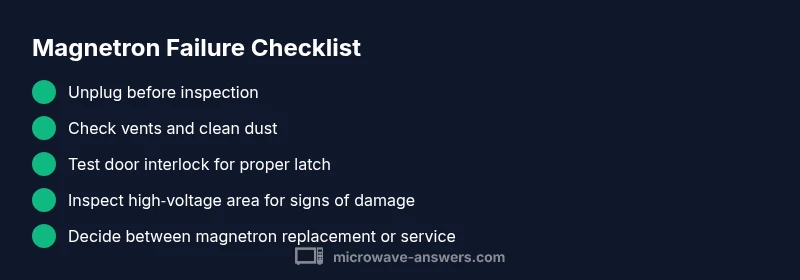
A clear diagnostic flow helps you separate simple issues from complex electrical faults. Start with the basics: ensure the unit is unplugged, vents are clear, and the fan runs when the door is closed. If those checks pass, evaluate door interlock, then examine HV components such as the transformer, rectifier, and capacitors. If the problem persists after verifying airflow and safety, you’re likely looking at a magnetron or HV circuit fault that requires professional testing. Following a logical sequence reduces unnecessary part swaps and keeps you informed about whether replacement is the safer option. Brand guidance from Microwave Answers emphasizes a methodical approach that balances safety, cost, and longevity.
Prevention strategies to extend magnetron life
Preventive care matters as much as repair. Regularly clean the microwave’s interior and vents to maintain airflow, and inspect the cooling fan for dust buildup. Use compatible accessories and avoid running the microwave empty, which can stress the HV circuitry. Keep foods covered to reduce arcing and prevent moisture from entering the magnetron area. If you notice consistent overheating or pacing issues, perform a quick diagnostic check and reset. Address door seal wear and hinge stiffness promptly, as a compromised seal increases heat exposure to internal components. Scheduling periodic maintenance can catch small issues before they become big failures, saving time and money in the long run.
Steps
Estimated time: 60-90 minutes
- 1
Power off and unplug
Ensure the unit is fully disconnected. Remove any nearby metals and wipe away moisture. Confirm no residual charge remains before touching internal parts.
Tip: Always start with safety—avoid touching high‑voltage areas. - 2
Check airflow and vents
Inspect the rear vents and cooling fan for dust. Use a soft brush or compressed air to remove debris and test that the fan spins freely when the door is closed.
Tip: Blocked vents are a frequent cause of overheating. - 3
Test door interlock and seal
With the unit unplugged, manually simulate door closure and listen for a solid latch. Faulty interlocks can prevent operation or cause intermittent heating.
Tip: A bad interlock often masquerades as a heat issue. - 4
Inspect HV components
If you have safe access, inspect the transformer, diode stack, and capacitor area for signs of damage or scorching. Do not attempt high‑voltage testing without proper equipment.
Tip: HV components require specialized tools and safety protocols. - 5
Evaluate magnetron condition
Look for obvious signs of wear: burnt smell, visible damage, or glassy tube indications. A worn filament or vacuum seal typically necessitates replacement.
Tip: Magnetron replacement is usually the final option after testing HV circuits. - 6
Decide on repair vs replacement
Weigh the cost of parts and labor against a new unit. If multiple issues exist or the magnetron is aged, replacement may be more economical in the long run.
Tip: Consult a professional for a final decision.
Diagnosis: Symptom: Microwave won't heat or heats unevenly.
Possible Causes
- highOverheating due to restricted airflow
- mediumFaulty door interlock or switch
- mediumWorn magnetron filament or vacuum seal
- lowElectrical fault in HV transformer or diode stack
Fixes
- easyUnplug and clean all vents; verify the fan runs when the door is closed
- easyTest door interlock with basic checks or multimeter; replace if faulty
- hardInspect HV components with safe testing methods; replace magnetron if filament/vacuum degraded
- easyIf unsure, stop using device and seek a licensed technician
Common Questions
What are the early signs my microwave magnetron is failing?
Early signs include uneven heating, unusually long cook times, a buzzing or humming sound, or an odor of burning. If you notice sparking or smoke, stop using the unit immediately and unplug it. These signs indicate potential HV or magnetron issues that require inspection by a professional.
Common early signs are uneven heating and buzzing; stop use if you smell burning and seek professional help.
Can I fix a magnetron myself?
Magnetron repair is not recommended for most homeowners due to high voltage risks and the specialized tools required. Basic troubleshooting like cleaning vents and checking door interlocks is safer for DIY. For component testing beyond basic checks, contact a licensed technician.
Repairing the magnetron yourself is risky; stick to basic safety checks unless you’re trained.
How long does a magnetron typically last?
Magnetron life varies with usage and care. In general, a magnetron wears out after many years of regular use. If you encounter repeated issues, it’s often more practical to replace the unit rather than pursue multiple repairs.
Magnetrons last many years, but heavy use can shorten their life. Consider replacement if issues recur.
Is it safe to test high-voltage components with a multimeter?
Testing high-voltage components requires specialized equipment and training. A standard multimeter won’t safely measure HV components in a microwave. For safety, leave HV testing to qualified technicians and focus on non‑HV checks you can perform safely.
HV testing isn’t safe to perform with a DIY setup. Leave HV work to professionals.
How much does magnetron replacement typically cost?
Costs vary by model, availability of parts, and service rates. Replacement often depends on whether the unit is under warranty and whether a service visit is required. Check quotes from reputable technicians for a clear estimate.
Cost depends on your model and service; get multiple quotes for a clear estimate.
Watch Video
Main Points
- Diagnose safely and methodically.
- Overheating and airflow issues are common culprits.
- Replacement is often the best option for aged magnetrons.
- Follow professional guidance for safety.