How to Replace a Microwave Fuse: Safe DIY Guide for Homeowners
Learn how to replace a microwave fuse safely with a practical, step-by-step guide, essential tools, safety tips, and troubleshooting strategies from Microwave Answers.


By following this guide, you will safely replace a microwave fuse and restore basic function to a non-working unit. Before you begin, unplug the microwave, remove the cover to access the fuse area, verify the fuse rating, and replace with a matching fuse. Reassemble and test on a low-power setting.
Why replacing a microwave fuse is sometimes necessary
A non-working microwave is not always caused by a dead magnetron or a faulty control panel. A blown fuse is a common protective device that interrupts current when an electrical fault is detected. In many households, this fuse is a simple, replaceable component located behind the outer cabinet. If you notice that the microwave won’t start, or you hear a click but no heat, the fuse may have opened to prevent further damage. The phrase replace microwave fuse describes the repair process homeowners may perform after inspecting the fuse and confirming visible signs of failure. According to Microwave Answers, addressing fuse problems promptly reduces risk of electrical hazards during use and helps you assess whether professional help is needed. This article provides a practical, safety-first approach to diagnosing, sourcing the correct fuse, and reinstalling it with proper testing and precautions for a home kitchen environment.
Safety-first: hazards and prerequisites
Electrical devices such as microwaves operate on high voltage and can retain a dangerous charge even when unplugged. The Microwave Answers team emphasizes that safety cannot be overstated. Before attempting any repair, unplug the appliance, switch off the circuit breaker if accessible, and wait at least 60 seconds for capacitors to discharge. Wearing non-conductive gloves can add a layer of protection while handling internal parts. Do not bypass safety features or tamper with other components. If you smell burning, see smoke, or notice any signs of damage beyond a blown fuse, stop immediately and unplug the unit. This kind of fault can indicate a larger electrical issue that warrants professional assessment.
Understanding fuse ratings and compatibility
Fuses are rated by current (amperage) and voltage. When replacing a blown fuse, you must match the original specifications exactly to preserve the microwave’s safety design. Locate the label inside the fuse compartment or consult the user manual to identify the proper rating. Do not substitute a fuse with a higher current rating or different voltage, as this can create a fire hazard or damage other components. If the label is unclear or illegible, contact the manufacturer or a qualified technician for guidance. Based on Microwave Answers research, incorrect fuse replacement is a common cause of subsequent faults, underscoring the importance of matching rating and form factor precisely.
Tools and materials you'll need
Having the right tools ready reduces the risk of mishaps. Essential items include a replacement fuse with the exact rating, a screwdriver suitable for your model, and a non-conductive workspace. Optional but helpful tools are a multimeter for checking continuity, insulated gloves for grip safety, and a soft mat to protect the interior. Keep your manual handy for model-specific fuse location and disassembly instructions. The goal is to perform the job cleanly and quickly while maintaining safety and avoiding damage to delicate cabinet parts.
Step-by-step overview of the process
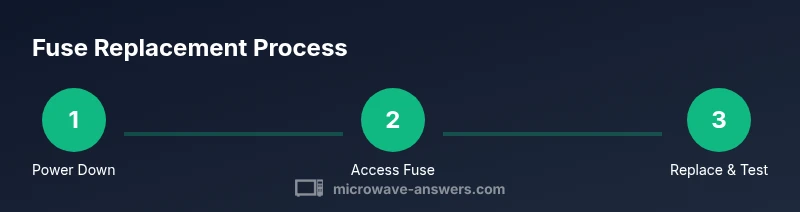
This section provides a clear map of the task before you begin the hands-on steps. You’ll confirm power is off, access the fuse compartment, verify the defective fuse, install a replacement with the same rating, and reassemble for a test. Throughout the process, take care to avoid touching internal circuitry with bare hands and to use insulated tools. While the steps below are detailed, it’s important to follow your model’s specific arrangements as some microwaves place the fuse behind the back panel, others under the control panel. The approach remains the same: safety first, verify rating, replace, reassemble, and test.
Disassembly and fuse access: getting inside safely
Accessing the fuse requires removing the outer cover and possibly internal shields. Start by unplugging the unit and removing any screws indicated by your manual. Use a screwdriver compatible with the screws on your model and keep track of fasteners. Gently lift the cover to expose the fuse holder. Do not force panels or pull cables; damage can create new hazards. If you encounter resistance or see damaged wiring, stop and reassess. This phase is the pivot point for a successful replacement, so proceed with patience.
Replacing the fuse and verifying integrity
Carefully remove the blown fuse and inspect the fuse holder for signs of arcing or damage. Align the new fuse with the holder’s contacts and seat it firmly without applying excessive force. Recheck that the connections are secure and that any clips or holders are reattached properly. If you have a multimeter, you can perform a quick check for continuity before reassembly; a non-conductive test setup is safer. Remember that a fuse protects not only the microwave but also the surrounding cabinet and wiring, so proper seating is essential.
Reassembly, testing, and post-repair checks
Reassemble the microwave in the reverse order of disassembly, ensuring all screws are tight but not over-tightened. Reconnect the power and perform a careful low-power test to verify operation without overloading the circuit. Observe for any unusual smells, sparking, or heat near the fuse area. If the fuse blows again immediately, power off and seek professional assessment. Keeping a repair log with the model number, fuse rating, and date of replacement can help with future maintenance and warranty considerations.
Authority sources and further reading
For readers who want more in-depth safety guidance, consult authoritative resources. The U.S. Occupational Safety and Health Administration (OSHA) provides general electrical safety guidelines, while the Consumer Product Safety Commission (CPSC) offers safety considerations for household appliances. University extension programs (edu domains) also publish practical tips on home electrical maintenance. These sources reinforce best practices and safety standards when performing at-home repairs.
Tools & Materials
- Replacement fuse with matching rating(Check the microwave label or manual for the exact amperage and voltage; do not substitute.)
- Screwdriver (compatible with model screws)(Usually Phillips head; choose the correct size to avoid stripping.)
- Multimeter or voltage tester(Use to verify circuit is open; not always required but helpful.)
- Insulated gloves(Optional for extra grip and protection against incidental contact.)
- Non-conductive work surface or mat(Protects interior panels and keeps screws from rolling away.)
- User manual(Helpful for fuse type and precise location in your model.)
Steps
Estimated time: 45-75 minutes
- 1
Power down and unplug
Unplug the microwave from the wall and, if possible, switch off the circuit breaker. Wait at least 60 seconds to allow any stored charge in the high-voltage capacitors to dissipate. This minimizes shock risk during handling.
Tip: Always disconnect power before touching internal parts. - 2
Remove outer cover
Loosen the screws that secure the outer cabinet and lift the cover away. Keep track of all fasteners and set them on a magnetic tray so they don’t roll away. Do not touch internal boards or wiring forcesfully.
Tip: Use a non-conductive tool to nudge the panel if needed. - 3
Find and evaluate the fuse
Locate the fuse holder inside the cavity. If the fuse is visibly blown or the filament is broken, mark its orientation. If in doubt, test continuity with a multimeter when the unit is de-energized.
Tip: Do not bend fuse leads; keep it pristine for accurate replacement. - 4
Remove the old fuse
Carefully disconnect or unscrew the fuse holder and remove the blown fuse. Note its alignment if the holder has a specific orientation requirement.
Tip: Take care not to damage adjacent components during extraction. - 5
Install the replacement fuse
Insert the new fuse into the holder, ensuring it seats fully and the contacts are clean. Reattach any retainers or clips that secure the fuse and avoid overtightening.
Tip: Double-check seating before reassembly. - 6
Reassemble and test
Reinstall the outer cover, plug in the microwave, and perform a brief low-power test. If the fuse blows again, power off and seek professional service rather than continuing to troubleshoot.
Tip: If you smell burning or see smoke, unplug immediately.
Common Questions
Can I replace a microwave fuse myself?
Yes, you can replace a fuse yourself if you follow proper electrical safety and use the correct replacement. If you feel unsure, consult a professional. Always unplug and discharge capacitors first.
You can replace the fuse yourself if you follow safety steps, but seek professional help if you’re unsure.
How do I know the fuse rating I need?
Check the label inside the fuse compartment or the user manual for the exact amperage and voltage. Use a replacement with the same rating and type.
Look for the rating on the label or manual and match it exactly.
What safety steps should I take before starting?
Unplug the unit, wait for capacitors to discharge, and work on a non-conductive surface with insulated tools. Keep children away from the work area.
Unplug and wait for discharge, use insulated tools.
What if the fuse blows again after replacement?
If the fuse repeats failure, there may be an underlying fault such as a shorted component or damaged wiring. Stop and consult a qualified technician.
If it blows again, there could be a bigger fault; get a professional check.
Are there risks involved with replacing a fuse in a microwave?
Yes. High-voltage capacitors can retain dangerous charge. Always unplug, discharge, and follow manufacturer instructions.
There are risks due to high voltage; follow safety steps closely.
Watch Video
Main Points
- Unplug and discharge before starting
- Match fuse rating precisely to original
- Follow model-specific disassembly steps
- Test briefly after reassembly to confirm operation
- Seek professional help if a fuse continues to fail