How to Check a Microwave Transformer: A Practical Guide
Learn safe, practical steps to inspect a microwave transformer, recognize warning signs, and decide whether replacement or professional service is needed with our detailed guide.


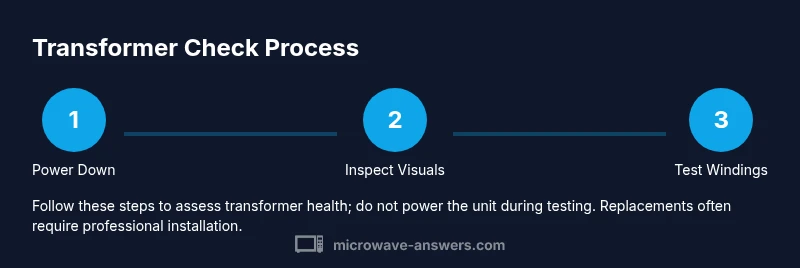
To check a microwave transformer, unplug the microwave, discharge stored energy, and inspect for signs of damage. Use a multimeter to test primary and secondary windings for continuity, listen for unusual noises, and check for burnt odor. If you see burns or abnormal readings, replace the transformer rather than attempt a repair.
What a microwave transformer does and why testing matters
In a microwave oven, the transformer is a heavy, high-voltage component that steps up the incoming household voltage to power the magnetron and other high-voltage circuits. Because the transformer handles high current and high voltage, a fault can prevent heating, arc, or trip the house circuit. Understanding how to check the transformer helps you isolate whether the transformer is the source of the problem or whether another part, such as the diode, capacitor, or control board, is at fault. The process described here focuses on safe, non-destructive checks that you can perform with basic tools. Always prioritize safety and assume high voltage even when the unit is unplugged. The keyword how to check microwave transformer should guide your approach, ensuring you verify both physical condition and electrical continuity before making replacement decisions.
Keep in mind that some failures are internal and not visible from the outside, so a careful combination of visual checks and electrical tests yields the best assessment.
Safety first: precautions before you begin
Safety is non-negotiable when you're working with microwave components. Always unplug the appliance and allow time for capacitors to discharge. Do not rely on the power switch alone to guarantee the circuit is dead. Wear protective eyewear and insulated gloves, and work on a non-conductive surface. Keep liquids away and avoid touching metal parts with wet hands. If you smell smoke, hear buzzing, or notice a sizzling sound, power off immediately and unplug the unit. If you are uncertain about any step, stop and seek professional help. This kind of task involves high voltage and can be dangerous if mishandled.
Visual inspection: what to look for on the transformer and surrounding components
During visual inspection, look for obvious damage such as burnt insulation, discoloration on the transformer casing, melted varnish, or scorching around lead connections. Check for loose or corroded terminals and cracked solder joints. Inspect the wiring harness and any connectors to ensure there are no frayed wires or pinched insulation. A transformer that has physically swollen or deformed parts should be considered a replacement candidate. Remember: visible damage is a strong indicator that the transformer is likely at fault; however, some failures are internal and not visible from the outside. A careful look can save time and potential hazards when you handle high voltage equipment.
Electrical testing basics: using a multimeter to assess windings
To test transformer windings, you will need a digital multimeter. Start by isolating the transformer from the microwave's chassis if possible and ensuring the unit is completely unplugged. Set the meter to the resistance or continuity range. Measure continuity between the primary winding terminals; you should see a consistent, low resistance. Then measure the secondary winding; a similar reading indicates continuity. Use the same method to test any associated windings or taps that may be present. If readings are infinite (no continuity) or show extremely low resistance that suggests a short, the transformer is likely defective. Always discharge any residual energy in capacitors before probing, and avoid touching exposed conductors. If you are not sure how to interpret the readings, consult a professional.
Interpreting results and next steps: when to replace or repair
If visual inspection shows damage or testing reveals abnormal windings, replacement is usually the safest option. A transformer is a high-voltage, high-current part that often is not repairable in a reliable way. If readings are borderline, consult a professional who can perform more advanced tests or perform a controlled replacement. In some cases, the issue may be with the control board, diodes, or high-voltage capacitor, not the transformer itself. Document readings and keep the model number handy for a parts search. The key is to balance safety, reliability, and cost when deciding the next step.
Remember that not every microwave problem is the transformer; follow a structured diagnostic approach to avoid unnecessary replacements.
Common mistakes and best practices
Common mistakes include testing with the microwave plugged in, using the wrong multimeter settings, or assuming a flicker in the display means a transformer issue. Always lock out the power and discharge capacitors before touching any components. Label wiring before disassembly so reassembly is accurate. Use non-conductive tools and keep metal fragments away from high-voltage areas. If you are not confident, stop and seek professional service.
Tools & Materials
- Safety goggles(Protect eyes from arc, solder splashes, and sharp edges)
- Insulated gloves(Minimum rating is 1-2 layer insulation)
- Screwdriver set (insulated)(Phillips and flat-head; used for housing screws)
- Digital multimeter(Prefer auto-range; set to ohms/continuity)
- Non-contact voltage tester(Quickly verify power is off)
- Wire labels or tape(Label leads during disassembly)
- Anti-static mat or clean workspace(Helps control static and keeps parts organized)
Steps
Estimated time: 45-60 minutes
- 1
Power down and unplug the microwave
Ensure the appliance is unplugged and set aside. Wait at least 5 minutes to allow residual energy to dissipate. This step reduces the risk of shock during later checks.
Tip: If you can't unplug the unit, do not proceed; safety first. - 2
Discharge stored energy safely
If accessible, discharge any remaining energy from capacitors using a resistor or a discharge tool designed for high-voltage appliances. Do not short capacitor terminals with metal tools.
Tip: Never touch capacitor leads while discharging. - 3
Remove the outer cover to access the transformer
Carefully remove the back cover or access panel using the insulated screwdriver. Keep screws organized and avoid touching internal components as you gain access.
Tip: Take a photo of wiring before removing connectors to aid reassembly. - 4
Isolate transformer for testing
Detach transformer leads from the surrounding circuitry as allowed by your model. Keep work surface dry and wear insulated gloves while handling wires.
Tip: Label wires to prevent misconnection during reassembly. - 5
Test windings with a multimeter
Configure the multimeter to the ohms/continuity range. Check continuity across the primary winding first, then the secondary, noting resistance values and consistency across similar windings.
Tip: Compare readings to the service manual or a known-good unit if available. - 6
Interpret results and plan next steps
If continuity is absent or readings are wildly inconsistent, the transformer is likely defective. Decide between replacement or professional evaluation. Remember that other components can mimic transformer failures.
Tip: Document readings and model info for a precise parts search.
Common Questions
Can a microwave transformer be repaired?
Most microwave transformers are sealed, high-voltage components and are not reliably repairable. Replacement is typically the safer and more dependable option.
Transformer repair is rarely reliable; replacement is usually the best course.
What are common signs of transformer failure?
Unusual humming, a burning odor, visible damage, or the microwave failing to heat are common indicators. If you notice any of these, replace or professionally test the unit.
Listen for buzzes or smells, then inspect with caution.
Is it safe to test the transformer with the microwave unplugged?
Unplugging is essential, but high voltage capacitors can store a charge. Discharge safely and use proper tools. If unsure, seek professional help.
Even unplugged, high voltage can linger; test carefully or call a pro.
Do I need to replace the magnetron along with the transformer?
Not automatically. A failing transformer can affect power to the magnetron, but magnetron failures happen independently. Check both, and replace parts as needed based on testing and symptoms.
Usually you replace the part that’s faulty; magnetron may be fine.
How much does transformer replacement cost?
Costs vary by model and supplier. Get a professional estimate and consider whether replacement parts are readily available for your microwave.
Prices vary; ask for an estimate from a qualified technician.
Watch Video
Main Points
- Unplug and discharge before touching any HV parts.
- Use a multimeter to check transformer windings for continuity.
- Look for visible damage and listen for abnormal sounds or smells.
- Replace the transformer if damage or abnormal readings are found.
- Consult a professional for high-voltage work and safety.