How to Check Microwave Magnetron: A Practical Guide
Learn how to check a microwave magnetron safely, diagnose common symptoms, and decide whether repair or replacement is needed. Step-by-step guidance with safety tips from Microwave Answers.


To check a microwave magnetron, you’ll assess symptoms like no heat, sparking, or unusual smells, then perform safe, non-destructive tests such as visual inspection and continuity checks with a multimeter. This guide emphasizes safety and when to replace rather than repair. You should unplug the unit, discharge capacitors, and consult the manufacturer’s service manual if available.
What is the magnetron and why check it?
The magnetron is the microwave oven's heart; it converts electrical power into microwave energy that heats food. When it fails, you may notice no heat, uneven cooking, or buzzing sounds. Understanding the magnetron's role helps you diagnose whether the symptom points to the magnetron or to other subsystems like the high-voltage transformer, diodes, capacitor, or control board. In this guide, we focus on safe, non-destructive checks you can perform as a homeowner or DIY enthusiast, while emphasizing when to stop and call a professional. Remember that working with a live microwave can expose you to dangerous voltages, so always power down and discharge capacitors before touching internal components. If your microwave is under warranty or you lack service documentation, the safest option is professional service. In many cases magnetron issues are associated with thermal overload, loose connections, or contamination from moisture; these conditions are easier to detect before removing the magnetron from its housing. By understanding the magnetron's role and typical failure modes, you can make an informed decision about repair vs replacement and avoid unnecessary risk.
Safety first: precautions before testing
Safety is non-negotiable when you work with any microwave internals. Before you touch anything, unplug the unit from the wall outlet and confirm the microwave is completely offline. Allow time for capacitors to discharge; for many models, waiting at least 60 seconds after unplugging is a prudent precaution. If you must remove the outer cover, use insulated tools and wear eye protection and non-slip gloves. Keep metal jewelry away from the work area to prevent accidental arcing. Work on a non-conductive surface, away from water, and never attempt repairs beyond your training. If you’re unsure about handling high-voltage components, stop and consult a professional. For warranty or model-specific steps, refer to the service manual for your exact microwave model.
Symptoms that indicate magnetron problems
Several symptoms commonly point to magnetron-related trouble, though they can also be caused by other components. No heat or uneven heating after normal operation often suggests magnetron degradation or failure. A buzzing or humming sound during operation can indicate a failed or overheating magnetron. If you observe arcing, smoking, or a burning odor inside the oven cavity, these are strong signals of internal damage. In some cases, the oven may run without stopping or display error codes related to high voltage components. Note that diagnosing magnetron issues can be tricky; a symptom can also result from the door interlock, control board, or transformer. Always rule out simpler causes (like a faulty door switch or dirty cavity) before concluding the magnetron is at fault.
Visual inspection checklist
Use a bright, clean light and mirror to inspect the magnetron area when the back panel is removed per the service manual. Look for signs of scorching, burn marks, melted insulation, or loose or corroded connectors around the magnetron terminals and its housing. Check the waveguide area for unusual residue or food splatter that could indicate overheating. Inspect the high-voltage diode and capacitor assembly if accessible, looking for bulging capacitors or crusty diode ends. If you find obvious damage or burning, stop and do not power the unit again; magnetron replacement or professional service is required. Document all findings with photos for reference when consulting a technician.
Safety-oriented electrical considerations
High-voltage components inside a microwave pose serious risks. Do not attempt to test or handle HV parts unless you have the appropriate training and follow the model’s service manual. If you do access electrical components, disconnect power, wear PPE, and keep tools non-conductive. A safe non-destructive approach focuses on external and visible checks first, such as door interlocks, control board indicators, and visible wiring integrity; internal electrical tests should be left to qualified technicians. If the unit is old or dishware has developed unusual issues, replacement of the magnetron or the entire HV assembly may be warranted rather than risky DIY testing.
What a service manual tells you
A model-specific service manual is your best friend for magnetron checks. It provides correct disassembly procedures, terminal layouts, testing procedures, and safety precautions tailored to your microwave. Manuals often include torque specs for screws, connector pinouts, and steps to discharge HV circuits safely. Following the manual helps prevent accidental damage to the magnetron or surrounding components and improves the likelihood of a correct diagnosis. If you cannot locate the official manual, look for the exact model number online through the manufacturer’s support portal or reputable repair databases. Do not improvise tests or wiring changes without documentation.
Step-by-step diagnostic workflow (high level)
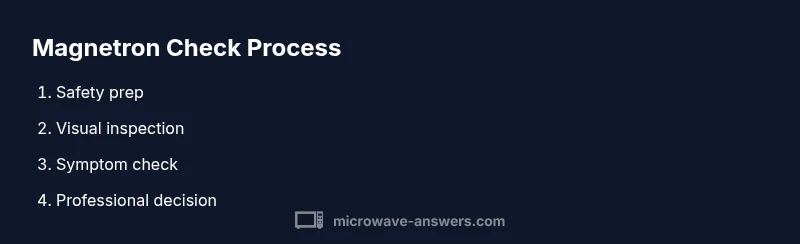
When approaching magnetron checks, follow a logical workflow to minimize risk and misdiagnosis. Start with simple, non-invasive checks, move to component-level inspections, and finally decide whether to seek professional service. Emphasize model-specific guidance from the manual at every stage. Keep records of symptoms, dates, and results for future reference or when contacting support. Remember that a magnetron’s failure is not always the root cause; power supply, door switches, or control boards can masquerade as magnetron symptoms. Use a methodical approach to ensure you don’t overlook a simpler fix.
Next steps and maintenance tips
If inspection and manual-guided checks point to magnetron failure, replacement is usually the most reliable option, as magnetrons are sealed tubes with limited repair viability. Before ordering a replacement, confirm model compatibility and obtain the correct wattage rating. If you are not comfortable performing replacement, hire a qualified technician. To prolong magnetron life, practice proper usage: avoid running the oven empty, keep the interior clean to prevent arcing, and ensure the door seals remain intact. Regular inspections and timely service can prevent unexpected failures and maintain safe operation.
Tools & Materials
- Safety goggles (ANSI-rated)(Eye protection required when disassembling or inspecting inner components)
- Insulated multimeter(Used to check continuity only if permitted by the service manual; do not test HV parts without training)
- Screwdriver set (Phillips and flathead)(For removing access panels and mounting screws; use insulated handles when possible)
- Non-conductive flashlight(Bright light to inspect for scorching or arcing inside the cavity)
- Service manual for model(Model-specific manual with disassembly steps and safety instructions)
- Soft, non-marring gloves(Protects hands and components during handling; magnetrons can have sharp edges)
- Replacement magnetron (if needed)(Only replace after confirming the magnetron is faulty and you have a compatible unit)
Steps
Estimated time: 60-90 minutes
- 1
Prepare and safety
Ensure the microwave is unplugged and the area is dry. Remove jewelry and wear PPE. If your model has a back panel, follow the manual to access the internals only after discharging any residual voltage.
Tip: Never bypass safety interlocks or work with exposed HV components. - 2
Open access and locate the magnetron
Carefully remove the back cover per the service manual. Identify the magnetron: a sealed metal cylinder with coaxial connections and mounting hardware. Photograph all connectors before touching anything.
Tip: Label connectors to ensure correct reassembly. - 3
Visually inspect for damage
Look for scorching, cracks, broken insulation, or burnt wiring around the magnetron and its connectors. Check the waveguide and surrounding insulation for signs of heat damage.
Tip: A visual cue often precedes electrical faults. - 4
Check for arcing or odor clues
If you see sparking inside the cavity or smell burnt plastic, stop immediately. These can indicate serious issues with the magnetron or HV components.
Tip: Do not power the unit again until assessed by a professional. - 5
Assess door interlocks and control indicators
Test door interlocks and inspect any LED indicators on the control board. Faulty interlocks can mimic magnetron failure by preventing the oven from energizing.
Tip: Some issues are resolved by a door switch replacement rather than magnetron repair. - 6
HV component caution and manual references
If the service manual allows, follow manufacturer instructions for safe HV component tests. Many tests require specialized equipment and training; if in doubt, stop and consult a pro.
Tip: Never attempt to discharge or test HV parts without proper training. - 7
Model-specific tests and decisions
Use the manual’s test procedures to verify connections, continuity, and resistance as specified. If diagnostic results point to the magnetron, compare model compatibility and warranty status before replacement.
Tip: Document results for the technician or replacement part supplier. - 8
Decision: repair or replace
If the magnetron shows signs of internal damage, replacement is often the safer, more reliable option. If other components fail tests, consider repairing those first or seeking professional help.
Tip: Magnetrons are sealed tubes; replacement is generally more cost-effective than internal repairs.
Common Questions
Can I test the magnetron while the microwave is plugged in?
No. High voltage remains present even when the unit seems off. Always unplug and discharge capacitors before any inspection. If in doubt, seek professional help.
No—unplug the microwave and discharge capacitors before any inspection.
What are common signs of magnetron failure?
No heat, uneven cooking, buzzing sounds, arcing, or burning odors can indicate magnetron problems, but other components can cause similar symptoms.
Look for no heat, unusual sounds, or odors; these warrant professional evaluation.
Is a magnetron repairable, or should I replace it?
Magnetrons are sealed tubes; most repairs involve replacement rather than repair. Check the model warranty and consult a technician for a proper replacement.
Usually replacement is the safer option; consult a technician for a proper part.
Do I need a service manual to check magnetron?
A model-specific service manual is highly recommended. It provides disassembly steps, safety guidelines, and exact test procedures.
A model-specific manual is essential for safe and accurate checks.
What precautions should I take after I suspect magnetron failure?
Unplug the unit, avoid handling exposed HV parts, and do not attempt to operate the microwave. Contact a professional for diagnosis and replacement.
Unplug and seek professional help if magnetron failure is suspected.
Can I diagnose magnetron issues with a multimeter?
Some tests require a service manual and proper HV safety procedures. Do not perform HV diagnostics unless trained; consult a technician.
HV tests require training; consult a professional for safety.
Watch Video
Main Points
- Power off and discharge before touching internals
- Use model-specific manuals for safe, accurate checks
- Visual inspection can reveal most magnetron issues
- Replacement is often the safest option for magnetrons
- Consult a professional for HV tests and magnetron replacement