What to Do When Microwave Overheats: Quick Troubleshooting Guide
Urgent guide to safety and fixes when a microwave overheats. Learn causes, immediate steps, diagnostic flow, and prevention to protect your home and appliances.


If your microwave overheats, unplug it immediately and stop using it. Let the unit cool completely, then inspect for obvious issues like a blocked vent, damaged door seal, or burnt smells. Do not operate it again until you’ve ruled out a forgotten item or moisture buildup. If overheating recurs, contact a licensed technician to avoid fire or electrical hazards.
Why overheating matters and what to do when microwave overheats
Overheating in a microwave is more than an annoyance—it can signal airflow problems, worn seals, or faulty components that could pose a fire risk. If you’re wondering what to do when microwave overheats, safety comes first. According to Microwave Answers, most overheating incidents happen because vents are blocked or the door seal has degraded, which traps heat and moisture inside. In these moments, quick, careful action protects your kitchen and reduces the chance of permanent damage to the magnetron or control board. Start with the simplest checks: ensure nothing metallic is inside, confirm the turntable isn’t jammed, and verify the exterior vents aren’t clogged. By approaching the issue calmly, you reduce risk and set up a solid path to a lasting fix.
bold: true],
Common causes of microwave overheating
Microwave overheating typically stems from airflow restrictions, door seal wear, or user mistakes. Blocked vents from food debris or spills reduce cooling efficiency and cause internal components to work harder. A compromised door seal or misaligned door latch can let heat escape poorly, prompting the system to run longer than intended. Using metal containers, foil, or dishes with metal trim can cause arcing and stress the magnetron. Age and power supply faults also contribute: older models may have degraded insulation or worn fans, making overheating more likely during heavy use. Understanding these culprits helps you target the right fix without unnecessary disassembly. Across multiple Microwave Answers analyses, these causes remain the most actionable for homeowners and DIY enthusiasts.
bold: true],
Immediate safety steps you should take
When you notice the microwave overheating, act quickly but calmly. First, stop the oven and unplug the unit to eliminate power. Do not open the door if you smell smoke or hear abnormal buzzing while powered; wait for it to cool. Remove any hot foods carefully with oven mitts, and place them in a safe container away from flammables. Check the exterior and vents for clogs and clear them with a soft brush or cloth. If the unit cools and you cannot identify a clear cause, avoid running it again until a professional checks the magnetron, wiring, and control board. Remember: never operate a damaged microwave, and never bypass the safety interlocks.
bold: true],
Diagnostic flow: symptom → diagnosis → solutions
Symptoms: local heat buildup, burning smell, or shutdown during operation.
Diagnoses range from simple airflow blockages to faulty internal components. Start with the easiest checks:
- Are the vents clean and unobstructed?
- Is the door seal intact, with no cracks or warping?
- Is food or liquid buildup restricting heat dissipation?
If simple fixes don’t resolve the issue, progression to the magnetron or power supply is likely. Solutions vary by cause: clear vent debris, replace a damaged seal, remove metal objects, or schedule service for component replacement. In all cases, discontinue use if you detect smoke, sparking, or a strong burning odor.
bold: true],
Step-by-step: basic fixes for the most common cause (vent and seal)
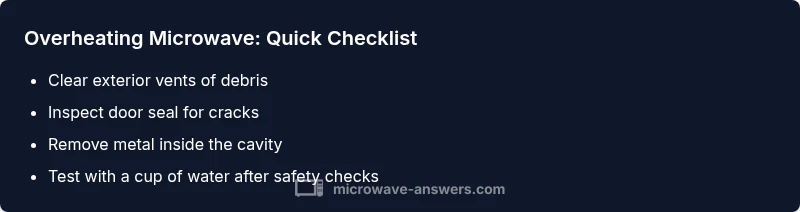
- Power off and unplug the microwave. 2) Inspect and clean exterior vents with a soft brush; remove lint and debris. 3) Open and check the door seal for cracks; wipe clean and test with a tissue to check for gaps. 4) Reconnect and run a short test with a cup of water to observe heating behavior. 5) If overheating continues, stop and contact a technician.
Tip: Always unplug before inspecting internal parts and never operate with damaged seals. Safety first keeps you from electric shocks and fire hazards.
tip:
Steps
Estimated time: 15-20 minutes
- 1
Power off and unplug
Turn off the microwave and unplug it from the wall. This stops electrical current and reduces the risk of shocks while you inspect for signs of damage or blockages.
Tip: If the plug is hard to reach, switch off at the circuit breaker instead. - 2
Check vents and clean
Look at the exterior vents and the interior fan housing if you can safely access it. Use a soft brush or microfiber cloth to remove dust, lint, and food debris.
Tip: Do not use water directly on electronic components; use a dry or slightly damp cloth. - 3
Inspect the door seal
Examine the door gasket for cracks, warping, or gaps. A damaged seal lets heat escape or lets moisture in, both of which can lead to overheating.
Tip: Test the seal by closing the door on a sheet of paper—if it pulls out easily, the seal may be worn. - 4
Remove interior obstructions
Ensure there is no foil, metal bowls, or standing metal utensils inside. These items can cause arcing and put extra stress on the magnetron.
Tip: Always transfer food to microwave-safe containers before heating. - 5
Run a controlled test
Place a cup of water inside and run a short: 30-60 second test cycle. If the unit still overheats or hums unusually, stop and seek professional help.
Tip: Keep a safe distance and avoid touching the interior after a test. - 6
Consult a professional
If overheating recurs after basic checks, arrange service for internal components like the magnetron or power supply. Replacements should follow manufacturer guidelines.
Tip: Avoid DIY repairs on high-voltage components to prevent serious injury.
Diagnosis: Microwave overheats during normal operation
Possible Causes
- highBlocked ventilation or fan failure
- highDamaged door seal or misaligned door
- highMetal inside or foil causing arcing
- mediumFaulty magnetron or power supply
Fixes
- easyUnplug and clean vents; remove debris
- mediumInspect door seal; replace if damaged
- easyRemove any metal objects and plastic wrap that could cause arcing
- hardIf issues persist, schedule service for magnetron or power supply check
Common Questions
What causes a microwave to overheat most often?
The most frequent causes are blocked vents, a worn or damaged door seal, and improper use (metal inside or foil). Age and power issues can also contribute. Regular checks help catch these early.
Most overheating happens because vents are blocked or the door seal is damaged. Regular checks help you catch it early.
Is it safe to use a microwave after it overheats once?
If overheating occurred once but the unit cools and basic checks pass, you can cautiously test again. If it recurs, discontinue use and consult a technician.
If it overheats again, stop using it and call a technician.
Can a magnetic component cause overheating?
Yes. A failing magnetron or power supply can overheat the cavity or fail to regulate power properly. This usually requires professional assessment and possible replacement.
A faulty magnetron can cause overheating and needs a professional check.
What should I do if I smell burning or see smoke?
Immediately unplug the unit and keep it away from combustibles. Do not use water to cool hot electrical components. Contact emergency services if the smell intensifies.
Unplug it right away and keep away from anything flammable.
How long should I wait after cooling before testing again?
Give the microwave at least 15-30 minutes to cool fully before attempting another test or heating food.
Let it cool for 15 to 30 minutes before testing again.
When should I replace rather than repair a microwave?
If the appliance is older, showing repeated overheating, or has major internal component failures, replacement is often more economical and safer.
If it keeps overheating after repair, it’s usually best to replace it.
Watch Video
Main Points
- Unplug and inspect for obvious causes first
- Ventilation and door seals are the most common overheating culprits
- If overheating repeats, stop using and seek professional service
- Never use metal or foil in the cavity during operation
- Regular maintenance reduces the risk of future overheating