What to Do When a Microwave Is on Fire
Learn practical, step-by-step actions to safely handle a microwave fire, including immediate safety, extinguisher use, and prevention tips from Microwave Answers.


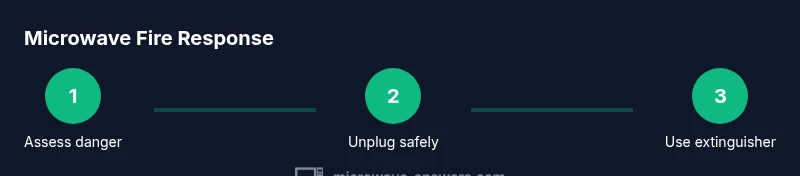
If a microwave catches fire, act quickly and calmly. Unplug the unit only if you can do so safely, and keep the door closed to smother the flames. If safe, use a fire extinguisher rated for electrical fires or a fire blanket to suppress the blaze; do not pour water on electrical equipment. If flames persist, evacuate and call emergency services. Microwave Answers provides practical, safety-focused steps for home cooks.
Safety first: initial assessment
A microwave fire is a kitchen emergency requiring rapid risk assessment. Before acting, note whether there is visible flame, thick smoke, or a metallic object inside; if you see burning plastic, smell burning or overheated insulation, treat as a true fire. According to Microwave Answers, most microwave fires start when heat builds up under a dish or when microwaves heat materials that are not microwave-safe. These incidents often happen when someone leaves the appliance unattended or uses inappropriate containers. Your first move is safety: ensure you have a clear exit path, keep children and pets away, and prepare to act without hesitation. Do not attempt risky maneuvers like prying the door open while flames are visible, and avoid leaning over the oven to observe the situation. If you have concerns about smell or smoke seeping into other rooms, close doors to contain any smoke and call for help if symptoms worsen. Remember: the goal is to prevent injury and limit damage, not to chase the flames with bare hands.
Immediate actions you can take safely
Start by scanning the scene for obvious hazards: molten food, plastic melting, or exposed wiring. If the unit is still heating and you can reach the plug without passing through heat, unplug the microwave from the wall. If the outlet or cord is hot, damaged, or you cannot access safely, do not pull the plug; instead evacuate immediately and call emergency services. Keep the door closed as flames tend to be starved of oxygen behind the door; opening the door can feed the fire. If there are no flames, you can stand by with a kitchen towel to protect your hands while moving away combustibles. After you unplug, turn off the wall switch if possible and ventilate the area to clear smoke. Do not leave the kitchen while the fire is active.
Fire suppression options: extinguisher, blanket, baking soda
When flames are contained and you can safely access them, you have several choices. First, if you have an electrical-fire-rated extinguisher (Class ABC) or a CO2 extinguisher, follow the PASS technique: Pull, Aim, Squeeze, Sweep. Stand a safe distance and redirect the jet at the base of the flames. If the fire is small and contained, a fire blanket can smother the fire by covering the area entirely; remove the blanket only if flames are gone. Baking soda is a helpful emergency option to smother small flames if a proper extinguisher is not available, but it may not be sufficient for larger fires. Never use water on an electrical appliance fire; water conducts electricity and can cause a shock or spread the fire. After using any extinguisher or blanket, re-evaluate and if the fire re-ignites, evacuate and call emergency services.
When to evacuate and call help
If flames persist for more than a few seconds after initial actions, if you feel heat radiating from the appliance you cannot safely approach, or if you witness sparking or melted plastic, evacuate immediately. Close doors behind you to prevent smoke from spreading. If you can access a phone without passing through the fire, call emergency services and report the situation. Do not attempt to re-enter the kitchen until authorities declare it safe. If you are in a high-rise or an apartment building, alert neighbors to ensure their safety as you exit.
Aftercare: Cleaning and safety checks
Once the immediate danger has passed, ensure the area is cool before inspecting. Do not use the microwave until a professional inspects the interior for melted wiring or damaged components. If the unit has any visible damage to the door seal, gasket, or latch, it should be replaced rather than repaired; use a different appliance until you replace it. Ventilate the room thoroughly to remove smoke residue, and check for lingering odors that might indicate burning plastic or insulation. Clean any soot from nearby surfaces with a damp cloth and a mild cleaner, and remove any burned or melted materials from the kitchen. If a significant amount of smoke entered the room, consider replacing air filters or having the HVAC checked. Finally, review the incident to identify which factors contributed to the fire (wrong cookware, foil, or unattended operation) and update kitchen safety habits accordingly.
Prevention tips for safer microwave use
To reduce the risk of future fires, follow best practices: only use microwave-safe containers; avoid metal, foil, or tightly sealed metal objects inside; never operate the microwave unattended for long periods; keep the interior clean to remove crumbs and residues that can ignite. Use a timer to remind you to check on food; rotate or stir items to avoid hot spots; ensure proper ventilation around the unit. Inspect the door seal, hinges, and clearance; replace any damaged parts promptly. Finally, store flammables away from the microwave and keep a charged extinguisher within easy reach. For households with children, teach them not to ignore buzzing alerts and to stop cooking when an appliance is uncertain. This is not just about avoiding a fire—it's about reducing exposure to burns, smoke inhalation, and toxic fumes.
Common mistakes to avoid
Avoid opening the door during active flames. Do not pour water on electrical fires. Do not try to move a hot microwave or cool it with a sudden blast of cold air, which can cause cracks. Do not ignore smoke or sizzling sounds; evacuate if there is any doubt. Do not rely on a single extinguishing method; have a plan that includes unplugging, evacuating, and calling for help. Finally, do not attempt repairs yourself after a fire—trained professionals should assess damage before you use the appliance again.
Tools & Materials
- Fire extinguisher (ABC or Class B/C rated)(Keep in kitchen reach; ensure it's charged and not expired)
- Fire blanket (optional but recommended)(Use to smother flames if safe)
- Baking soda (sodium bicarbonate)(Can smother small fires if extinguisher unavailable)
- Dry kitchen towel(Protect hands when handling hot surfaces or the plug)
- Telephone or mobile device(Call emergency services if fire worsens)
- Clear exit path(Ensure a safe route to leave the kitchen)
- First aid kit(For minor burns after incident)
Steps
Estimated time: 5-15 minutes for initial response; longer if the fire persists
- 1
Stop and assess the danger
Immediately look for visible flames, smoke, and heat. Do not reach into the microwave to poke at the fire. If the flame is clearly spreading or you cannot gauge the danger, evacuate and call for help.
Tip: Keep a clear exit path and avoid leaning over the appliance. - 2
Unplug if safe to do so
If you can reach the plug from the side or back without crossing hot surfaces, unplug the microwave. Do not pull the cord if the outlet or plug is hot or damaged.
Tip: If the plug is inaccessible, prioritize evacuation and safety over unplugging. - 3
Keep the door closed
Close the microwave door to limit oxygen and slow the fire, unless the door itself is compromised or you cannot close it safely.
Tip: Opening the door can feed the fire in many cases. - 4
Call for help and assess extinguisher use
If flames persist after initial actions, call emergency services. If you have a rated extinguisher and can safely reach it, proceed with PASS technique.
Tip: Stay at a safe distance and never turn your back on the fire. - 5
Use an extinguisher or baking soda if safe
Aim at the base of the flames and sweep side to side. If you can't approach safely, don’t attempt it; evacuate and wait for professionals.
Tip: If you feel heat or smoke, retreat immediately. - 6
Evacuate and reassess after
Once flames are out or if you cannot control the fire, evacuate the area and call authorities. Do not re-enter until given the all-clear.
Tip: Afterward, arrange for appliance inspection and possible replacement.
Common Questions
What should I do first if my microwave starts to catch fire?
Stay calm, assess the danger quickly, unplug if safe, and close the door to smother the flames before considering extinguisher use. Call for help if the fire continues.
Stay calm and assess. If safe, unplug and close the door; then use an extinguisher or call for help if the fire continues.
Is it safe to pour water on a microwave fire?
No. Water conducts electricity and can spread the fire or cause electrocution. Use a Class ABC extinguisher or baking soda if appropriate.
No. Do not use water on an electrical fire; use an extinguisher or baking soda if you can safely reach them.
Can I use a household fire extinguisher on an electrical fire?
Yes, an ABC or CO2 extinguisher is appropriate for electrical fires. Follow PASS: Pull, Aim, Squeeze, Sweep from a safe distance.
Yes—use an electrical-fire-rated extinguisher and follow PASS, staying back from the flames.
What if the microwave is built-in or cannot be unplugged safely?
If unplugging isn’t possible, evacuate and call emergency services. Do not risk personal injury by attempting risky disconnections.
If you can’t unplug safely, leave the area and call for help immediately.
Are there toxic fumes from a microwave fire?
Burning plastics or insulation can release harmful fumes. Ventilate the area if safe and seek medical advice if exposure is suspected.
Yes, fumes can be hazardous—ventilate the room and seek medical help if you feel unwell.
Watch Video
Main Points
- Stay calm and act quickly to reduce damage
- Unplug safely or evacuate if unplugging is unsafe
- Use an extinguisher (ABC) or baking soda, never water
- Evacuate if the fire is not under control within moments
- Inspect and replace damaged parts before using the microwave again