How to Stop a Microwave Fire: Step-by-Step Safety Guide
Learn proven steps to safely stop a microwave fire, minimize risk, and prevent recurrences. This guide covers immediate actions, proper extinguishing, post-fire checks, and prevention tips for home cooks.


The goal is to stop a microwave fire safely by keeping the door closed, cutting power, and using approved extinguishing methods only if the fire is small. Do not open the door during flames, and unplug the appliance if it’s safe to do so. If the fire persists or involves wiring, evacuate immediately and call emergency services. This guide provides actionable steps and safety considerations.
Why fires happen in microwaves and the science behind arcing
Fires in microwave ovens happen for a few reasons, often tied to how the appliance heats food and how users interact with it. Microwaves excite water molecules inside food to generate heat, which is usually contained by the container and the oven walls. Problems arise when metal objects orbit inside the cavity, foil or metal trim is left in or on food, or when oil-heavy foods overheat and begin smoking. In those situations, sparks (arcing) can occur as electrons jump between conductive surfaces, sometimes igniting grease or food debris. Poor ventilation or damaged door seals can also contribute to flare-ups. According to Microwave Answers, many domestic fires start when metal is mistaken for food packaging or when overheated fats ignite in the microwave interior. The key takeaway is that arcing and overheating are the core triggers, and recognizing early warning signs (smoke, a buzzing current, unusual odors) helps you act before flames grow.
Prevention note
Always inspect containers for metal, ensure lids are vented, keep the interior clean, and never run a microwave with no food or liquid inside for extended periods. By understanding the science behind arcing and overheating, you reduce the risk of a small spark turning into a full kitchen fire. Microwave safety is about quick detection, calm decision-making, and using the right tools when needed.
First principles of safety during a fire
The most important rule is to protect yourself while minimizing damage. Do not reach into a burning cavity, and avoid placing your face near the door or vents. If there is any doubt about the severity, evacuate the space and call emergency services. The safest path is to treat any visible fire as potentially dangerous and proceed with definitive safety steps rather than improvising with makeshift solutions. The Microwave Answers team emphasizes that staying calm and acting in predictable steps reduces risk for you and others nearby.
Immediate safety actions you should take in seconds
When smoke or flames appear, lock in safety with a few decisive actions: stop the microwave, do not open the door, unplug the device if safe to do so, and move people away from the kitchen if necessary. If visible flames are small and confined, you may smother them with baking soda or a properly rated fire extinguisher (ABC). Remember, water should never be used on an electrical appliance fire. Quick, deliberate actions are essential to prevent rapid escalation.
Safe extinguishing methods for a small microwave fire
For a small, contained fire inside the oven, the safest options are baking soda or a Class ABC fire extinguisher. Gently sprinkle or pour baking soda to smother the flames, avoiding water or dairy products which can splash and spread fire or cause electrical shock. If you use a fire extinguisher, aim at the base of the flames and discharge in steady, even sweeps from a safe distance. Never attempt to move the microwave while it is actively burning—wait until it is safe to do so, and ensure you can retreat to a safe location if needed.
After the fire: cooling, inspection, and deciding what to repair or replace
Once flames are extinguished, leave the door closed and allow the interior to cool fully before touching any components. Check for melted wiring, scorch marks, or a strong burnt odor. If you detect damage to the door seals or control panel, or if the oven emits heat or smoke after replugging, do not use it and seek professional service or replacement. Consider having the circuit that powers the kitchen assessed if a power surge or wiring issue contributed to the incident.
Prevention and best practices to minimize fire risk
Preventive steps are the best defense. Use microwave-safe containers, avoid metal objects inside the cavity, and never operate the microwave when empty or with highly flammable substances nearby. Keep the interior clean of buildup and check seals for wear. Use the appliance for its intended purpose, monitor foods with high oil or sugar content, and ensure the kitchen has functioning smoke alarms. Regular maintenance and mindful cooking reduce the odds of future incidents.
Authority sources and practical guidelines
For official guidelines on microwave safety, consult authoritative sources such as government or university sites that describe fire safety in household settings, electrical safety, and kitchen incident response. These resources reinforce the key principles covered here: do not improvise, prioritize personal safety, and use proper extinguishing methods for small fires. Always verify guidelines before attempting repairs yourself, and follow local fire codes for home safety.
Final safety checklist and quick reference
- Do not open the door if flames are present. - Unplug the microwave if safe. - Smother small fires with baking soda or a dry-chemical extinguisher. - Evacuate and call emergency services if the fire grows. - Allow the appliance to cool completely before any inspection.
Tools & Materials
- ABC-rated fire extinguisher(Kitchen-size; keep it readily accessible)
- Baking soda(Dry, unused for other purposes)
- Dry towel or oven mitts(Heat protection when handling hot parts)
- Non-metal lid or microwave-safe cover(Can be used to smother if flames are low)
- Smoke alarm tester or working smoke alarm(Ensure early warning in the kitchen)
Steps
Estimated time: 15-25 minutes
- 1
Assess the scene and prioritize safety
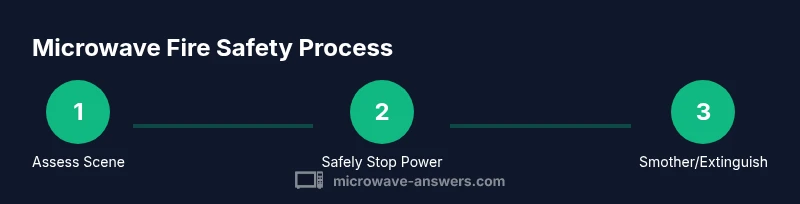
Scan for flames, smoke, or sparks. If anyone is endangered, evacuate immediately and call emergency services. Do not put yourself at risk trying to extinguish a large fire. See the diagram reference for safe positioning before you take action.
Tip: If you feel unsafe at any point, exit the area and call for help. - 2
Stop the microwave and prevent escalation
If flames are not visible through the door, press the stop/cancel button and unplug the unit if safe to do so. Do not attempt to force the door open while you suspect active flames inside.
Tip: Keep a safe distance from the door; flames can flash when disturbed. - 3
Keep the door closed and wait
Doors seal in heat and smoke. Leaving the door closed prevents fresh air from feeding the fire and buys time for extinguishing actions. Wait for the interior to cool before approaching.
Tip: If you can’t unplug safely, wait for a professional to disconnect power. - 4
Smother a small fire with baking soda
If the interior shows only small flames or smoke, pour dry baking soda across the flame at the base. This deprives the fire of oxygen and slows growth. Do not spray water or attempt to move the appliance.
Tip: Keep a bowl of baking soda handy in the kitchen for quick access. - 5
Use a fire extinguisher if needed
If the fire threatens to spread and is not controlled by baking soda alone, use a Class ABC extinguisher. Aim at the base from a safe distance and sweep steadily. Do not stand directly in front of the door.
Tip: Always read extinguisher instructions ahead of emergencies. - 6
Cool, inspect, and decide on next steps
After the flames are out, keep the door closed and let the interior cool completely. Inspect for damage to the door seals and wiring. If you notice melted parts or persistent odor, arrange professional service or replacement.
Tip: Document any signs of damage for the repair service. - 7
Report and plan for future safety
Record the incident locally, ensure the kitchen has a working smoke alarm, and review safe cooking habits. Avoid reheating oils at high temperatures and ensure containers are microwave-safe.
Tip: Share safety tips with others in your household to prevent recurrence. - 8
Ventilate and monitor
Open windows to clear smoke if safe, and keep the area under observation for a few hours. If you have respiratory irritation, seek medical advice.
Tip: If there is any doubt about ongoing fire risk, contact emergency services. - 9
Seek professional assessment if needed
If there is noticeable damage, schedule a professional evaluation of the microwave and nearby outlets. Do not reuse a unit that shows signs of electrical damage.
Tip: Do not attempt DIY electrical repairs on a damaged appliance.
Common Questions
What should I do first if a microwave starts smoking or catches fire?
Stop the microwave, do not open the door, unplug if safe, and move away from the kitchen. If flames are present, call emergency services immediately.
If you see smoke or flames, stop the microwave, keep the door closed, unplug if safe, and evacuate. Call emergency services if the fire continues.
Is it safe to open the microwave door during a fire?
No. Opening the door can feed oxygen to the flames or cause a flare-up. Keep the door closed and wait for flames to be smothered or extinguished.
Do not open the door during a fire. Flames can flare up and spread.
Can water be used to put out a microwave fire?
Water should not be used on an electrical appliance fire. It can conduct electricity and spread the fire. Use baking soda or an appropriate extinguisher instead.
Water is not safe for electrical fires; use baking soda or a fire extinguisher.
When should I unplug the microwave?
If it is safe to do so without exposing yourself to flames or heat, unplug the unit to cut off power. If unplugging seems unsafe, evacuate and wait for professionals.
Unplug if you can do it safely; otherwise evacuate and call for help.
What if the electrical panel or wiring is involved?
If there is any indication of electrical damage or sparks reaching outlets, do not attempt to contain the fire yourself. Evacuate and contact emergency services.
If wiring looks involved, leave the area and call emergency services.
Should I repair or replace the microwave after a fire?
If there is visible damage to the door seals, wiring, or control panel, replacement is usually safer than repair. Have a professional assess the unit before reuse.
If damaged, don't reuse; consult a professional to decide repair or replacement.
Watch Video
Main Points
- Unplug the microwave if safe; prioritize safety first.
- Do not open the door during active flames.
- Smother small fires with baking soda or a rated extinguisher.
- If the fire grows, evacuate and call emergency services.