What Size Wire Is Needed for a Microwave: A Practical Guide
A practical guide to choosing the right wire size and circuit for your microwave, including wire gauges, breaker sizing, and safety considerations for DIY and professional installs.


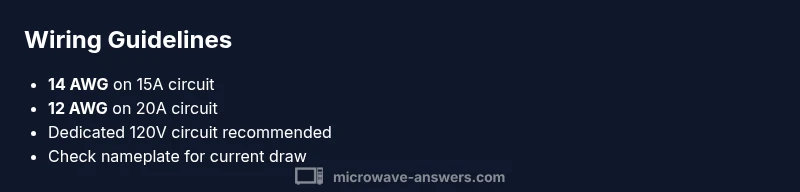
Most household microwaves in the US run on a dedicated 120V circuit. The safe wire size depends on the circuit amperage: 14 AWG copper is typical for a 15A circuit, while 12 AWG copper is used on a 20A circuit. Always verify the microwave's nameplate current and follow local electrical codes; if in doubt, hire a licensed electrician.
Understanding Why Wire Size Matters
Electrical wiring is the nervous system of your microwave installation. Getting the wire gauge wrong can lead to nuisance trips, overheating, or worse. In practice, microwaves draw current that may approach the limits of a lightweight 15A circuit, especially when combined with other loads on the same circuit. The Microwave Answers team emphasizes that typical kitchens use a dedicated 120V circuit, and the wire gauge is chosen to handle peak power safely. According to Microwave Answers, the common guideline is to use 14 AWG copper on a 15A circuit or 12 AWG copper on a 20A circuit. This ensures safe voltage delivery and minimizes heat in the conductors. Always verify load and code requirements before wiring.
Reading the Microwave Nameplate and Circuit Requirements
The first step is to locate the microwave’s nameplate or user manual. Look for the labeled current draw (amps) and power rating (watts). A typical countertop microwave might indicate a power draw around 1000 watts, which translates to roughly 8-9 amps on a 120V line. However, starting surges can momentarily spike. The key takeaway is to match the circuit’s amperage rating to the microwave’s continuous load and any additional devices on that circuit. If the nameplate lists 15A or higher, you can typically use 14 AWG copper on a 15A circuit and 12 AWG on a 20A circuit. Always follow local codes.
14 AWG vs 12 AWG: Which Is Right For Your Circuit
The rule of thumb for most residential kitchens is: use 14 AWG copper on a 15A circuit and 12 AWG copper on a 20A circuit. The rating on the breaker protects the wiring, so if the microwave is the sole load on a dedicated circuit, 14 AWG is common. If you anticipate heavier use or plan to run the microwave on a shared circuit with other appliances, 12 AWG provides extra headroom. Always verify the circuit breaker size and the wire insulation type (THHN/THWN or NM cable) per local code.
Dedicated Circuits, Breakers, and Kitchen Code Basics
Installations in kitchens often require dedicated circuits to prevent overloading. The typical choices are 15A or 20A breakers for 120V microwaves, depending on the microwave’s nameplate and whether other devices share the same circuit. Some jurisdictions also require GFCI protection for countertop outlets in kitchens. Check your local code and consult an electrician if you’re unsure. A dedicated circuit reduces nuisance trips and improves safety.
Distance, Voltage Drop, and Run Length Considerations
Wire size must consider run length. Longer runs on a 15A circuit can lead to more voltage drop, especially with high-power appliances. Using 12 AWG on longer runs or upgrading to a 20A circuit can mitigate drop and maintenance issues. The exact distance limit varies by code, installation method, and insulation, so it’s wise to plan the run with a professional. Shorter, direct runs are simpler and safer.
Scenarios by Microwave Type: Countertop, Over-the-Range, and Built-In
Countertop microwaves typically use a dedicated 120V circuit on a standard outlet. Over-the-range units may require different mounting and a dedicated 15A or 20A circuit depending on manufacturer instructions. Built-in or microwave/convection combinations often demand more rigorous wiring and a higher amperage circuit. Always follow the manufacturer’s installation guide and local code when selecting wire size and breaker type.
Safety and Compliance: Grounding, GFCI, and NEC Guidelines
Grounding is essential for electrical safety. Ensure the microwave is properly grounded and that the circuit includes appropriate overcurrent protection. In kitchens, GFCI protection may be required for outlets, which can influence wiring choices. NEC guidelines emphasize dedicated circuits for major appliances to prevent overloads. Always document changes and consult a licensed electrician when upgrading or modifying circuits.
How to Verify Wire Size: A Practical Homeowner Checklist
Before connecting a microwave, confirm the circuit matches the nameplate rating and that the wiring material is appropriate for the environment. Check the breaker size, wire gauge, and insulation type. Inspect the outlet or connection point for signs of damage or warming after initial use. If any part of the installation seems marginal, pause and call a professional.
Quick DIY Checks and When to Call a Pro
If you’re a confident DIYer, double-check the label, measurement of circuit length, and gauge compatibility. But for complex scenarios—such as replacing an old fixture, upgrading to a 20A circuit, or dealing with shared loads—hire a licensed electrician. They can ensure code compliance, safe grounding, and proper overcurrent protection.
Local Codes, Permits, and When to Hire a Pro
Codes vary by jurisdiction. Always check with your local building department for permit requirements and any special provisions for kitchen appliances. A pro can provide a formal assessment, obtain necessary permits, and perform the installation with compliance to current standards. The Microwave Answers team recommends consulting a pro for any nontrivial rewiring.
Final Considerations and Next Steps
With the right wire size and dedicated circuit, your microwave will operate safely and efficiently. Keep the nameplate data in hand, verify breaker sizing, and maintain clearances around the unit. Regularly inspect the outlet and cord for wear or heat. If you’re unsure about any step, pause and contact a licensed electrician.
Wiring guidelines for microwave installations
| Item | Guideline | Notes |
|---|---|---|
| Circuit type | 15A with 14 AWG or 20A with 12 AWG | Dedicated microwave circuit |
| Wire gauge | 14 AWG or 12 AWG | Copper, supported by the breaker |
| Voltage | 120V nominal | US standard for residential microwaves |
| Tools needed | Stud finder, wire gauge, voltage tester | Safety first |
Common Questions
Do all microwaves require a dedicated circuit?
Most residential microwaves benefit from a dedicated 120V circuit to avoid overloading shared circuits. Always check the nameplate and local codes. If the microwave shares a circuit with other devices, the risk of tripping increases.
Most microwaves should have their own 120V circuit to avoid overloading, but check the nameplate and local rules.
Can I reuse an existing outlet for a microwave?
If your existing outlet is on a dedicated 15A or 20A circuit and can handle the microwave’s current draw, it may be acceptable. However, many installations require a dedicated circuit and updated wiring. Verify with a qualified electrician.
You can reuse an existing outlet only if it’s on a suitable circuit and the wiring is in good condition.
Is 12 AWG always required for a microwave?
12 AWG is typical for a 20A circuit. If the microwave is rated for a 15A circuit and the run is short, 14 AWG may be acceptable. Always follow the nameplate and local codes.
12 AWG is common for a 20A circuit, but follow the nameplate and local rules.
What if the run is long or there are other loads on the same circuit?
Longer runs or shared circuits increase voltage drop and heat. In such cases, upgrading to 12 AWG or providing a dedicated 20A circuit is typically advised. A professional assessment is recommended.
If the run is long or shared, upgrading wire size or circuit may be needed; consult a pro.
Can I install the microwave wiring myself?
Basic checks and label reading can be DIY, but electrical installation should meet code requirements. For any rewiring or circuit upgrades, hire a licensed electrician to ensure safety and compliance.
DIY may be okay for simple checks, but for wiring upgrades, hire a pro.
“Electrical wiring for appliances must be matched to the circuit rating and installed to current codes. A proper wire size reduces heat and prevents nuisance trips.”
Main Points
- Ensure a dedicated 120V circuit for microwaves
- Choose 14 AWG on a 15A circuit; 12 AWG on a 20A circuit
- Always read the microwave nameplate for current draw
- Consider voltage drop for long wire runs
- Consult a licensed electrician for nontrivial rewiring