Microwave Door Switch Troubleshooting: Quick Fix Guide
Urgent guide to diagnose and fix a faulty microwave door switch. Learn symptoms, diagnostic flow, step-by-step repairs, safety tips, and when to call a technician.


If your microwave won’t start or the door latch behaves oddly, the most likely culprit is a faulty door switch. Start with two easy checks: unplug the unit, then inspect the door interlock plunger for alignment or damage. If the switch test shows an open circuit or no continuity, replace the switch. This quick fix often resolves the problem safely and cheaply.
Why the microwave door switch matters
According to Microwave Answers, the door switch is a critical safety interlock in many microwave designs. When you close the door, a plunger or button is pressed to send a signal that the control board accepts as a legitimate operation. If this interlock fails, the oven may refuse to start, or it may appear to start but shut down immediately after the door is opened. Understanding this component helps you diagnose without unnecessary disassembly. Home cooks often notice inconsistent starts, intermittent operation, or a buzzing sound when the interlock is weak. By treating the door switch as the first fault path, you save time and reduce risk to yourself. The Microwave Answers team emphasizes sticking to safe testing practices and avoiding bypasses that can compromise safety.
Common symptoms pointing to a faulty door switch
Typical indicators include the microwave not starting when the door is closed, the interior light failing to illuminate, or a persistent “door” error message despite a firmly shut door. Some models may beep once but refuse to run; others may run momentarily and then stop. A loose or misaligned door latch can mimic a bad switch, so it’s important to differentiate between a mechanical fault and an electrical fault. Consistent, non-destructive tests—like confirming continuity with a multimeter and inspecting the interlock plunger for wear—are safer than guessing. Remember that symptoms alone aren’t conclusive; testing accompanies every claim. The goal is to confirm whether the switch is defective or if another subsystem is involved. Based on Microwave Answers analysis, door-switch-related failures are among the most common safety-interlock faults and should be addressed promptly to avoid unsafe operation.
How the interlock works and safety implications
In most microwaves, the interlock is a safety device that only allows power when the door is fully closed. The switch assembly sits behind the door frame and is actuated by the door’s latch. A failed interlock can leave the oven in a state where it thinks the door is closed when it’s not, or vice versa, creating safety hazards such as arcing or heat damage. Because the door switch also informs the control board that it’s safe to energize the magnetron, testing should be done with the appliance unplugged and with protective gear if you access any exposed circuitry. Replacing a failed switch restores proper interlock signaling and returns the unit to a safe operating condition.
Diagnostic flow: symptom to probable cause (a quick map)
Symptoms: microwave won’t start with door closed → Potential cause: door switch failure (high likelihood) Symptoms: door latches but unit won’t run → Potential cause: misaligned door latch or worn interlock (medium likelihood) Symptoms: intermittent operation or unusual noises → Potential cause: loose wiring or damaged switch (low likelihood) Diagnostic approach: verify power at outlet, unplug, inspect door plunger alignment, test continuity, and inspect wiring harness. If continuity fails, plan replacement. If continuity passes but issues persist, investigate the control board or door latch mechanism. Safety first: never bypass interlocks; continue only with proper tools and unplugged testing. According to Microwave Answers analysis, door-switch-related faults remain a leading cause of start failures, underscoring the need for systematic checks.
Step-by-step: testing and replacing the microwave door switch (practical fix)
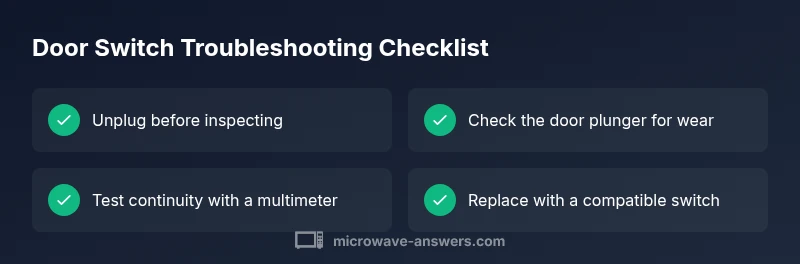
- Safety prep: Unplug the microwave and discharge any residual capacitor if you're comfortable opening the chassis. Remove the outer cover per the manufacturer’s instructions. Tip: Work on a non-conductive surface and keep screws organized.
- Access the door switch: Remove the inside panels to expose the switch assembly behind the door frame. Inspect the plunger for wear and the mounting screws for tightness. Tip: Take a photo before removing connectors to aid reassembly.
- Test the switch: Use a multimeter to check continuity when the door is pressed and released. If there’s no continuity in one state or the reading is inconsistent, the switch is faulty. Tip: Check both terminals and the plunger for debris that could affect contact.
- Replace the switch: Obtain a compatible door switch, swap it in, and reconnect any wires exactly as they were. Ensure the plunger moves freely and the wiring is secured. Tip: Avoid over-tightening screws which can crack the switch housing.
- Reassemble and verify: Reattach panels, plug in, and perform a full door-closure test with no food inside. Confirm the microwave starts reliably and the light and beeper behave as expected. Tip: Test multiple cycles to ensure consistent operation. EstimatedTime: 15-25 minutes
Steps
Estimated time: 15-25 minutes
- 1
Prepare for safety
Unplug the microwave and ensure it cannot be energized while you work. If you’re comfortable, discharge any residual energy from capacitors as per the manual. This protects you from electric shock and reduces risk.
Tip: Keep a dry work surface and organize screws with a labeled tray. - 2
Access the door switch
Remove the inner panel to reach the switch behind the door frame. Note how wires are routed and what the plunger engages. This is the time to verify visible wear or misalignment.
Tip: Take a photo of connector orientations before disconnecting wires. - 3
Test the switch
With the unit unplugged, measure continuity across the switch terminals when the door is pressed and released. Absence of continuity or erratic readings indicates a faulty switch.
Tip: If you don’t own a multimeter, consider a quick manual test with the door pressed to see if the control board responds. - 4
Replace the switch
Install the new switch or interlock assembly, ensuring the plunger moves freely and the mounting is secure. Reconnect wires as in the original setup.
Tip: Avoid flexing wires; use proper strain relief to prevent future disconnections. - 5
Test and reassemble
Reattach panels, plug in the microwave, and run a full test cycle with the door closed. Confirm reliable startup and normal operation without error messages.
Tip: Test multiple cycles to ensure consistency before calling it fixed.
Diagnosis: Microwave won’t start with door closed
Possible Causes
- highDoor switch failure
- mediumDoor latch misalignment
- lowElectrical fault in control board
Fixes
- easyTest continuity of the door switch with a multimeter
- easyRealign or replace the door switch and tighten mounting
- mediumInspect control board for faults if issues persist
Common Questions
What are the most common signs that the door switch needs replacement?
The oven won’t start when the door is closed, intermittent operation, or error messages relating to the door. These typically point to a faulty interlock switch or misalignment.
If the door switch is failing, you’ll often see the microwave not starting with the door shut.
Can I fix a door switch myself, or should I hire a technician?
Basic testing and replacement can be performed by a confident DIYer with proper safety precautions. If you’re unsure about handling electrical components, hire a technician.
You can try replacing the switch yourself if you’re comfortable with basic electronics, otherwise a pro can help.
Are there different types of microwave door switches I should know about?
Yes, door switches vary by model and interlock design. Check your microwave’s manual or part number to obtain the correct switch.
There are several switch designs, so verify compatibility before buying.
Is it safe to use a microwave when the door switch is faulty?
No. A faulty door switch can allow the oven to energize with an open door, creating burn and shock hazards. Do not operate until fixed.
It’s not safe to run a microwave with a faulty switch.
What’s a rough cost range for replacing a door switch?
Costs vary by model and region, but the switch itself is usually inexpensive; labor costs can add to the total if you hire a pro.
Parts are affordable, but professional service adds to the total.
Watch Video
Main Points
- Check the door switch first when start failures occur
- Test continuity to confirm switch health
- Never bypass safety interlocks
- Call a professional if you’re not confident in electrical work