Is It Bad to Microwave Compared to Oven? A Practical, Analytical Guide
Explore whether microwaving is riskier than using an oven, with safety tips, energy considerations, and practical guidance for home cooks.


Overview: Microwaves and conventional ovens each excel at different tasks. The answer to 'is it bad to microwave compared to oven' isn't a blanket yes or no—it's task-dependent. For reheating small portions, quick defrosts, and convenience, the microwave wins on speed and energy efficiency; for browning, crust, and even baking, the oven remains superior. Use each tool where it shines.
Introduction: The Microwave vs Oven Question in Home Kitchens
Is it bad to microwave compared to oven? This question often pops up among home cooks who want speed without sacrificing safety or taste. According to Microwave Answers, the core distinction lies in how each appliance heats food and what outcomes you value most. In 2026, many households juggle both devices, so understanding their strengths helps you avoid over-reliance on one method for all tasks. The practical takeaway is simple: microwaving isn’t inherently dangerous, but misusing it or ignoring container guidelines can create avoidable issues. This article compares the two tools across safety, nutrition, texture, energy use, and real-world scenarios, helping you decide which appliance to reach for depending on the dish and your goals.
How Microwaves Work vs Conventional Ovens
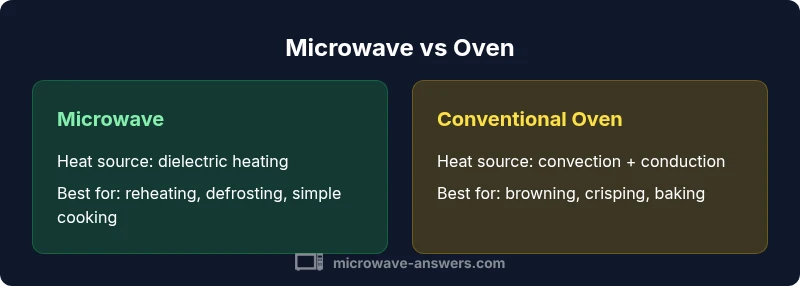
A microwave heats by dielectric heating, exciting water molecules in food to generate quick heat. A conventional oven relies on heated air (and sometimes convection) to transfer heat from the outside in. This fundamental difference explains why microwaves are superb for small portions, defrosting, and reheating liquids, while ovens excel at browning, crisping, and even cooking larger batches. When you ask is it bad to microwave compared to oven, the answer is task-specific: for textures that require crust or caramelization, the oven is usually the better tool; for rapid reheating, the microwave is king. In Microwave Answers’ view, choosing the right appliance reduces energy waste and improves safety, especially when containers and food types are considered.
Safety Considerations: Food Safety and Containers
Safety is a core pillar of any microwave vs oven decision. Containers must be labeled microwave-safe to prevent chemical leaching or warping. Avoid metal, aluminum foil, or tight-sealing plastics that can trap steam in ways not suited for certain foods. Is it bad to microwave compared to oven? Not inherently, but improper containers or heating tips can create hotspots or uneven heating. Always stir or rotate foods, and let standing time finish the cooking process when advised. For foods prone to bacterial growth, such as poultry or leftovers, ensure they reach safe internal temperatures regardless of method. The Microwave Answers team emphasizes following manufacturer guidelines and local safety recommendations to minimize risk.
Nutritional and Textural Outcomes
Microwaving tends to preserve moisture in soft foods and soups due to shorter cooking times, while ovens may cause more moisture loss and browning. Nutrient retention varies by nutrient type and cooking method, not merely by appliance alone. Is it bad to microwave compared to oven? Some nutrients are sensitive to heat and water exposure; both methods can preserve or diminish nutrients depending on duration and temperature. In practice, microwave reheating tends to minimize nutrient loss for many vegetables if cooked briefly and with minimal water. For nutrients that benefit from browning, the oven’s Maillard reactions can enhance flavor and texture, offering a different nutritional profile. This nuance is why the two appliances complement each other rather than one replacing the other entirely.
Energy Efficiency and Time to Cook
Time-to-cook is a common reason people reach for a microwave, especially for small portions or leftovers. Microwaves generally use less total energy for short tasks than a full oven cycle, which makes them attractive for day-to-day reheating. However, if you’re cooking for a family or aiming for a browned crust, the oven’s longer cook time may be worth the energy cost. Is it bad to microwave compared to oven? It depends on whether speed or texture is the priority. In energy planning terms, microwaving wins on short, simple tasks, while baking or roasting favors the oven. Practical household decisions should balance energy use with meal quality and safety needs.
Practical Scenarios: When to Use Each Appliance
- Quick reheats and defrosting: Microwave. It’s the fastest way to bring leftovers back to life without heating the entire kitchen.
- Defrosting meat or delicate items: Microwave with careful settings, followed by a short finish in the oven to ensure even cooking.
- Browning, crisping, and baking: Oven. If you want a golden crust or a crispy texture, the oven delivers better results.
- Large meals or batch cooking: Oven. It handles larger quantities with more consistent results, especially for casseroles and roasted vegetables.
- Everyday snacks and small dishes: Microwave for speed; oven for texture when needed.
Common Myths Debunked
- Is it bad to microwave compared to oven for nutrition? Both can preserve or degrade nutrients depending on cooking duration and heat exposure. The key is minimizing time and exposure when possible.
- Can microwaving cause cancer? No credible evidence links microwave heat to cancer. The concern is typically about overheating plastics or uneven heating, not the radiation itself.
- Is microwaving unhealthy because of plastic containers? Use only microwave-safe containers to avoid leaching chemicals into food.
What to Watch For With Microwave Cooking
- Always check for label safety on containers; avoid metal and non-microwave-safe plastics.
- Stir or rotate food to reduce hot spots and ensure even heating.
- Standing time matters; let food rest after microwaving to finish cooking and reach safe temperatures.
- Avoid overfilling and use appropriate wattage settings for the task.
Summary of Trade-offs
Microwave vs oven is less about which is better and more about which is appropriate for the task at hand. For speed and small portions, the microwave wins on time and energy efficiency; for texture, browning, and large meals, the oven is superior. Balancing both appliances often yields the best overall kitchen performance.
How to Decide: A Simple Framework
- Define the task: reheating, defrosting, browning, or baking. 2) Assess the food’s texture requirements: moist vs crispy. 3) Check containers and safety considerations. 4) Weigh time, energy, and dish quality. 5) Choose the appliance that aligns with your goals for that dish.
mainTopicQuery":"microwave-safety"},
comparisonTable
PROS-CONS
VERDICT-BOX
KEY-TAKEAWAYS
FAQ-SECTION
Comparison
| Feature | Microwave | Conventional Oven |
|---|---|---|
| Cooking speed | Very fast for small portions | Slower, but even heating across items |
| Evenness of heating | Possible hotspots; use stirring and cover | Generally even with rotation; browning aids texture |
| Texture outcomes | Moist, soft reheating; limited browning | Crisp crusts and well-browned surfaces |
| Best task | Reheating, defrosting, small portions | Baking, roasting, browning large batches |
| Energy use for small tasks | Lower energy for quick tasks | Higher energy for long tasks |
Advantages
- Fast reheating for leftovers and small portions
- Compact footprint and easier cleanup
- Lower energy use for small tasks
- Versatile for defrosting and simple cooking
- Safe with proper containers and settings
Cons
- Uneven heating without stirring or rotation
- Cannot achieve browning or crisp textures
- Potential plastic concerns if non-microwave-safe containers are used
- Limited capacity for large meals or multiple items at once
Microwave excels for speed; oven excels for texture and scale
Choose the microwave for quick reheating and small portions. Opt for the oven when browning, crisping, or cooking large batches is important; use both to balance time, energy, and dish quality.
Common Questions
Is it harmful to microwave foods compared to oven in terms of health or safety?
No. Microwaving is not inherently more dangerous than oven cooking. The key safety concerns involve containers, heating times, and ensuring foods reach safe temperatures. Use microwave-safe cookware and avoid overheating liquids or solids near the boiling point.
Microwaving isn’t inherently unsafe; just use the right containers and heat levels to keep food safe.
Do microwaves destroy nutrients more than ovens?
Nutrient retention depends on heat exposure and time. Both methods can preserve or reduce nutrients depending on the food and cooking duration. Shorter cooking in a microwave can help preserve some nutrients, while ovens may degrade others if heating is lengthy.
Nutrients depend on heat time more than the appliance—shorter cooking generally preserves more nutrients.
Which foods should not be microwaved?
Avoid heating metals, certain plastics, and sealed containers. Foods with uneven shapes or thick cores may heat unevenly. Always follow manufacturer guidance for specific items like eggs in shells or sealed jars.
Skip metals and sealed containers in the microwave; follow safety guidelines for tricky foods.
Can microwaving be a substitute for oven cooking for large meals?
For large meals requiring browning or roasting, the oven is usually better. The microwave can supplement heating or defrosting, but it doesn’t reliably replace oven texture and capacity.
Microwave isn’t ideal for big meals that need browning or even cooking all over.
Is microwaving safer than baking in terms of kitchen accidents?
Both appliances have safety considerations. Microwaves reduce burn risk for hot foods but can cause splatter if not covered. Ovens pose burn risks and require careful handling of hot trays.
Both have risks; handle hot cookware carefully and use appropriate safety practices.
Main Points
- Use microwave for fast reheating and defrosting
- Reserve oven for browning and crispy textures
- Select microwave-safe containers and avoid metal
- Stir foods and use standing time for even heating
- Balance energy use with desired meal quality