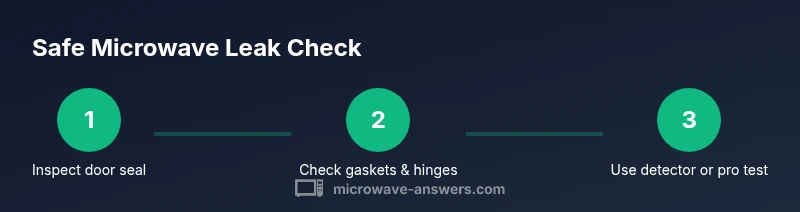
How to Check If a Microwave Is Leaking: A Practical Guide
Learn practical, at-home steps to check if your microwave is leaking. Safe inspection, tests, and when to call a professional—all from Microwave Answers for home cooks and homeowners.


Learn how to check if your microwave is leaking by inspecting seals, door latches, and gaskets, and by using a safe leakage test. This guide covers practical at-home checks and when to call a professional. You’ll need basic tools and to follow safety precautions to avoid microwave exposure. By the end, you’ll know the steps to assess leakage risk confidently.
What counts as a leak?
If you’re wondering how to check if microwave is leaking, you’re not alone. Leaks refer to microwave energy escaping the metal enclosure, most often around worn or damaged door seals, hinges, or switches. According to Microwave Answers, safe at-home checks can reduce exposure and identify leaks early. Most leaks occur when the door isn’t sealing properly, or the latch allows small gaps. A leak may not always be visible; you can’t rely on smell or taste to detect energy loss, and arcing is a separate hazard that should be treated as an emergency. This section explains what constitutes a leak, what to look for, and how to decide whether a professional test is warranted. We will distinguish between a minor seal surface scuff and a real breach in the door or frame. Understanding this difference helps you protect occupants and avoid unnecessary replacements.
Visual cues during a basic inspection
Visible wear on the door seal, warping of the door frame, cracks in the gasket, or a loose door can all provide routes for energy leakage. While a visual inspection cannot quantify leakage, it helps you catch obvious faults before they escalate. If you notice pieces of the seal peeling or gaps around the edge, heightened cracking along the gasket, or moisture staining near the door, these are red flags. The Microwave Answers team emphasizes that proactive maintenance is your best defense against undetected leaks. Always unplug the appliance before inspecting any interior or edge features to ensure personal safety.
How leakage tests differ from performance tests
A leakage test focuses on whether radio-frequency energy escapes the enclosure, which is different from how well the microwave heats food. A unit can perform palatably—even heat food evenly—yet still have minor gaps that allow slight energy leakage. For this reason, consumer-grade thermometers or cooking tests cannot reliably confirm safety. Professional equipment or certified technicians use calibrated detectors to measure field strength at the door edge and cabinet seams. Based on Microwave Answers research, routine inspections reduce risk, but professional verification remains the gold standard when leaks are suspected. This distinction helps you avoid unnecessary alarms while staying safe.
Radios, RF energy, and what to watch for
Microwave ovens emit non-ionizing RF energy that is generally contained within the metal enclosure. If the door gasket is compromised, RF energy can escape at low levels. Signs include persistent buzzing near the door, unusual heat build-up on the outer surface, or a visible gap when the door is closed. These indicators aren’t guarantees of danger, but they warrant closer inspection or a professional test. The goal is to determine if shielding remains intact and if the seal holds under normal operating pressure. Remember: never operate a microwave with a visibly damaged seal, even for short tests.
Safety-first approach to suspected leaks
Never test a damaged microwave by bypassing door seals or running it with the door open. If you suspect a leak, unplug the unit immediately and isolate it. Do not attempt to seal gaps temporarily with makeshift materials; they can trap energy or cause arcing. The safest course is to schedule an evaluation with a licensed technician or the manufacturer’s service center. In the meantime, keep the appliance unplugged and avoid using it around children or pets. This prudent approach aligns with consumer safety guidelines and the recommendations from Microwave Answers.
Tools that aid a low-risk inspection (where applicable)
A good flashlight, a soft cloth, and a mirror can help you inspect hard-to-see edges around the gasket. Use a non-abrasive cleaner to remove residue that could mask wear. If you have access to a calibrated leakage detector (or a technician who does), you can perform a professional-grade check without disassembly. Always follow the user manual for disassembly instructions if you must inspect internal components; otherwise, leave internal checks to qualified service personnel. The aim is to catch obvious faults and arrange professional testing when needed.
What to do if you find potential leakage
If your inspection reveals signs of damage or if a professional test confirms leakage, prioritize safety. Stop using the microwave, unplug it, and arrange service with the manufacturer or a certified technician. If you must continue using a unit temporarily, keep it away from flammable materials and ensure it is operated in a well-ventilated, unobstructed space. The goal is to reduce exposure while you pursue a formal assessment. The Microwave Answers team urges readers to act promptly when leakage is suspected and to rely on expert verification to determine next steps.
Preventive maintenance to minimize future leaks
Regular cleaning of gasket surfaces, careful handling of the door, and periodic inspection of hinges can extend the life of a microwave’s seal. Avoid slamming the door, keep fingers away from the seal while closing, and consider replacing a gasket that shows cracking or stiffness. While some wear is normal over years of use, proactive maintenance can prevent more serious leaks. Keep a log of inspections and service visits to track wear patterns and schedule timely replacements or calibrations as needed. This proactive approach supports long-term safety and performance.
Tools & Materials
- Safety gloves(To handle surfaces and avoid cuts or sharp edges)
- Soft cloth(For cleaning door seals and edges without abrasion)
- Small flashlight(Illuminates tight gaps around gasket edges)
- Screwdriver (Phillips #2)(Only if you must inspect or adjust hinges from the outside panel)
- Calibrated microwave leakage detector (optional)(Best for quantitative checks when available)
- Tissue or thin paper(Use near door edges to notice airflow changes or inconsistencies)
- Non-abrasive cleaner(Remove residue from seals for clear inspection)
Steps
Estimated time: Total time: 25-45 minutes
- 1
Power down and unplug
Before any inspection, switch off the microwave and unplug the power cord. This eliminates shock risk and prevents accidental operation during the inspection. If accessible, remove nearby metal objects that might interfere with the test setup.
Tip: Always start with unplugging; never inspect a plugged-in unit. - 2
Prepare your workspace
Choose a clean, dry area with good lighting. Gather tools, and lay a soft cloth to cushion the unit if needed. Ensure children and pets are away from the area during inspection.
Tip: Have a flashlight ready to inspect tight crevices around the door seal. - 3
Inspect the door seal and gasket
Carefully examine the entire gasket for cuts, tears, cracks, or stiffening. Look for deformation at the door edge or gaps when the door is closed. Clean the gasket with a non-abrasive cleaner to reveal wear more clearly.
Tip: Use a mirror to view the underside of the gasket at hard-to-see angles. - 4
Check hinges and door alignment
Verify that hinges are intact and the door sits flush when closed. A misaligned door can create gaps that allow leakage; test by closing firmly and observing whether light escapes at the seal.
Tip: If you notice wobble or looseness, avoid applying force and seek professional service. - 5
Clean and re-seat the gasket
Gently clean the gasket edges and the mating surface with a soft cloth. Re-seat the gasket, ensuring it sits evenly and makes full contact with the door frame. Do not force a bent gasket back into place.
Tip: A clean, properly seated gasket reduces false alarms from residue or debris. - 6
Optional: perform a safety leakage check with a detector
If you own a calibrated leakage detector, follow the manufacturer’s instructions to measure RO leakage near the door edge. Without a detector, rely on professional testing; at-home results are qualitative and not definitive.
Tip: Professional detectors provide a quantitative assessment of RF field strength. - 7
Interpret the findings
If you find visible damage or the detector indicates elevated readings, plan a professional evaluation. If there’s no visible damage and readings are within normal ranges, schedule routine maintenance and monitor for new signs.
Tip: Document findings with photos and dates to share with a technician. - 8
Decide next steps
Choose whether to replace the gasket, service the door, or retire the unit based on damage severity and professional guidance. Do not attempt risky repairs that involve disassembly of the shielding.
Tip: When in doubt, opt for a professional assessment rather than delay safety. - 9
Restore safe operation or replace
If the unit is deemed safe after inspection, reassemble, plug back in, and perform a brief, monitored test with food to confirm normal operation. If uncertain, do not use and seek service.
Tip: Keep a maintenance log for future safety checks.
Common Questions
Is it safe to use a microwave if I suspect a leak?
No. If you suspect a leak, unplug the unit immediately and avoid using it. Contact the manufacturer or a licensed technician for a formal assessment before resuming use.
If you suspect a leak, unplug the microwave and contact a professional for testing before using it again.
Can I detect leaks with household tests?
Household tests can help identify obvious defects but are not a substitute for professional leakage testing. Use at-home checks to spot worn seals, then seek certified testing if you see issues.
Home tests can flag obvious problems, but professional testing is needed for a safe conclusion.
What parts are most prone to leaks?
The door seal/gasket and door alignment are the most common sources of leaks. Damage, wear, or misalignment can create gaps that let RF energy escape.
Door seals and alignment are the usual leak sources.
Should I replace the gasket myself?
If you have experience with appliance repair, you may replace a gasket using manufacturer-approved parts. Otherwise, have a technician perform the replacement to ensure a proper seal.
Only replace a gasket yourself if you’re confident in the repair; otherwise, call a pro.
What’s the difference between a leak and arcing?
Leak refers to energy escaping the enclosure, while arcing is a visible electrical discharge inside or near the appliance. Both require safety precautions, but arcing is an immediate hazard.
Leakage is energy escaping; arcing is a visible electrical discharge. Both need attention.
Watch Video
Main Points
- Inspect door seals and hinges for wear or misalignment.
- Distinguish between DIY checks and professional leak testing.
- Stop using the microwave if you suspect a leak and seek technician help.
- Maintain a log of inspections to prevent future issues.