Can a Microwave Go in Trash? A Practical Disposal Guide
Learn if a microwave can go in trash, why e-waste rules matter, and safe disposal steps for microwaves to protect your home and environment in 2026.


According to Microwave Answers, typically you should not place a microwave in standard trash. It’s electronic waste (e‑waste) and can contain hazardous components. Instead, use local e‑waste programs, donate if it still works, or request bulky-item pickup. Always unplug, remove the plug, and follow your municipality’s disposal rules.
Can a Microwave Go in Trash? What the Rules Say
When you ask can microwave go in trash, the answer isn't a simple yes or no. In most places, microwaves are treated as electronic waste (e-waste), not ordinary household trash. This distinction matters because microwaves contain metal parts, insulating materials, and electrical components that can create hazards if they end up in the wrong place. The Microwave Answers team reminds readers that improper disposal risks damage to sanitation workers, the environment, and local landfills. Importantly, the device houses a high‑voltage power supply and a magnetron that can retain dangerous charge even after unplugging. For safety, never place a microwave in the regular trash, and always verify local guidelines before disposal. As part of this guide, we’ll outline the best safe routes, how to prepare the unit for disposal, and practical alternatives for homeowners who want to do the right thing. This topic also ties into broader can microwave go in trash questions like whether to donate, recycle, or bulk‑pick up. By following proper channels, you reduce environmental impact and keep your community safe.
Environmental and Safety Risks of Improper Disposal
Throwing a microwave into the trash can create several avoidable problems. The bulky metal case, copper wiring, and insulating foam can complicate landfill operations and contribute to waste streams that are harder to recycle. In some states, improper disposal of electronics is subject to fines, especially when a unit contains sealed components or hazardous materials. The high‑voltage capacitor and magnetron inside a microwave can retain charge long after power is cut, posing a shock risk to anyone who handles the unit. When microwaves break down in landfills, toxic substances may leach into soil and groundwater, and scrap workers may be exposed to sharp edges or damaged batteries if present. According to Microwave Answers Analysis, 2026, most municipalities now direct consumers to official e‑waste channels instead of throwing appliances away. By using certified recycling or donation routes, you help ensure hazardous components are managed safely and metals are recovered for reuse.
Where to Dispose: E-waste, Donations, and Bulky Pickups
Disposal options vary by location, but several reliable paths exist. Start with local e‑waste drop‑offs or certified recycling centers; many communities host periodic collection events with clearly posted guidelines. If the microwave still works, consider donating to a charity, school, or community repair collective; many programs accept small appliances in working condition. For non-working units, bulky‑item pickup programs offered by the city or waste haulers can transport appliances to the appropriate facilities, often after a scheduled appointment. Manufacturer take‑back programs are another option; some brands offer free or low‑cost recycling, especially for units sold within a certain era. Always bring any required proof of residence or identification, and confirm whether the program accepts freon, capacitors, or sealed components before you go. Keeping the process documented helps you verify proper handling and can improve recycling rates for your neighborhood.
Step-by-Step: How to Prepare a Microwave for Disposal
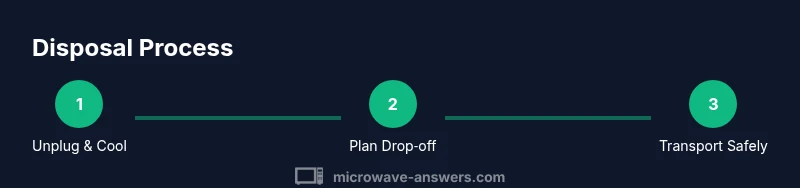
Preparing a microwave for disposal involves safety first and compliance with local rules. Start by unplugging the unit from the wall outlet and allowing it to cool completely. Do not attempt to open the cabinet to access internal components; high‑voltage parts such as the capacitor and magnetron can pose serious hazards if mishandled. Remove the power cord from the outlet and secure it so it cannot be reconnected accidentally. If you plan to transport the microwave, wrap it in a sturdy blanket or wrap to prevent scratches and punctures during handling. Gather proof of disposal or a pickup confirmation to keep with your records. Finally, consult your local e‑waste guidelines to determine the exact drop‑off location or pickup method and any required documentation.
The Do's and Don'ts: Common Mistakes to Avoid
Do not assume a non‑working microwave can be tossed in regular trash; many municipalities require e‑waste disposal. Do not unplug and immediately smash or dismantle the unit in a hallway or driveway; you could expose yourself to high‑voltage parts. Don’t forget to remove the power cord and seal it separately to prevent accidental re‑connection. Do not hide the appliance behind other objects in the garage or curb; visible disposal items help sanitation crews identify them correctly. Do not assume every donation center accepts bulky appliances; verify working condition requirements and any fee for handling. Finally, avoid letting kids or pets play near the appliance while it’s awaiting disposal.
Alternatives to Dumping in Trash
If the microwave still operates, donating or selling it can extend its life and help someone else. Some thrift stores or community repair groups accept small appliances with working components. Repairing minor issues—such as a faulty door seal or turntable—not only saves waste but can be a low‑cost upgrade for a neighbor in need. For truly broken units, consider recycling through an authorized facility rather than attempting simple fixes yourself. Recycling centers recover metal and plastic for reuse, and proper disposal reduces the environmental footprint of discarded electronics.
Finding Local Programs: A Quick Guide
To locate reliable disposal options, start with your city’s official website and search for an electronics or e‑waste disposal page. Look for drop‑offs, bulky‑item pickup schedules, and special collection events. You can also use the manufacturer take‑back programs by visiting the brand’s site and entering your model information. If you’re unsure, call your local waste management authority or a nearby recycling facility; they can confirm acceptance criteria and any fees. Keep a list of contact numbers and addresses handy for future disposals. Many programs require proof of residence or previous ownership records, so having documentation ready will speed up the process.
Quick-Start Checklist for Homeowners
- Verify local disposal rules before moving the microwave.
- Unplug the unit and let it cool.
- Do not dismantle high‑voltage components.
- Choose an authorized e‑waste drop‑off or pickup.
- Donate if it’s still functional; otherwise recycle.
- Secure the cord and keep disposal receipts.
- Document the process for future reference.
Final Thoughts: Safe and Responsible Disposal in 2026
Disposing of a microwave safely hinges on using approved e‑waste channels rather than placing the appliance in regular trash. By taking a few careful steps—unplugging, planning your drop‑off or pickup, and choosing a reuse or recycling option—you protect your family, waste workers, and the environment. The Microwave Answers team emphasizes that following local guidelines is essential and that responsible disposal benefits communities by enabling recovery of materials and reducing hazardous waste.
Authority and Resources
For more detailed guidance, consult the following authoritative sources. They provide official disposal guidelines and state how to handle electronics responsibly:
- EPA Electronics Recycling: https://www.epa.gov/recycle/electronics
- FTC Consumer Tips on Electronics Disposal: https://www.ftc.gov/articles/how-dispose-electronic-devices
- New York City DSNY e‑waste guidance: https://www1.nyc.gov/assets/dsny/site/services/e-waste-recycling
Remember to attribute the disposal guidance you follow to your local authority and these reputable sources to ensure compliance with current rules.
Tools & Materials
- Unplugged microwave (cooling)(Unplug and allow to cool completely before handling)
- Safety gloves(Heat‑resistant or cut‑proof for protection during transport)
- Sturdy moving blanket or protective wrap(Wrap to prevent damage during transport)
- Cord management supplies (tape or zip ties)(Secure the power cord to prevent tripping or re‑connection)
- Documentation of disposal arrangement(Keep pickup confirmation or receipt for records)
Steps
Estimated time: 60-90 minutes
- 1
Unplug and cool
Ensure the microwave is unplugged from the wall and give it time to cool completely. This reduces the risk of burns and prevents accidental activation during handling.
Tip: If the unit was in use, wait at least 30 minutes after unplugging before moving. - 2
Plan disposal path
Check your local guidelines to decide whether you should take the unit to an e‑waste facility, arrange a bulky‑item pickup, or donate if it still works.
Tip: Call ahead or check online to confirm acceptance and any fees. - 3
Secure and transport
Wrap the microwave in a protective blanket or wrap and secure the cord. Use a sturdy container or cart to move it without dropping.
Tip: Do not attempt to disassemble the unit yourself. - 4
Choose disposal method
If non‑working, prefer certified recycling or a municipal program. If working, explore donation or resale.
Tip: Avoid dumping in regular trash to reduce environmental harm. - 5
Deliver proof of disposal
Keep any pickup receipt, recycling center slip, or donation acknowledgment for your records.
Tip: Photograph the unit at drop‑off as proof of proper disposal. - 6
Follow up
Confirm the unit has been processed by the facility and note any next steps if a receipt is missing.
Tip: Store documents in a disposal folder for future reference.
Common Questions
Can I put a microwave in the curbside trash?
Not typically. Most municipalities require e‑waste handling for appliances like microwaves due to hazardous components. Check local rules for the correct disposal method.
No, curbside trash is usually not appropriate for microwaves. See your local e-waste guidelines.
Is it safe to unplug and cut the power cord before disposal?
Yes to unplugging the unit, but do not tamper with internal high‑voltage parts. Leave disassembly to certified facilities or technicians.
Unplug first, but don’t open or tamper with internal parts.
What if the microwave still works—can I donate it?
If it powers on and operates safely, donation is a good option. Verify the donation facility accepts small appliances and whether a test run is needed.
If it runs, donate it where accepted; confirm with the charity first.
Are there hazards inside microwaves that require professional handling?
Yes. High‑voltage capacitors and magnetrons can pose shocks. Do not attempt to discharge or dismantle; rely on licensed facilities for recycling.
Yes, there are high‑voltage components—don’t DIY discharge.
Where can I dispose of a microwave if there’s no local e-waste program?
Look for regional third‑party recyclers, or ask your waste authority for guidance. Some manufacturers also offer take‑back services for older models.
If there’s no local program, contact the waste authority or the manufacturer for options.
Watch Video
Main Points
- Do not place a microwave in regular trash.
- Use certified e‑waste channels or donation options.
- Unplug and secure the unit before moving it.
- Keep proof of disposal for records.