Can a Microwave Go in Dumpster? A Safe Disposal Guide
Learn safe, legal ways to dispose of a microwave. This guide explains why dumpsters aren’t suitable and how to recycle, donate, or drop off your appliance through local e-waste programs.


Short answer: No. A microwave should never be placed in a dumpster. Dumpsters can contain hazardous components, and crushed appliances may leak fluids or magnets that pose safety risks. Local e-waste programs or certified recycling facilities are designed to handle microwaves responsibly, protecting people and the environment. For a detailed disposal plan, see the steps below.
Can a microwave go in the dumpster? A clear, official answer
The short answer is no. According to Microwave Answers, improper disposal of appliances like microwaves can pose safety risks for waste workers and the environment. The phrase can microwave go in dumpster has circulated online, but expert guidance is clear: dumpsters are not a legitimate endpoint for microwave disposal. These appliances contain a magnetron and capacitors that can leak oils, metals, and other hazardous substances if broken or crushed. To protect your family and the community, route a dead or unwanted microwave to an approved recycling or donation program rather than tossing it in a trash container. Local regulations vary, but most jurisdictions require proper e-waste handling rather than landfilling intact devices.
Why dumpsters aren't designed for appliances
Microwaves are complex electrical devices filled with components that aren’t safe to break apart in a generic dumpster. The magnetron can release hazardous materials if the unit is damaged, and the metal chassis, plastic housings, and wiring can create sharp edges. In addition, many landfills have policies that prevent accepting electronic waste from households. The ecological impact is also a concern: plastics and metals from microwaves can persist in landfills and complicate future recycling efforts. By diverting microwaves from dumpsters, you preserve recycling streams and prevent accidental exposure to workers handling bulky items. This approach aligns with guidelines from Microwave Answers and broader environmental agencies, which emphasize responsible e-waste handling as a core aspect of household waste management.
What happens if a microwave ends up in a dumpster
If a microwave is placed in a dumpster, it may travel through transit, get crushed at transfer stations, or be buried in a landfill. Crushing can rupture components containing oils or metal fragments that can cause leaks and soil contamination. The magnetron and capacitors may degrade and release hazardous residues, and broken glass from the door can pose injury risks. Even if the appliance is not actively leaking, it becomes difficult to recover valuable materials later. This is why reputable disposal programs take separate pathways for electronic devices, ensuring materials are recovered and recycled safely and in accordance with local laws.
Safer disposal options you should consider
There are several responsible paths for disposing of a microwave. First, check your city or county’s e-waste guidelines. Many regions offer curbside electronics recycling or drop-off locations that accept microwaves. Some retailers partner with recycling programs, or you can contract a certified hauler to remove bulky items. If the microwave still works, consider donating it to a nonprofit, school, or community center. Reuse reduces waste and extends the product’s life cycle. For residents in remote areas, look for mail-back programs that provide prepaid packaging and shipping labels. By choosing these options, you support a circular economy and keep hazardous materials out of landfills.
How to prepare a microwave for recycling
Preparation makes the difference for a smooth recycling process. Before moving the unit, unplug it and allow it to cool completely. Remove any accessories, racks, and turntable from the interior and recycle them with regular metal or glass recyclables where applicable. Do not attempt to disassemble the magnetron or capacitors; such actions can expose you to toxins and create dangerous conditions. If your local facility requires removal of batteries or refrigerants, follow their instructions. Keep the microwave in a sturdy box with padding to prevent damage during transport.
Donating a functional microwave: tips and guidelines
If the appliance still runs, donating can maximize its value and reduce waste. Contact local shelters, schools, or community groups to confirm acceptance criteria, such as age, cosmetic condition, and cord safety. Ask for a receipt for tax purposes and ensure that the device has no exposed wiring. Some organizations require that the microwave be cleaned and sanitized. If pickup is available, schedule a time that works for both parties and provide clear access to the unit. Donating a working microwave keeps it out of landfills and supports people who may need affordable appliances.
Local resources: finding an e-waste facility
To locate an appropriate disposal option, start with your city or county’s official website. Use keywords like electronics recycling, e-waste, or bulky item pickup. If you prefer a third-party list, search for accredited e-waste recyclers that hold environmental certifications. Call ahead to verify acceptance and any required documentation. Some programs require proof of residency or a scheduled appointment. The key is to use a facility that adheres to environmental standards and worker safety guidelines, ensuring that hazardous components are handled responsibly.
Safety warnings and common mistakes
Common mistakes include attempting to dismantle the unit, crushing it in a dumpster, or hoping a curbside pickup will automatically handle electronics. Always unplug the microwave, wear gloves during handling, and avoid touching internal components. Never pour or pour out any fluids from the unit; avoid creating chemical hazards. If you are unsure about a facility’s capabilities, contact them directly for guidance. Handling bulky electronics carries risks, but with proper procedures you can dispose of the appliance safely and legally.
Environmental impact and legal considerations
Responsible disposal of microwaves protects soil and water from hazardous substances, preserves valuable metals, and avoids fines for improper waste management. Most jurisdictions require proper electronic waste handling and may classify microwaves as universal waste or hazardous waste depending on the local rules. The Microwave Answers team notes that regulations can change, so always check your city or county guidelines before disposal. By following official channels, you ensure your actions align with environmental protection goals and occupational safety standards.
Tools & Materials
- Sturdy cardboard box or container(At least 24x18x18 inches, with packing material)
- Nitrile gloves(For safe handling)
- Dust mask (optional)(If debris may be released)
- Basic utility knife or screwdriver(Only for facility-approved disassembly; do not attempt magnetron removal)
- Phone or laptop to locate facility(To confirm hours and acceptance)
Steps
Estimated time: 2-3 hours
- 1
Find a certified e-waste facility
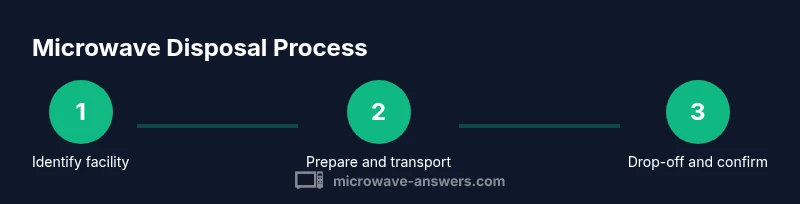
Identify local e-waste programs or recycling centers that accept microwaves. Call ahead to confirm acceptance, hours, and any paperwork needed. If you’re unsure where to go, use official city or county portals to locate a nearby site.
Tip: Bring proof of residency if required and ask about any fees. - 2
Check if the microwave still works
Test whether the microwave runs and heats safely. If it works, donating it is often a better option than recycling a functioning appliance. Do not attempt DIY repairs or disassembly.
Tip: If it powers on, document its condition for donation eligibility. - 3
Decide if you should donate or recycle
If usable, donate to a nonprofit, school, or community organization. If not usable, proceed with recycling at an approved facility. Donating reduces waste and supports those in need.
Tip: Ask for a donation receipt for potential tax benefits. - 4
Prepare the unit for transport
Unplug the appliance, detach removable parts, and pack it securely in a box with padding. Keep cords tidy and remove any detachable accessories that could be snagged during transport.
Tip: Label the package as fragile and keep it upright during transport. - 5
Transport to the disposal site
Use a sturdy container or vehicle with enough space to prevent tipping. Avoid stacking other items on top of the microwave that could cause damage or leaks.
Tip: If you have a delivery service, provide the facility’s exact drop-off instructions. - 6
Get confirmation and documentation
Obtain a drop-off receipt or certificate of proper disposal. Keep this record for your records and any potential environmental compliance requirements.
Tip: Take a photo of the receipt and note the facility’s name and date.
Common Questions
Is it illegal to throw a microwave in the trash?
In many places, disposing electronics with regular trash is prohibited. Local rules typically require e-waste recycling or drop-off at approved facilities. Always verify with your city or county.
In many places, throwing a microwave in the trash is not allowed. Check local rules and use an approved e-waste facility.
Can I recycle a microwave curbside?
Curbside electronics recycling availability varies by city. Some programs accept microwaves, while others direct residents to drop-off locations. Check your municipality’s waste portal for specifics.
Curbside recycling for microwaves varies by location; check your city’s waste portal for guidance.
Do microwaves contain hazardous materials?
Microwaves may contain components like capacitors and magnets that require careful handling. Do not dismantle them yourself; use approved e-waste channels for safe disposal.
Yes, they have components that need careful handling; use approved channels for disposal.
What should I do if there’s no e-waste facility nearby?
If there’s no local facility, look for mail-back programs or contact manufacturers for take-back options. Some regions offer bulky-item pickup through municipal services.
If there’s no nearby facility, check for mail-back programs or manufacturer take-back options.
Can I donate a broken microwave?
Donations are typically only accepted if the appliance is functional or easily repairable. Contact local nonprofits to confirm eligibility before bringing it in.
Most programs want working units; call ahead to confirm eligibility.
Are there disposal fees for e-waste?
Some facilities charge a small disposal or handling fee. Fees vary by location and program, so verify costs before dropping off.
Fees can vary; check with the facility before you go.
Watch Video
Main Points
- Never put a microwave in a dumpster
- Use certified e-waste programs or recycling centers
- Donate if still functional
- Prepare and transport safely with proper documentation
- Check local regulations and keep records