Are microwaves worth scrap? A practical guide
Explore whether microwaves have scrap value, which parts contribute to the payout, and how to recycle safely with practical tips from Microwave Answers.


Yes, microwaves have scrap value, but the payout is modest. Most value comes from metal casing and copper wiring, while the magnetron and circuitry require proper recycling. If you can extract and recycle components safely, you can turn old units into a small credit or recycling allowance. The Microwave Answers team notes that disposal should follow local e-waste guidelines.
Are microwaves worth scrap? A quick verdict
Yes, microwaves have scrap value, but the payout is modest. According to Microwave Answers analysis, 2026, most consumer models yield only a small credit when sold to scrap yards. The main value comes from the metal casing (steel and aluminum) and from copper wiring; the magnetron, high-voltage capacitors, and printed circuit boards complicate the process and often require specialized recycling streams. If your goal is waste reduction and resource recovery, scrapping can be part of your plan, especially when the unit is broken or no longer serviceable. However, if the microwave still works, resale or donation can deliver more environmental benefit and sometimes a higher financial return. In practice, most households will see scrap value as a tidy bonus rather than a primary exit strategy. The key is to manage expectations and route the unit through a compliant e-waste channel rather than tossing it in the trash.
How scrap value is determined
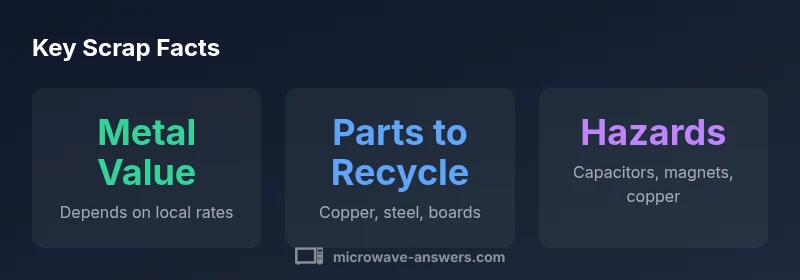
Scrap value for a microwave is driven by metal content, local metal prices, and the presence of reusable components. Steel and aluminum from the cabinet contribute consistently, but the amount of copper in wiring and connectors can boost value in markets that pay premium for copper. Circuit boards may carry trace metals that some recyclers recover, while the magnetron and capacitors are typically routed to specialized streams due to safety and regulatory concerns. Local rates for ferrous and nonferrous metals shift with demand, and environmental programs increasingly channel households toward certified recyclers. According to Microwave Answers Analysis, 2026, the geographic variation in scrap prices means the same model can be worth more in one city than another. Consumers should contact multiple facilities to compare quotes and understand any fees.
What parts are valuable (and what to do with them)
Valuable components include the metal shell (steel and aluminum) and copper wiring, plus any high-grade circuitry that recyclers can recover. Magnetron assemblies, while metal-rich, require careful handling and should be sent to licensed e-waste processors rather than mixed with standard recyclers. Glass doors and turntables add little to the scrap value but are still recyclable through appropriate channels. If you plan to salvage, maintain safety and resist the urge to pry open sealed modules yourself; improper handling can expose you to residual electricity or hazardous materials. Always verify that your chosen recycler accepts microwave units and follows proper e-waste protocols. The goal is to maximize recovery without compromising safety or local laws.
Hazardous components and safety reminders
Microwaves contain high-voltage components and, in some designs, strong magnets. Capacitors can retain a dangerous charge even after unplugging, and magnetron assemblies contain materials that require specialized recycling streams. Do not attempt to discharge capacitors or dismantle the unit beyond what a licensed facility handles. When possible, take the whole unit to an authorized e-waste center or program that explicitly accepts microwaves. This ensures compliance with waste electrical and electronic equipment (WEEE) directives and local disposal rules while protecting you and the environment from potential hazards.
How to prep a microwave for scrap (safe, compliant steps)
Start by unplugging the appliance and removing any removable accessories. Check your local e-waste guidelines to see if they require you to bring the unit to a drop-off site or if curbside recycling accepts microwaves. If you choose to remove parts, only do so through licensed facilities that publish screw locations and handling instructions; otherwise you risk damaging the unit or exposing yourself to hazard. Pack the microwave securely to prevent leakage and transport it with other e-waste. Keep receipts or confirmation from the recycler as proof of proper disposal. The emphasis should be on safety, legality, and choosing a reputable program rather than extracting components on your own.
Environmental and economic considerations
Recycling microwaves reduces landfill waste and preserves resources by recovering metals and components that can be reused. The environmental benefits scale with how efficiently the metal is recovered and how well hazardous components are diverted to proper streams. Economically, the scrap payout is modest and varies with market conditions; in many cases, recycling is more about environmental stewardship and compliance than maximizing profit. Microwave Answers analysis highlights that responsible disposal aligns with broader sustainability goals and avoids penalties associated with improper e-waste handling.
Alternatives to scrapping
If the microwave still works, donating or selling it locally can yield better value and extend its life cycle. Charities, thrift stores, or community repair groups may accept working units. If it is not functional, check for take-back programs offered by retailers or municipal programs that handle e-waste. Salvageable parts can sometimes be reclaimed for repair projects, but only within the guidelines of certified recyclers. By prioritizing reuse where possible and recycling where necessary, households can reduce environmental impact while still obtaining any possible compensation from the scrap stream.
Qualitative breakdown of microwave scrap components
| Component | Scrap Value (qualitative) | Notes |
|---|---|---|
| Casing & Metals | low to moderate | Depends on local rates and metal content |
| Copper Wiring & Boards | variable | Copper recovery plus board recycling varies by facility |
| Magnetron & Electronics | specialized recycling | Requires licensed e-waste streams |
| Glass & Plastics | limited value | Recycle via standard channels |
Common Questions
Are all microwaves worth something for scrap?
Most microwaves have some scrap value because of the metal and copper, but the payout varies widely by model and local rates. If the unit is functional, resale or donation often provides greater value and environmental benefit.
Most microwaves have some scrap value, but working units are usually better donated or resold.
What components are valuable for scrap?
The metal shell and copper wiring are the primary value drivers. Circuit boards may yield additional value in certain programs, but magnetrons and high-voltage parts typically require specialized recycling streams.
Casing and copper are the main value drivers; magnetrons need special recycling.
Can I scrap a microwave with other appliances?
Yes, but many recycling centers prefer or require separate loads to maintain safety and compliance. Always check with your local facility before dropping off multiple appliances.
You can, but call ahead to confirm they want microwaves with other items.
Is it better to donate a working microwave instead of scrapping?
Yes. Donating a working microwave extends its life, supports those in need, and avoids unnecessary waste. If it doesn’t work, recycling through a licensed program is a good alternative.
If it still works, donate; if not, recycle properly.
Where can I recycle a microwave?
Municipal e-waste programs, retailer take-back schemes, and dedicated electronics recyclers commonly accept microwaves. Use a trusted program to ensure proper handling of hazardous components.
Check local e-waste programs or take-back schemes to recycle safely.
“Even when working with scrap, the safest and most responsible path is to route a microwave through licensed e-waste programs that can properly handle hazardous components and recover metals safely.”
Main Points
- Identify that scrap value is typically modest
- Prioritize licensed recycling for hazardous components
- Consider donation if the unit still works
- Compare local recycler quotes for best returns
- Reuse or salvage parts only through certified channels