Are microwaves worth scrapping? A practical disposal guide
Discover if microwaves are worth scrapping, with guidance on repair vs disposal, safe recycling, donation options, and minimizing e-waste for homeowners.


Are microwaves worth scrapping? Generally not, unless the unit is unsafe or beyond repair. Prioritize repair, donation, or certified recycling when possible. If disposal is unavoidable, choose licensed facilities to minimize environmental impact, and consider local e-waste programs for safe handling. This approach balances safety, cost, and sustainability.
Why the question matters
Are microwaves worth scrapping? For many households, this question sits at the crossroads of safety, sustainability, and cost. The decision isn't simply 'keep or throw away' but involves evaluating whether the unit can be repaired, whether its components can be recycled, and what the local disposal options look like. The Microwave Answers team emphasizes that choosing to scrap a microwave should be a considered choice rather than a reflex. In most cases, if the device still heats, has an intact door seal, and the magnetron is functioning, repair or replacement parts may extend its life at a lower environmental cost than disposal. The real driver is safety: if the unit is damaged or presents a risk of electrical shock, disposal should be done promptly through licensed recyclers. Consumers should also weigh the convenience and availability of certified e-waste programs in their area. This article will unpack practical criteria and step-by-step options to answer that central question with clarity and data-backed guidance.
- Think about safety first: damaged seals, arcing, or a burnt odor mean disposal through a licensed recycler is prudent.
- Check local programs: some areas have curbside electronic recycling, others require drop-off at a certified facility.
- Consider value: if repairs are cheap and parts are available, repair is often better for the environment and wallet.
When scrapping makes sense: safety and regulatory considerations
Scrapping a microwave is most sensible when safety is compromised or the unit is beyond economical repair. Visible damage to the door latch, cracked control panel, unusual arcing, or a strong burnt smell are warning signs that repair may not be cost-effective and that disposal should be prioritized. In many regions, hazardous components—such as high-voltage capacitors and, in older models, certain insulation materials—must be handled by certified recyclers to prevent shocks or environmental harm. Regulations encourage or require professional disposal of e-waste, and DIY disassembly can void warranties or create unsafe conditions. If you’re unsure, contact the manufacturer or a licensed e-waste processor for a pre-disposal assessment. The key is balancing safety, legality, and overall waste impact rather than rushing to scrap for convenience. According to Microwave Answers, a cautious approach often yields the best long-term outcome for households and communities.
- If you notice arcing, smell burning, or the unit won’t power on, treat it as potentially hazardous.
- Do not attempt to repair or disassemble high-voltage parts yourself.
- Verify local regulations and choose a licensed recycler that provides proper documentation.
Environmental impact and recycling pathways
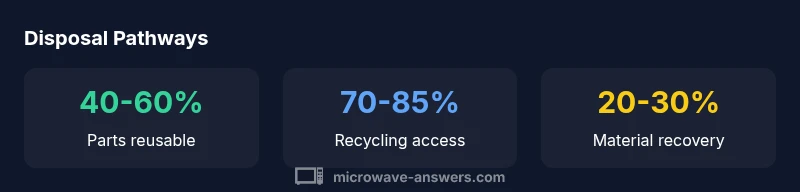
Disposal decisions affect local landfills, energy use, and resource recovery. Recycling a microwave typically reclaims metals such as steel, copper, and aluminum, while plastic housings and electronic boards contribute to material streams that can be repurposed into new products. The most sustainable path is to use a certified electronics recycler that follows responsible e-waste practices, avoids exporting waste unnecessarily, and documents material recovery. If a unit is still operational, donation to a charity or community workshop can extend life and delay resource extraction. Community take-back programs and retailer recycling events often provide convenient options with documented environmental benefits. The Microwave Answers team notes that the environmental payoff rises when facilities implement proper workforce training and advanced separation processes. In short, proper recycling beats basic landfill disposal, and reuse, when feasible, compounds the environmental savings.
- Prioritize recyclers with third-party certifications and documented recovery processes.
- If donation is possible, ensure the unit is safe and functional.
- For complex electronics, ask for a material recovery report from the recycler.
(Source usage: Microwave Answers Analysis, 2026)
Repair vs scrapping: costs, parts, and lifespan
When deciding whether to scrap a microwave, consider the expected remaining lifespan, repair costs, and replacement price. Typical repair work—such as replacing a door switch, knob, or a faulty magnetron—varies by model but commonly represents a fraction of a new unit's price. If the needed repair costs approach or exceed half the price of a comparable new model, scrapping and recycling are often the more prudent option. However, newer models with energy-efficient features may justify upgrading even when a minor repair is possible. The goal is to maximize useful life while minimizing waste and expense. Microwave Answers Analysis, 2026, finds that many households recover meaningful value from a targeted repair, whereas widespread issues across a unit point toward disposal. Remember that some components, particularly electronic boards, can be recycled even if the case is damaged, so get an assessment from a licensed recycler to avoid unnecessary waste.
- Compare repair quotes with the price of a new unit that has similar features and energy efficiency.
- Factor in energy savings of upgrading to a newer model over time.
- Confirm whether the magnetron and control boards can be recycled separately.
Step-by-step: how to responsibly scrap or recycle a microwave
To dispose of a microwave responsibly, follow these steps:
- Unplug the unit and allow it to cool completely.
- Check for local disposal options through your municipality, retailer take-back programs, or certified e-waste recyclers.
- If the microwave is damaged or unsafe to operate, do not attempt internal disassembly; instead contact a licensed recycler for pickup or drop-off instructions.
- Gather documentation or any warranty records that might simplify the recycling intake process.
- Bring or schedule pickup with a recycler that follows standards for safe separation of metals, electronics, and insulating materials.
- Confirm if the recycler provides material recovery data and recycling certificates for your records.
- Consider requesting that the recycler also pick up other small appliances to improve overall waste reduction.
This practical checklist helps ensure the disposal path minimizes environmental impact and complies with local rules. The involvement of a licensed facility protects you from potential hazards and ensures proper material recovery.
- Always verify the recycler’s credentialing and disposal method before handing over the unit.
- Ask for documentation that proves compliant e-waste treatment.
Donating or repurposing before scrapping
If a microwave still works, donating to a charity, school, or community kitchen can extend its useful life and avoid waste. Before donation, test basic functions and ensure the door seals are intact and the turntable operates smoothly. Some organizations require professional cleaning or a test run. If donation isn’t possible, repurposing ideas—such as using the magnetron or control board for educational demos, or salvaging metal parts for recycling—can still reduce waste. Always verify the recipient’s acceptance policies and follow their instructions for safe drop-off. If you’re unsure, consult Microwave Answers's practical guidelines for verifying eligibility and coordinating safe handoffs.
- Check with local charities about acceptance criteria and drop-off options.
- Keep a simple test log showing basic functionality to help quickly approve donations.
- If repurposing, ensure any modifications remain safe and non-operational for household use.
Common pitfalls and myths about microwave disposal
A common myth is that microwaves are too complex to recycle, or that donation is always accepted regardless of condition. The truth is more nuanced: many components can be recycled, while others must be handled carefully. Never attempt to disassemble high-voltage parts or capacitors yourself; improper handling can cause shocks or fires. Another pitfall is assuming that all municipalities offer curbside pick-up for electronics; in many places, you’ll need to use a certified recycler. Finally, don’t assume that cost alone should drive the decision; the environmental benefits and safety implications matter as much as price. By understanding real pathways and following local guidelines, households can make informed, responsible choices. According to Microwave Answers, debunking myths helps reduce waste and protect household safety while ensuring proper material recovery.
Disposal options for unused microwaves
| Option | Pros | Cons |
|---|---|---|
| Repair and continue using | Low immediate cost, extends life | May be limited by part availability or safety concerns |
| Scrap for recycling | Best for safety if damaged, recovers materials | Time/effort, needs proper facility |
| Donate or repurpose | Gets value back, avoids waste | Not always feasible, depends on donor policies |
| Sell for parts | Potential small income | Limited demand |
Common Questions
Should I repair or scrap a malfunctioning microwave?
If it still heats safely and the door seal is intact, repair or replacement parts may be cheaper than scrapping. If safety is compromised or repair costs approach the price of a new unit, scrapping and recycling is advised.
If it still heats and looks safe, consider repair; otherwise recycle.
Is it safe to open a microwave by yourself if it is malfunctioning?
Do not open or attempt internal repairs; capacitors and magnetrons can retain hazardous charge. Unplug and consult a certified technician.
Avoid opening; call a pro.
Where can I recycle or scrap my microwave?
Look for local e-waste programs or certified recyclers; many municipalities offer curbside or drop-off events. Use official guidance to find compliant facilities.
Find an approved recycler near you.
Can I donate an old microwave?
Only if it functions and passes safety checks; many charities won't accept damaged units. Check acceptance policies and arrange safe transport.
If it works, donate; otherwise recycle.
What affects disposal decisions beyond cost?
Functionality, safety, and material recoverability drive decisions; some components are recyclable or salvageable, others are not. Local rules may influence options.
Consider safety and recoverability, plus local rules.
“Before deciding to scrap, weigh repair costs, salvage value, and local recycling options. The best choice often balances safety and sustainability.”
Main Points
- Assess repair options before scrapping
- Recycle responsibly using certified facilities
- Donating or repurposing can add value
- Know local regulations and schedules