Why Use a Tea Kettle Instead of a Microwave: A Practical Comparison
Discover why a tea kettle often beats a microwave for tea brewing: flavor control, safer boiling, and energy efficiency. A practical, hands-on comparison of heating principles, maintenance, and real-world decision factors.


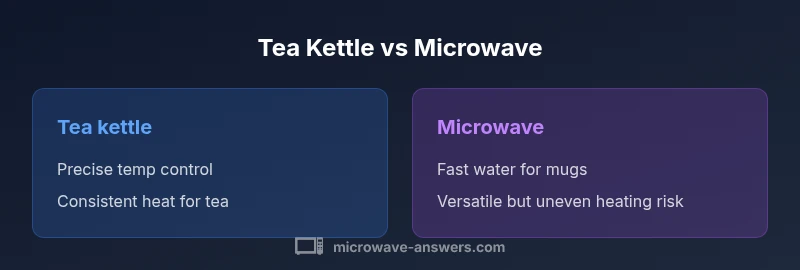
Tea kettles typically offer more precise temperature control, prevent uneven heating, and preserve tea flavor, making them the preferred method for true tea brewing. Microwaves shine for speed and convenience when reheating or for water in a mug, but can compromise flavor and safety if overused. This article compares pathways, trade-offs, and practical decision factors.
The central question: why use a tea kettle instead of microwave
In home kitchens, many steam-driven decisions come down to taste, safety, and energy use. The key question why use a tea kettle instead of microwave surfaces often for tea brewing, where the kettle excels at delivering consistent water temperature and preserving delicate flavors. The Microwave Answers team has observed that the kettle's predictable boil cycle and feedback from traditional whistling designs help home cooks dial in exact temperatures. This article explores the practical differences, the scenarios where kettles shine, and the trade-offs you should weigh when building your daily routine around hot water. The goal is not to moralize about microwaves but to provide a clear framework for choosing the right tool for the job, especially if you brew tea regularly or handle foods that require precise temperature control.
- You will learn how heating principles differ between kettles and microwaves.
- You will see real-world scenarios where each method excels.
- You will gain a practical decision framework to tailor your kitchen setup to your tea rituals and cooking tasks.
Heating principles: kettles vs microwaves
A kettle heats water by conduction with a dedicated element or open flame, delivering rapid, uniform heat to a fixed volume. A microwave agitates water molecules with electromagnetic waves inside a container, heating unevenly depending on container shape, placement, and water volume. The key difference is predictability: kettles give you a straightforward boil cycle, while microwaves require attention to container selection and stirring to avoid cold pockets. For tea brewing, predictable temperatures help maintain delicate aromas and avoid scorching leaves. In practical terms, a kettle is often more energy-efficient for small to medium batches because you heat only what you need and you can monitor the water closely.
In contrast, microwaves are versatile for quick tasks across many foods, but warming water can be less consistent. If you’re boiling a liter for multiple cups, a kettle minimizes the risk of overheating or scorching. If you’re just heating a cup for instant tea, a microwave can be convenient, but you may sacrifice flavor nuances that depend on stable temperature. Overall, kettles emphasize controlled thermal input, while microwaves emphasize speed and flexibility.
Flavor extraction and tea quality: how the heating method shapes your cup
Tea flavor is highly sensitive to water temperature. Different teas require different ranges (green tea around lower temperatures, black teas at higher ones, and oolongs somewhere in between). A tea kettle allows you to reach and maintain precise temperatures, with some models offering adjustable thermostats and kettle designs (like gooseneck kettles) that give you even finer control over pour rate and delivery. This level of control supports gentle, even extraction, which preserves the natural sweetness and avoids tannin over-extraction that can produce bitterness. A microwave, by contrast, heats water in a less predictable fashion. Uneven heating can lead to slight temperature gradients in the water, potentially altering extraction and resulting in inconsistent flavor across cups. For serious tea drinkers, the temperature discipline provided by a kettle often correlates with better aroma, mouthfeel, and overall cup quality.
In practice, if you brew tea daily, a kettle reduces variability and helps you dial in your preferred infusion time. For casual tea moments or when you’re in a rush, a microwave can still deliver a acceptable cup, but the trade-off is occasional flavor deviation or a less nuanced cup.
Safety considerations when heating water
Safety with hot water is a fundamental concern regardless of the method. A kettle’s design typically includes a controlled spout, a secure handle, and a lid that minimizes splashing. When a kettle whistles, you receive a clear cue that the water has reached a rolling boil and can be removed safely. The risk of burns remains, so maintain a stable stance, use heat-safe containers, and never leave a kettle unattended on a high flame or electric element. In a microwave, the risk is slightly different: overheating can occur if water is heated beyond its boiling point in closed containers, leading to sudden eruptions when the container is moved. Additionally, microwavable plastic containers or poorly rated glass can release chemicals or crack under high heat. Always use microwave-safe containers and follow manufacturer guidelines for water heating. For households with children or seniors, kettles with built-in safety features (auto-shutoff, boil-dry protection) are especially valuable, while microwaves may require more careful monitoring to avoid scalds and spills when handling hot water.
Convenience and speed: weighing the trade-offs
Speed matters in busy mornings, but the speed advantage of a microwave comes with caveats. For small quantities of water (one mug), a microwave can heat water rapidly, but you often need to stir to avoid hot spots. The kettle, on the other hand, brings the water to a rolling boil with a consistent rate, and the pour can be controlled precisely, making it easier to measure temperature and maintain a steady infusion. For larger batches (two or more cups), a kettle generally performs faster and more predictably, especially if you want to preserve aroma and sweetness without risking over-extraction. If you drink tea infrequently, the microwave may feel sufficiently convenient; for daily tea rituals, the kettle provides a reliable workflow and a tactile, satisfying sense of control that many tea lovers value.
Maintenance, durability, and lifecycle costs
Kettles are built to withstand repeated heating cycles, but descaling is important when you live in hard-water areas. A simple ritual of boiling water with a splash of vinegar or a dedicated descaler extends the life of the heating element and maintains performance. Cleaning a kettle typically involves regular rinse and occasional descaling to remove mineral buildup. Microwaves, by contrast, accumulate fingerprints and food splatters that can affect performance if not cleaned. The microwave’s interior can harbor lingering odors if not aired out, and certain foods can leave stubborn stains. In terms of lifecycle costs, kettles may require occasional replacement of the gasket or filter, while microwaves may accumulate higher maintenance costs if internal components degrade. The key is to adopt a routine that suits your water quality, usage pattern, and appetite for occasional appliance upkeep.
Environmental and energy considerations: what matters in daily use
From an environmental perspective, the energy used to heat water is a major factor. A kettle that efficiently transfers heat to water can minimize energy waste compared with a microwave heating water in an improvised container. For households that brew tea multiple times a day, using a kettle can reduce standby energy draw and improve overall efficiency compared with repeatedly using the microwave for hot water tasks. The energy footprint also depends on the kettle’s material and build quality; durable kettles with good insulation often retain heat better, reducing repeated energy demands. When comparing models, consider not just wattage or power rating, but also features like auto-off after boiling and boil-dry protection—these contribute to lower energy waste and improved safety over time.
Decision framework: mapping your needs to the right tool
To choose between a kettle and a microwave, start by listing your typical hot-water needs. If you regularly brew tea, especially in larger volumes, a kettle is generally the better fit for flavor control and consistent temperatures. If your priority is speed and absolute convenience for single cups or occasional reheating, a microwave can be enough. Consider space: a compact kitchen might benefit from a single appliance that does multiple tasks, while a stand-alone kettle and a compact microwave may be more ergonomic if you have the counter space. Finally, assess how much you value flavor accuracy versus flexibility. Tea lovers who chase precise temperatures may favor a kettle, while others who value quick, flexible heating for various foods may lean toward a microwave. Practical tips include choosing a gooseneck kettle for pour control, or selecting a microwave with a pre-set tea/coffee heating function if available.
Practical tips for selecting and using the right tool
- Match kettle type to your tea habits: gooseneck for precise pouring, whistling for quick alert.
- Choose microwave containers labeled microwave-safe to avoid chemical leaching and uneven heating.
- Calibrate your water temperature goals and maintain your appliances with regular descaling and cleaning.
- Consider a combined setup if you brew tea daily but also need quick reheating for meals.
- Use a thermometer to confirm water temperature when your kettle lacks precise controls.
Real-world scenarios and quick-start checklists
Understanding when to pick each tool helps you optimize for flavor and time. For an hour-long tea session with several cups, a kettle is the best partner. For a 60-second tea moment or a cup of hot water for instant soups, a microwave may be the practical choice. Develop a simple checklist: (1) desired tea type, (2) batch size, (3) speed vs flavor emphasis, (4) available counter space, and (5) maintenance willingness. This framework helps you select the right tool and use it optimally.
Comparison
| Feature | Tea kettle | Microwave |
|---|---|---|
| Heat source and consistency | Dedicated heating element with predictable boil loop | Electromagnetic heating; can be uneven if not stirred/drained properly |
| Flavor impact and tea quality | Precise temperature control supports ideal extraction | Water heating is less consistent; flavor can vary between cups |
| Speed for small batches | Fast and controllable for 1-2 cups | Very quick for small volumes but may require stirring |
| Safety considerations | Auto-off/boil-dry protection; safer handling when managed | Burn risk if container misused; careful handling needed |
| Maintenance | Descaling for mineral buildup; longer lifespan with proper care | Interior cleaning to avoid odors; easier to wipe exterior |
| Upfront cost and space | Moderate cost; takes dedicated counter space | Low footprint per unit; versatile for reheating and cooking |
Advantages
- Better flavor control for frequent tea brewing
- Precise temperature control with gooseneck designs
- Lower risk of uneven heating for hot water in mugs
- Dedicated appliance streamlines tea routines
Cons
- Requires counter space and separate storage
- Descaling and maintenance in hard-water areas
- Not as versatile for cooking tasks as a microwave
Kettle is preferred for regular tea brewing; microwave wins for speed and versatility
Choose the kettle when flavor, temperature control, and predictable results matter most. Opt for the microwave when you need quick hot water for beverages or reheating, and space is limited. The best setup may combine both devices for maximum flexibility.
Common Questions
What is the main advantage of using a tea kettle over a microwave?
The main advantage is precise temperature control and consistent heat delivery, which helps preserve tea flavor and aroma. A kettle supports repeatable infusions, reducing bitterness from over-extraction. For daily tea rituals, this often translates to a better cup.
The kettle gives you precise control over temperature and repeatable results, which helps you brew better tea.
Can you safely boil water in a microwave?
Yes, but you must use a microwave-safe container and avoid overheating water. Stirring before pouring can prevent superheating and burns. Follow manufacturer guidelines and never run an empty microwave for extended periods when heating water.
Yes, but use a microwave-safe container and stir to prevent overheating.
How can I prevent uneven heating when using a microwave for water?
Choose a container with even shape, use a microwave with sufficient wattage, and stir the water halfway through heating. For best results, avoid microwaving in a sealed or tightly closed container to prevent pressure buildup.
Stir halfway and use a suitable container to avoid hot spots.
Is there a health difference between kettle-boiled water and microwave-heated water?
From a safety perspective, neither method makes water inherently unsafe when used correctly. Flavor and mineral content can affect perceived healthiness of beverages. The main health consideration is avoiding plastic containers and ensuring clean, well-maintained appliances.
Both methods are safe if used properly, focus on clean equipment and safe containers.
How should I choose between a kettle and a microwave for daily use?
Assess your tea habits, space, and energy priorities. If you brew tea regularly and value flavor control, favor a kettle. If you want quick hot water for various tasks and have limited space, a microwave may be more convenient.
Think about your routine and pick the tool that saves you time while preserving flavor.
What maintenance considerations matter for long-term use?
Kettles benefit from periodic descaling to prevent mineral buildup, while microwaves require interior cleaning to remove odors and residues. Both devices benefit from regular inspection of gaskets and safety features to ensure safe operation.
Descale the kettle and clean the microwave interior regularly to keep them performing well.
Main Points
- Prioritize kettle for flavor and temperature control
- Use microwave for speed and convenience when appropriate
- Maintain your kettle with descaling to extend life
- Balance space, maintenance, and energy use in decision making