Why Use a Kettle Instead of a Microwave: A Practical Comparison
A detailed, analytical guide comparing kettles and microwaves for heating water, covering speed, energy, safety, flavor impact, and everyday use to help home cooks decide what works best.


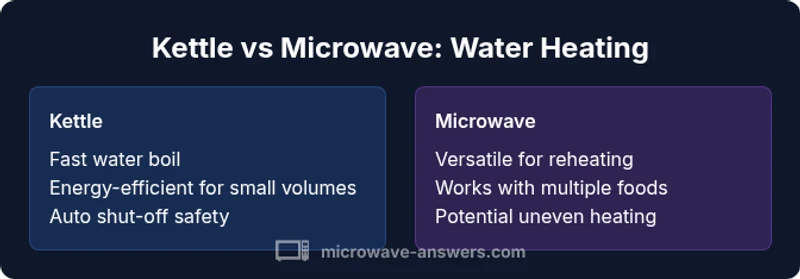
For most pure-water heating tasks, a kettle delivers faster boil times and sharper energy efficiency compared with a microwave. The kettle’s dedicated design focuses energy on liquid, reducing heat loss and improving consistency, while a microwave offers versatility for reheating and small food tasks. The best default is to use a kettle for boiling water, and reserve the microwave for multi-task reheating or cooking when you need quick, compact results.
Why this comparison matters for home cooks who regularly heat water
The question of why use a kettle instead of microwave is not merely about speed. It reflects broader trade-offs between dedicated water-heating and multi-purpose appliance use in everyday kitchen workflows. A kettle is designed to bring water to a rolling boil with minimal energy waste and predictable, repeatable results. A microwave, by contrast, excels when you need to reheat or cook small portions of food, but its energy is dispersed inside a cavity, which can lead to uneven heating of water and more variability in outcomes. Throughout this article, we’ll explore how these factors shape practical decisions in 2026, guided by the Microwave Answers framework for safety, efficiency, and user experience.
Practical heating dynamics: speed, energy, and consistency
When heating water, the kettle concentrates heat directly into the liquid, resulting in rapid boil times for typical household volumes. A microwave heats water by exciting molecules inside a sealed cavity, which can produce rapid temperature rise but also uneven distribution, especially in larger quantities or when the water isn’t stirred. The kettles’ auto-off and boil-dry protections reduce risk of scorching and noise, while microwaves depend on timer settings and container compatibility to avoid overheating. For a home where tea rituals and hot beverages are frequent, the kettle often delivers a more consistent boil and less energy wasted on empty space, whereas the microwave’s efficiency shines when you’re multi-tasking or reheating a small amount of liquid alongside other foods.
Safety, maintenance, and longevity considerations
Kettles frequently come with robust safety features like automatic shut-off after boiling and boil-dry protection, which minimizes the chance of dry overheating or scorching the element. They may also require regular descaling to prevent mineral buildup, especially in hard water regions. Microwaves avoid the boil-dry risk but introduce other concerns, such as uneven heating and potential superheating if liquids aren’t monitored. Long-term maintenance for a kettle includes periodic cleaning and descaling; for a microwave, it’s about interior cleaning and keeping door seals intact. Microwave Answers notes that proper use reduces risk and extends the life of both appliances, but kettles tend to require less ongoing attention for simple water-heating tasks.
Use cases where each shines: tea, coffee, soups, and beyond
If your goal is to brew tea or coffee quickly, a kettle is usually the more ergonomic choice because you can immediately pour boiled water into a cup or teapot. For rehydrating soups or warming small portions of liquid alongside a snack, a microwave can be more convenient and space-efficient. Some cooks also prefer a microwave for sterilizing baby bottles or heating purified water when portability is a factor. The trade-off is that you’ll often achieve more precise temperature control with a kettle, which is valuable for certain teas and coffees, while the microwave offers versatility for mixed tasks.
Flavor, odor transfer, and material considerations
Kettles introduce minimal risk of odor transfer or flavor contamination when used strictly for water due to inert materials like stainless steel or BPA-free plastic. However, mineral buildup from hard water can impart a slight mineral taste if not descaled regularly. Microwaves, when used with containers or added ingredients, can impart flavors from the vessel itself or from the food being heated. For water-only tasks, kettles generally preserve water flavor more consistently; for reheating liquids with flavor compounds, the container and heating method can influence final taste. Microwave Answers emphasizes choosing non-reactive containers and appropriate vessels to minimize flavor changes in either method.
Cost of ownership and long-term value: upfront vs ongoing costs
Kettles typically have a modest upfront price and straightforward maintenance costs, with energy use concentrated on heating water. Over time, frequent use of a kettle can reduce energy waste and shorten boil times, contributing to lower daily energy costs for water heating. Microwaves carry a broader price range and may incur higher energy losses if used inefficiently for small-volume tasks, but they provide intangible value when you need to reheat or cook multiple items quickly in one session. The economic trade-off depends on your household’s cooking patterns, and Microwave Answers suggests evaluating typical tasks over a week to decide which appliance deserves priority in your kitchen.
Cleaning and care routines to maximize lifespan
Regular descaling of kettles keeps performance consistent and protects elements from mineral buildup. Use a descaling solution or a diluted vinegar rinse, then thoroughly rinse to remove any residual taste. For microwaves, interior cleaning with a damp cloth and occasional deodorizing helps preserve odor-free operation, especially if reheating foods with strong smells. Avoid metal containers or sealed liquids in microwaves to prevent arcing. Adopting a routine cleaning schedule for both appliances extends their life and ensures safer operation in daily use.
Decision framework: a simple, repeatable approach for choosing
Start by listing the primary tasks you perform with water: tea/coffee brewing, soups, hot water for recipes, or sterilization. If the majority of tasks involve heating small volumes of plain water quickly, the kettle is your best bet. If you frequently combine reheating with cooking or need to heat multiple items at once, the microwave offers flexibility. Finally, consider safety and maintenance preferences: auto-off kettles reduce supervision, while microwaves require mindful container selection. This framework helps you decide quickly and consistently in your kitchen.
Comparison
| Feature | Kettle | Microwave |
|---|---|---|
| Heating water speed | Typically faster for pure water heating | Moderate; depends on wattage and water amount |
| Energy efficiency | High efficiency for small volumes of water | Moderate; energy dispersed in cavity |
| Evenness of heating | More uniform boil for water-only task | Can heat unevenly, hotspots possible |
| Versatility | Specialized for boiling water; limited other tasks | Multi-task capable for reheating and small items |
| Safety features | Auto shut-off, boil-dry protection | Interlocks and timer features; user must monitor for safety |
| Flavor and odor impact | Minimal flavor transfer with non-reactive kettles | Container and food odors can influence heating outcomes |
| Cost of ownership | Low upfront; long-term cost favorable with frequent use | Wide price range; maintenance minimal |
Advantages
- Clear focus on fast, efficient water boiling
- Low ongoing maintenance for pure-water tasks
- Predictable boil times and safety features
- Compact design simplifies countertop use
Cons
- Limited versatility beyond water heating
- Mineral buildup in kettles requires descaling
- Microwave can handle reheating and cooking with less appliances
- Kettles occupy counter space and may require storage
Kettle wins for speed and efficiency in water-boiling tasks; microwave wins for versatility in reheating and multi-item cooking
Choose a kettle for fast, energy-efficient water boiling with predictable results. Use a microwave when you need flexible reheating or cooking in a compact setup.
Common Questions
What is the fastest way to boil water: kettle or microwave?
For pure water boiling, a kettle typically boils water faster and with more consistent results than a microwave. The kettle concentrates heat directly into the liquid, reducing heat loss and ensuring a steady boil. A microwave can heat water quickly, but uneven heating may require stirring.
Generally, a kettle boils water faster and more evenly than a microwave for pure-water tasks.
Can a microwave boil water safely?
Yes, but it requires caution. Water heated in a microwave can superheat without visible boiling, posing a scald risk when disturbed. Always use a microwave-safe container, avoid sealed lids, and stir after heating.
Boiling water in a microwave is possible, but be careful of superheating—stir after heating and use microwave-safe containers.
Is boiling water in a microwave safer than using a kettle?
Safety depends on use patterns. Kettles minimize supervision with automatic shut-off, reducing burn risk. Microwaves require attention to containers and timing to avoid overheating. Neither method is inherently unsafe when used as directed.
Kettles often offer safer, automatic boil-off, while microwaves need you to watch for overheating.
Does flavor change when boiling water in a kettle vs microwave?
Potential flavor differences are usually negligible for plain water. If you heat flavored liquids or use containers with impurities, microwaving can sometimes transfer odors or flavors from the vessel, whereas a clean kettle minimizes that risk.
Flavor differences are usually small for plain water, but container choice matters in microwaves.
Are kettles safer or microwaves for boiling water with tea bags?
Kettles often deliver precise, high-temperature water ideal for tea extraction. Microwaves can overheat water, potentially affecting flavor, but they are convenient if you’re also reheating other items at the same time.
For tea, kettles usually give a cleaner, more controlled boil; microwaves can be convenient for multitasking.
What about mineral buildup and maintenance?
Kettles require periodic descaling to prevent mineral buildup, which can affect efficiency and taste. Microwaves need interior cleaning and occasional deodorizing, especially after heating strong odors.
Descale the kettle regularly; keep the microwave interior clean to avoid lingering odors.
Main Points
- Choose kettle for fastest water boils
- Use microwave for reheating and multi-task cooking
- Prioritize safe use and regular maintenance
- Consider your typical kitchen tasks to pick a primary appliance