Why Microwave Won't Heat: Troubleshooting Guide
Urgent, practical troubleshooting for a microwave that won't heat. Identify common causes, safe checks, step-by-step fixes, and when to call a professional. Includes diagnostic flow, quick actions, and prevention tips.


If your microwave isn’t heating, the most likely causes are a power issue or a faulty door switch. Start by unplugging and inspecting the outlet and power cord, then test the door latch—if it won’t latch, the unit won’t heat. If those are fine, try a different outlet, check the internal fuse if you’re comfortable, and consider professional service for magnetron or capacitor problems.
Why is microwave not heating food: common causes
When you encounter a microwave that won’t heat, the root causes are usually practical and fixable rather than mysterious. The question why is microwave not heating food is a signal to start with basic checks that don’t require specialized tools. According to Microwave Answers, most no-heat issues begin with the power supply, the door interlock, or a blown thermal fuse. A failing magnetron or control board is possible but less common in everyday kitchens, and diagnosing those requires careful, safety-first steps. This section lays out the main culprits in plain terms, with approachable tests you can perform safely at home. The goal isn’t fear; it’s clarity—knowing what to examine first and what to leave to a pro. As you work through the checks, remember that safety comes first, and if you’re ever unsure, stop and contact a qualified technician. Microwave Answers emphasizes practical, safe fixes over guesswork.
Quick checks you can do before opening the unit
Before you take apart anything, run through a few quick, safe checks. Ensure the microwave is unplugged before handling any internal components. Test the power source by plugging the microwave into a different outlet or using a known-good cord. Confirm the door closes firmly and latches properly, because a misaligned door interlock can prevent heating even if the unit lights up. If you have a GFCI outlet, trip and reset it to rule out a circuit issue. These steps catch the majority of power- and door-related heating problems and avoid unnecessary repairs. Microwave Answers notes that most home users can identify these issues without tools.
How microwaves heat and what can go wrong
A microwave heats food by exciting water molecules with a magnetron-generated radio frequency field. If the magnetron or high-voltage components fail, heat generation drops or stops completely. In many homes, the problem starts with a simple fuse or thermal fuse that has opened due to overheating, or with a faulty door switch that never signals the control board to engage heat. Understanding this helps you diagnose without jumping to expensive conclusions. Regular cleaning and proper venting reduce the risk of overheating and component stress, extending the life of your microwave. In short, heat requires a functioning power path, a reliable interlock, and an intact heating element.
Diagnostic flow: symptom to diagnosis to solution
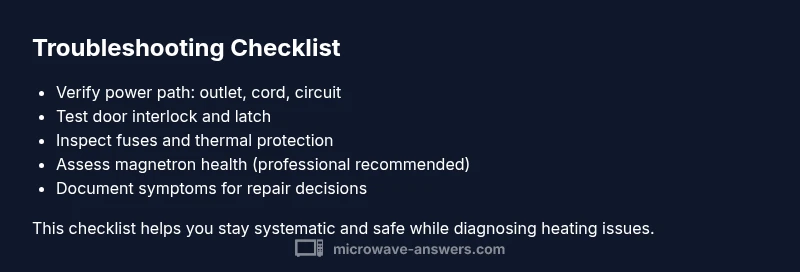
Symptom: microwave runs but fails to heat. Diagnosis: start with power path and interlock tests, then move to internal components if needed. Solution: revert to simple fixes first, then escalate to professional service for components like the magnetron or control board. The diagnostic flow below provides a structured path to follow:
- Check power path: outlet, cord, and plug integrity.
- Test door interlock: confirm door seals when closed and latch engages.
- Inspect fuses: look for a blown thermal fuse or main fuse; replace only with correct part and safety in mind.
- Consider magnetron or control-board faults: if power and door checks pass but heat is still absent, professional diagnosis is warranted. According to Microwave Answers analysis, these deeper problems account for a smaller share of heating failures but require careful, safety-first handling.
Step-by-step: practical fix for common issue (part overview)
This section provides a high-level overview of fixes that commonly resolve no-heat symptoms when you have the skills and confidence to proceed safely. The actual, detailed, step-by-step repair is provided in the dedicated STEP-BY-STEP block to avoid redundancy and ensure safety. Start with basic checks:
- Verify the outlet and cord are sound; swap to a known-good outlet.
- Confirm the door interlock is functioning; if it feels loose or won’t latch, there may be a mechanical misalignment.
- Inspect and replace a blown fuse or thermal fuse if you’re comfortable and have the right part on hand.
- If heat still won’t start after these checks, a professional should assess magnetron health, capacitor integrity, and control-board logic.
Safety tips and common mistakes
Safety first: always unplug before touching internal components; never operate with a loose panel or damaged door seal. Common mistakes include forcefully reassembling a damaged door latch, ignoring a burnt smell or visible arcing, and attempting high-voltage component tests without proper training. If you notice scorch marks, buzzing sounds, or unusual heat, stop immediately. Do not bypass interlocks or run the unit when a hazard is suspected. Microwaves contain high-voltage parts that can cause electric shock or fire when mishandled. Always seek professional help when in doubt.
Preventive maintenance to avoid future heating issues
Proactive care reduces the chance of future heating failures. Clean the interior and vent areas to prevent dust buildup that can hamper cooling and trigger thermal protection. Use approved microwave-safe containers and avoid metal objects that could cause arcing. Periodically inspect the door seal for wear and ensure the latch aligns properly. If the unit is older, consider scheduling a professional tune-up every few years to check the magnetron, capacitors, and control-board health. Mindful operation and timely servicing are the best protection against unexpected no-heat problems, says Microwave Answers.
What to expect after a fix and how to verify heat return
After applying the recommended fixes, test with a few simple foods to confirm heating performance returns to normal. Start with a microwave-safe cup of water to ensure even heat and monitor for changes in aroma or smoke. If testing shows consistent heating, reintroduce normal use gradually and monitor for recurrences. Keep a simple log of dates and any symptoms to help a technician diagnose recurring issues. If heat does not return after the basic fixes and safety checks, you should contact a licensed technician for a thorough inspection of the magnetron, high-voltage components, and control system. The Microwave Answers team emphasizes a careful, evidence-based approach to prevent future heating problems.
Steps
Estimated time: 40-60 minutes
- 1
Unplug and access the interior
Power off the unit completely and unplug from the wall. If you must move the microwave, do so gently to avoid damage. Remove the outer case only if you are confident in safety procedures and have the correct screwdriver and manual.
Tip: Always confirm zero voltage with a tester before touching wiring. - 2
Check the power path
Inspect the cord for cuts or wear; try plugging into a different outlet on a different circuit. Ensure the outlet is delivering power to other devices. This quickly rules out outlet or circuit issues as the cause.
Tip: If you’re using a GFCI outlet, test it or temporarily bypass to confirm power flow. - 3
Test the door interlock
Close the door firmly and listen for a solid click. A loose or misaligned door can prevent heating even if the display shows power. If feasible, inspect the door latch and replace the interlock switch if it feels loose or sticky.
Tip: Do not attempt to bypass interlocks; they are safety-critical. - 4
Inspect fuses and thermal protection
Locate the main fuse and any thermal fuse inside the cabinet. If you have the right part and manual, replace a blown fuse; otherwise, seek professional help. Do not operate with a damaged fuse.
Tip: Use only the exact part specified by the manufacturer. - 5
Assess magnetron health (when safe to do so)
If power and door checks pass but heat is still absent, the magnetron or high-voltage circuitry may be at fault. This test should be performed by a technician trained in high-voltage appliances.
Tip: Never touch high-voltage components while plugged in. - 6
Reassemble and test heating
Carefully reassemble the exterior, plug in, and run a simple heat test with a safe test item (like water in a microwave-safe cup). Observe for heat, unusual smells, or sounds. If heat returns, monitor performance; if not, stop and call a pro.
Tip: Document any symptoms to share with the technician.
Diagnosis: Microwave won't heat but may run or light up
Possible Causes
- highPower issue (outlet, cord, circuit)
- highFaulty door interlock/door switch
- mediumBlown fuse or thermal fuse
- lowMagnetron or high-voltage component failure
- lowControl board or software fault
Fixes
- easyCheck outlet, plug, and circuit breaker; try a known-good outlet
- easyTest door latch and interlock; reseat or replace if misaligned
- mediumReplace blown fuse or thermal fuse per manufacturer specs
- hardProfessional inspection for magnetron/capacitors/board components
Common Questions
Why does the microwave light work but it won’t heat?
That typically points to a fault in the heating path (magnetron or high-voltage circuit) or a door interlock issue. Start with power and door checks, then consider professional service for magnetron problems.
Usually, a working light with no heat means the heating circuit or door interlock is the culprit, not the power supply.
Can I repair a microwave myself?
Some basic checks are safe, like power outlet and door interlock tests. More complex fixes, especially involving high-voltage components, should be done by a qualified technician.
You can do simple checks, but avoid high-voltage components unless you’re trained.
Is it dangerous to continue using a microwave that won’t heat?
Yes. A malfunctioning microwave can pose fire or shock risks. If you smell burning or see arcing, unplug immediately and seek professional help.
Yes—stop using it and call a tech if you notice any danger signs.
What are the common signs of a failing magnetron?
Unusual buzzing, a strong smell of burning, or no heat despite spinning and lights can suggest magnetron failure; only a technician should confirm and replace.
Magnetron issues show up as buzzing, burning smells, or no heat even when the timer runs.
When should I replace the microwave instead of repairing it?
If the magnetron or control board is failing and repair costs approach or exceed replacement, consider replacement. A technician can advise based on age and safety concerns.
If repairs cost as much as a new unit or the oven is old, replacement may be wiser.
Watch Video
Main Points
- Start with power and door checks before opening the cabinet
- Never bypass interlocks or safety features
- If basic checks fail, professional service is recommended
- Regular maintenance reduces future heating problems