What to Do If Your Microwave Keeps Tripping the Breaker
Urgent, practical guide for home cooks: troubleshoot microwave breaker trips with safe steps, common causes, step-by-step fixes, and when to call a pro.


If your microwave keeps tripping the breaker, unplug it and move it to a dedicated 20-amp circuit outlet. Check for loose connections, inspect the power cord for wear, and avoid extension cords. If the breaker trips again, stop and call a licensed electrician or appliance repair pro.
Why the microwave trips the breaker
If you're wondering what to do if microwave keeps tripping breaker, you’re not alone. Breaker trips happen when the microwave draws more current than the circuit can safely handle, or when there is a fault inside the unit or wiring. The most common cause is a shared circuit with other devices or a worn-out power cord. In many homes, the kitchen outlets are on a general 15-amp circuit; a microwave can require a dedicated 20-amp circuit, so be mindful of the circuit rating. Modern microwaves might also have internal components that fail and momentarily short, which can trip a breaker. In addition, damaged outlets, improper wiring, or a loose terminal inside the microwave can lead to arcing, heat buildup, and trips. According to Microwave Answers, nearly all trips start with an overload or an outlet issue, which is why the first checks focus on the outlet and circuit compatibility. Always treat a tripping breaker as a safety alert and avoid continuing to use the appliance while unresolved.
Immediate safety steps you should take
Before diagnosing further, prioritize safety and minimize risk. If the breaker trips, switch off the circuit feeding the microwave and unplug the unit. Do not touch wires with the power on, and avoid using damaged outlets or cords. Check for scorch marks, a warm outlet, or a burning smell. Keep flammable items away from the appliance and ensure the area is well-ventilated. If the breaker re-trips after reseating, don’t press your luck—continue to the diagnostic checks or contact a professional.
Common causes and quick checks (in order of likelihood)
The most likely culprits are an overloaded circuit or a worn, damaged cord. A second common issue is a faulty outlet or a loose connection inside the microwave. Less common but possible are internal component faults (magnetron or transformer) that briefly short and trip the breaker, or arcing from interior damage. Start by confirming the microwave has a dedicated outlet on a 20-amp circuit, then inspect the cord for wear, and test the outlet with a basic tester. If you find scorch marks, heat, or a burnt smell, stop using the appliance and call a pro.
How to safely diagnose and plan next steps
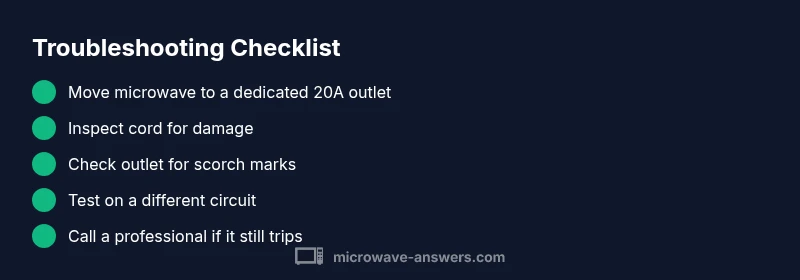
Create a simple checklist to separate symptoms from causes. First, verify the microwave is on its own circuit and that other high-draw devices aren’t sharing the same outlet. Next, inspect the cord for visible damage. If no cord issues are found, test the outlet with a circuit tester and consider plugging the microwave into a known-good 20A outlet on a different circuit. Record what you observe (outlet warmth, tripping pattern) to aid the technician. Always opt for non-destructive checks first and prioritize safety.
Prevention and long-term fixes
For lasting relief, dedicate a proper 20-amp circuit to the microwave and avoid daisy-chaining with other devices. Replace damaged power cords promptly and never use damaged outlets. Schedule periodic inspections of kitchen outlets and circuits, especially in older homes. Consider upgrading to a microwave with lower wattage if your electrical system can’t support high draw. Finally, keep a simple fault log: note when trips occur, what was running, and any smells or noises. This helps you and a professional pinpoint the root cause faster.
Steps
Estimated time: 45-60 minutes
- 1
Isolate the microwave on its own circuit
Start by checking if the microwave shares a circuit with other appliances. If it does, move the microwave to a dedicated outlet on a different circuit, preferably a 20A circuit. This reduces current draw during operation and prevents nuisance trips.
Tip: Label the circuit to avoid future mix-ups. - 2
Inspect the power cord and plug
Unplug the microwave and inspect the cord for cuts, kinks, or melted insulation. Replace a damaged cord immediately and avoid using a damaged plug in any outlet, as this is a common cause of trips.
Tip: Only use the cord supplied with the microwave or a manufacturer-approved replacement. - 3
Check the outlet for heat or scorch marks
Visually inspect the wall outlet for signs of overheating such as discoloration, warmth, or a burning smell. If seen, stop using the outlet and do not reinsert the plug until a professional inspects.
Tip: Never use a damaged outlet; overheating can indicate wiring problems. - 4
Test in a known-good outlet on a different circuit
Plug the microwave into a different, known-good outlet on a separate circuit. If the breaker still trips, the issue is likely with the microwave itself; if not, the problem is circuit-related.
Tip: Avoid extensions or power strips for safety and reliability. - 5
Inspect interior components for arcing or shorts
With the microwave unplugged, look inside for obvious arcing signs, loose door switches, or metal fragments. Do not operate if you see damage; consult a professional for internal inspection.
Tip: Internal faults require professional service. - 6
Call a professional if trips persist
If the breaker trips again after these checks, arrange a service visit from a licensed electrician or appliance repair technician. Ongoing trips can indicate a dangerous electrical fault.
Tip: Provide the technician with observed symptoms and steps taken.
Diagnosis: Microwave trips the household breaker when starting or during operation.
Possible Causes
- highOverloaded circuit or shared outlet with other high-draw appliances
- mediumDamaged or frayed power cord, plug, or damaged outlet
- lowInternal microwave fault such as a shorted magnetron or faulty door switch
- lowArcing due to damaged interior or metal foil in cavity
Fixes
- easyMove microwave to a dedicated 20A circuit outlet and unplug other devices on same circuit
- easyInspect the power cord for damage and replace if needed
- easyTest outlets with a circuit tester and consider using a different outlet on another circuit
- hardIf the breaker still trips, contact a licensed electrician or appliance technician
Common Questions
Why does my microwave keep tripping the breaker?
Most trips are caused by circuit overload or a faulty outlet. Start by confirming a dedicated 20A circuit and inspecting the cord for damage.
Most trips come from overload or a bad outlet; check the circuit and the cord, then call a pro if it continues.
Can a microwave trip the breaker even when it’s not being used?
Yes, if there is a wiring fault or a short to ground somewhere in the circuit. Unplug and have the outlet and wiring checked.
It can trip if there’s a wiring fault; unplug and get the outlet inspected.
Is it safe to keep using the microwave after a breaker trips?
No. A breaker trip indicates a fault. Stop using the microwave until the problem is diagnosed and fixed.
No—stop using it until it’s checked by a pro.
Should I use an extension cord with a microwave?
No. Extension cords can overheat and cause trips. Use a dedicated outlet instead.
Don’t use an extension cord; plug into a proper outlet.
What should a technician check first when diagnosing trips?
Technicians start by confirming circuit rating, outlet integrity, and cord condition before opening the unit.
They check the circuit and outlet first, then inspect the cord and interior components.
Watch Video
Main Points
- Move the microwave to a dedicated 20A outlet
- Inspect and replace damaged cords promptly
- Avoid extension cords or shared outlets
- If trips persist, call a licensed pro
- Document observations for the technician