Repair Microwave Door: A Safe Step-by-Step Guide
Learn to safely diagnose and repair a faulty microwave door, including interlocks, latches, and hinges, with a clear step-by-step approach for home cooks. Practical safety tips and parts guidance included.


With this guide you will repair a microwave door by safely diagnosing the door interlock switch, latch, and hinge, then replacing faulty parts and re-testing. Start by unplugging the unit, gather essential tools, and work on a non-operational microwave out of warranty. This step-by-step plan emphasizes safety and practical fixes.
Why repairing the microwave door matters
A faulty microwave door is not merely a nuisance; it can cause the oven to refuse to start, or worse, allow microwaves to leak if the interlock system is compromised. In many models, the door interlock switches prevent energy from reaching the high-voltage circuit. If you suspect the door is not sealing properly or the latch feels loose, a repair microwave door project is worth doing yourself only with careful safety steps. According to Microwave Answers, starting with a low-risk diagnosis helps you decide whether to perform a repair or replace the unit. The core idea is to isolate the fault area, test components with a multimeter, and replace worn parts rather than attempting crude workarounds. The repair microwave door process centers on understanding how the door, latch, and interlock work together to keep the appliance safe. By the end of this guide you’ll know when a repair is feasible and how to perform it without compromising safety. Remember, never operate a microwave with any door components damaged or missing.
Safety prerequisites before you begin
Before touching any internal parts, unplug the unit and disconnect it from power. Allow the capacitor to discharge; even after unplugging, a microwave can retain a small charge. Wear safety gloves and use insulated tools. Work on a clean, dry surface and keep screws organized. Use proper lighting to inspect hinges and door frame. If you smell burning plastic or notice arcing sounds, stop and seek professional service. For the repair microwave door, never bypass interlocks or tape over gaps; these devices are safety-critical.
Diagnosing the door interlock, latch, and hinge
Start by inspecting the door interlock switches mounted inside the frame; look for loose wires, cracked housings, or corrosion. Check the door latch for wear on the striker and strike plate; replace if the latch feels loose or the striker shows rounding. Examine the hinges for bending or misalignment. If the door closes but the oven won’t start, the interlock switch may be the culprit. A multimeter can test continuity: with the door open, the switch should show no continuity; with the door closed, it should show continuity. If readings are inconsistent, replace the switch or the entire interlock assembly.
Tools and replacement parts you'll need
Gather a Phillips and flat-head screwdriver, a multimeter, needle-nose pliers, small bins for screws, and a safe replacement kit for the interlock switch and latch. The exact parts depend on your model; have the model number handy to order compatible components. For the repair microwave door, buying a complete door interlock kit often saves time and ensures all connectors are correct. Keep a tissue or microfiber cloth handy to wipe dust and fingerprints from the interior.
The repair workflow: a practical plan
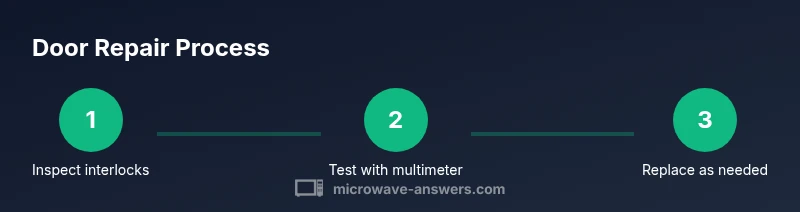
This section outlines a practical approach to repair microwave door problems without causing additional damage. Begin with power-off safety checks, then proceed to inspect the interlock switches, latch, and hinges. Use a multimeter to confirm electrical continuity and a model-specific parts kit to replace worn components. Reassemble with careful alignment, then test the unit using a safe water-cup test to verify door engagement and microwave operation. If the door gasket shows wear, replace it to restore a tight seal. Finally, document parts and steps for future maintenance. The goal is a durable, safe repair rather than a temporary fix.
Common mistakes and how to avoid them
Avoid bypass attempts that defeat safety interlocks; these switches protect users from exposure to microwave energy. Don’t force a misaligned door to latch; re-check hinge alignment instead. Never operate the oven with exposed wiring or damaged insulation. Keep screws organized by position so you return components to their original places. Regularly wipe the interior to prevent dust buildup that can affect door sensors. The repair microwave door should always adhere to the manufacturer’s specifications and safety standards.
When to seek professional help or replace the unit
If you notice persistent arcing, unusual smells, or visible damage to the door frame or interlock wiring, stop immediately and consult a professional. If your appliance is under warranty, contact the manufacturer or an authorized service provider rather than attempting a home repair. If the model is older or the repair parts are not readily available, evaluating replacement options based on energy efficiency and usage may be prudent. The goal is to keep you safe while maximizing the appliance’s lifespan.
Tools & Materials
- Phillips screwdriver (size #2)(Used for securing door hinges and covers)
- Flat-head screwdriver(Useful prying around panels without damage)
- Multimeter(Test continuity on interlock switches)
- Needle-nose pliers(Grip small connectors and wires)
- Small parts organizer or labeled bins(Keep screws in order by location)
- Replacement door interlock switch kit(Model-specific; install to restore interlock function)
- Replacement door latch/hinge kit(Optional but recommended for worn metal components)
- Safety gloves(Protect hands from sharp edges)
- Soft cloth or microfiber towel(Wipe dust and fingerprints during reassembly)
- Model number reference (manual or label)(Identify compatible parts)
Steps
Estimated time: 60-90 minutes
- 1
Power down and unplug
Ensure the microwave is completely disconnected from power. If accessible, wait 1–2 minutes to allow any residual charge to dissipate before touching internal components.
Tip: Tag the power cord or place it in a separate area to prevent accidental replugging. - 2
Access the door interior
Remove outer screws and gently separate the door panel to expose the interlocks, latch, and hinges. Keep screws organized by position to ease reassembly.
Tip: Take photos of connector positions before disconnecting any wires. - 3
Inspect interlocks and latch
Visually check interlock switches for cracks, bent pins, or loose wires. Wiggle the latch and inspect the strike plate for wear. If anything looks damaged, plan replacement parts before continuing.
Tip: If a wire is damaged, do not attempt to solder in place; replace the entire interlock assembly. - 4
Test electrical continuity
With the door open, test continuity on the interlock switches. Close the door and re-test. Inconsistent readings indicate a faulty switch that should be replaced.
Tip: Use the multimeter on the lowest resistance range and confirm zero resistance when closed. - 5
Replace faulty components
Install the replacement interlock switch kit and any worn latch components. Ensure connectors are fully seated and wires are routed away from moving parts.
Tip: Handle new parts by the edges to avoid transferring oils or contaminants. - 6
Reassemble and test
Reattach the door panel and hinges, then plug in. Run a careful test by placing a cup of water inside and closing the door to confirm proper engagement and function.
Tip: If the door doesn't seal, recheck gasket alignment and hinge fit.
Common Questions
Can I repair a microwave door myself?
Yes, you can repair a microwave door if you have the right tools, model-specific parts, and safety measures. If the unit is under warranty or you’re unsure about electrical safety, seek professional service.
Yes, you can fix a microwave door yourself if you have the right tools and parts, but consider the warranty and safety considerations before starting.
What are common signs of a door interlock failure?
Common signs include the oven not starting, irregular door sensor responses, or the mechanism not latching firmly. If the door area feels warm, or you hear buzzing near the interlock, stop and inspect.
Look for the oven not starting or the door not latching; if you feel heat near the door, stop and inspect safely.
Is it safe to test the door while the unit is unplugged?
Yes. Testing with the unit unplugged reduces risk, but always verify there is no residual charge. Use a multimeter to check switches only when the door is open and powered off.
Yes, testing with the unit unplugged is safer. Use a multimeter to check switches when the door is open.
Do I need to replace the entire microwave if the door fails?
Often you can replace specific parts like interlocks or latches, depending on the model's availability. If the unit is old or expensive to repair, compare replacement costs and efficiency.
Sometimes a part replacement suffices, but consider model age and repair costs when deciding to replace.
What safety steps are essential before starting?
Always unplug the microwave, discharge capacitors if accessible, wear safety gloves, and work on a dry surface. Keep screws organized and avoid altering safety components.
Unplug, discharge, wear gloves, work dry, and keep parts organized.
Where can I find model-specific parts for a repair microwave door?
Check the model number on the label, then search authorized parts distributors or the manufacturer's website for compatible interlock and latch kits.
Use your model number to locate manufacturer parts or authorized distributors for interlocks and latches.
When should I call a professional?
If you encounter damaged wiring, arcing, burning smells, or if the unit is under warranty, contact a professional. Complex repairs may require a licensed technician.
Call a professional if wiring is damaged or you smell burning, or if the unit is under warranty.
Watch Video
Main Points
- Unplug before any repair work
- Interlocks and hinges are safety-critical components
- Use model-specific replacement parts
- Test thoroughly with a water cup after reassembly
- Seek professional help if safety is uncertain