Microwave Door Repair: A Practical How-To Guide
Learn safe, practical steps to diagnose and fix common microwave door issues, including latches and interlocks. Tools, steps, safety tips, and when to hire a pro.


You can diagnose and repair common microwave door problems, from a loose latch to a faulty interlock switch. This guide covers essential safety precautions, the exact tools you’ll need, and a clear, step-by-step process. By following these instructions, home cooks can restore door reliability and extend appliance life without unnecessary downtime.
Common Door Issues and Diagnoses
In microwave door repair, a handful of problems show up most often. The latch can loosen or crack, the interlock switch can fail to detect a closed door, the door seal or gasket can wear, or the door mounting hinges can develop play. A misaligned door may not seal properly, causing arcing or cooking inefficiency and, in worst cases, safety trips. According to Microwave Answers, many door failures stem from wear on the latch tabs and interlock springs, making repeated opening and closing a poor design on aging units. Start by observing symptoms: does the door feel loose, does the microwave fail to start when closed, or does it stop mid-cycle? Also inspect the gasket around the door; a damaged seal can allow steam and heat leakage. Document the exact issue as you troubleshoot to determine whether you can fix it with a simple part replacement or if a more involved repair is required. This is the core of microwave door repair: identify the faulty component so you can choose the right fix and avoid unnecessary teardown.
Safety Protocols Before You Start
Safety is non-negotiable in any microwave door repair. Before you touch any internal components, unplug the appliance from the wall outlet and remove it from power sources. If the microwave shares a circuit with other devices, switch off the circuit breaker to eliminate residual voltage. Give capacitors time to discharge—wait at least 60 seconds after unplugging for many modern models. Wear non-conductive gloves and use insulated tools to minimize the risk of shock. Never attempt to operate the microwave with the cabinet open or when you notice exposed wiring. Microwave door repair often involves high-voltage circuitry, so err on the side of caution and skip steps if you’re unsure. The safety mindset you bring now will prevent injuries and further damage later. Remember: risk is part of the repair, but smart precautions keep you safe and the machine protected.
Tools and Materials You'll Need
Preparing the right toolkit saves time and reduces the chance of mistakes. Essential items include a screwdriver set (Phillips and flat), a multimeter to test switches, needle-nose pliers, a replacement interlock switch and/or latch assembly, a new door gasket if the seal is compromised, microfiber cloths for cleanup, and non-conductive lubricant for moving parts. Depending on your model, you may also need a service manual or model-specific parts. Optional but helpful: a camera or notebook to document wiring and connectors before removal. Having the exact parts on hand reduces downtime and improves the odds of a successful repair on the first attempt. Remember to source OEM or model-appropriate parts to ensure proper fit and performance. If you’re unsure about part compatibility, consult the model’s service sheet or a reputable parts retailer. This preparation step is a cornerstone of effective microwave door repair.
Accessing the Door Mechanism Safely
Accessing the door mechanism requires careful disassembly to reach the interlock switch and latch without damaging the cabinet. Start by removing the outer screws that secure the front panel, and gently separate the skin to reveal the door frame. Disconnect any bridging wires or harnesses one at a time, labeling them to ensure correct reassembly. Inspect the door hinge pins for wear and test door alignment against the cabinet recess. Misalignment can cause the door not to seal or engage the interlock, leading to start issues or heat loss. Throughout this process, keep track of each screw’s location and orientation, as misplacing fasteners is a common repair pitfall. A methodical approach reduces risk and makes the repair more predictable. If the door hinges show vertical or horizontal play, you may need a hinge replacement to restore proper alignment. This step lays the groundwork for a reliable door repair.
Replacing the Door Interlock Switch
The interlock switch is a common failure point in microwave door repair. If the microwave won’t start, or starts and stops inconsistently when the door is closed, the interlock is a prime suspect. After locating the interlock switch, test continuity with the multimeter by closing and opening the door. If there’s no continuity or if the switch feels mushy or sticky, replace it with the correct part for your model. Install the new switch with the same orientation and secure mounting. Re-check all connectors for snug fits, and verify that no wires are pinched. Post-install testing should show the door interlock providing a clean, reliable signal when the door is closed. This replacement is often straightforward and a highly effective fix in many microwave door repair scenarios.
Replacing the Door Latch Assembly
A worn or broken latch can prevent the microwave from recognizing a closed door. If the latch tab is cracked, bent, or the spring is weak, replace the latch assembly with the correct model. Align the latch with its corresponding strike and ensure it engages fully when the door is closed. After installation, test the door closure multiple times to ensure consistent engagement and no resistance. If the latch feels sticky or binds during movement, apply a small amount of non-conductive lubricant to the moving parts. Proper latch installation is critical for reliable starting conditions and safe operation. A properly seated latch improves door seal quality and reduces the risk of microwave leakage or arcing.
Checking the Door Seal and Gasket
Even a perfectly functioning latch and interlock can fail to seal if the gasket is damaged. Inspect the door gasket for cracks, tears, or flattening that could cause heat and steam leakage. Replace the gasket if you notice any damage, ensuring it seats evenly around the entire door frame. Clean the mating surfaces before reassembly to prevent debris from compromising the seal. After gasket replacement, run a short test at low power with a small, safe load to confirm the door seals correctly and remains stable through several cycles. A good seal also helps keep microwave energy where it belongs, protecting both your food and your kitchen.
Testing Electrical Safety and Continuity
With power off, use a multimeter to confirm continuity across the door interlock switch and latch wiring as you operate the door. Verify that switching states (open vs. closed) correspond to expected changes in the circuit. Check for any arcing or overheating around connectors during testing. If you see signs of damaged insulation or exposed conductors, discontinue and replace the affected wiring. Performing thorough electrical checks reduces the risk of fires or further damage and validates the repair. This step is essential for safety and for confirming that your microwave door repair is effective before final reassembly.
Common Pitfalls and How to Avoid Them
A frequent mistake in microwave door repair is rushing the reassembly stage, which can leave loose screws or misaligned panels that degrade performance. Another pitfall is mixing up connectors; always label wires before disconnecting and consult the service sheet when available. Using the wrong parts is a major risk; ensure part numbers match your model and avoid generic replacements that don’t fit. Poor test cycles can hide latent issues; always run a few full-cycles to verify stability and seal integrity. Finally, skipping safety steps to save time can lead to injury or expensive damage. Being meticulous and patient pays off in durable, safer repairs.
When to Seek Professional Help
Not all door problems are worth DIY, especially when high-voltage components are involved or when model-specific service procedures demand specialized tools. If you encounter stubborn interlocks, a damaged magnetron assembly, or if the cabinet shows signs of water intrusion or overheating, consult a trained technician. The Microwave Answers team emphasizes prioritizing safety and reliability; if your model is under warranty or if disassembly feels daunting, professional service is a wise choice. A qualified repair technician can diagnose concealed issues and ensure compliance with safety standards, often saving time and avoiding costly mistakes.
Maintenance and Quick Checks to Prevent Recurrence
Preventive maintenance is the best defense against microwave door problems. Schedule periodic inspections of the door seal, latch, and interlock, and replace worn parts promptly. Keep the exterior clean to prevent debris from entering hinges or switches, and avoid slamming the door, which accelerates wear. If you notice slow closures or inconsistent starts, address the issue early rather than waiting for a total failure. Storing the microwave in a stable, vibration-free location also helps extend component life. Regular maintenance is an effective, low-effort strategy for keeping microwave door repair to a minimum and maintaining overall appliance reliability.
Tools & Materials
- Screwdriver set (Phillips and flat)(Phillips #2 and slotted blades; magnetic tip helpful)
- Multimeter(For continuity checks on interlock and door switch)
- Replacement interlock switch(Model-specific part; confirm compatibility)
- Replacement door latch assembly(Model-specific; ensure correct mounting hardware)
- Door gasket/seal(Replace only if damaged or worn)
- Non-conductive lubricant(For moving latch parts; avoid contact with electrical components)
- Insulated gloves(Extra safety when handling internal components)
- Soft microfiber cloth(Clean surfaces before reinstall)
- Camera or notepad(Document wiring layout for reassembly)
Steps
Estimated time: 60-90 minutes
- 1
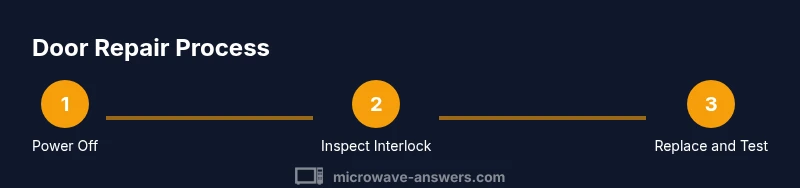
Power Off and Safety Check
Unplug the microwave and switch off the circuit; allow capacitors to discharge. Verify there is no power at the outlet by testing with a simple device. This protects you from shocks while you inspect the door components.
Tip: Record the model number and part numbers before disassembly to simplify sourcing replacements. - 2
Remove Outer Cabinet Screws
Use the appropriate screwdriver to remove screws around the front and sides of the cabinet. Keep screws organized in a tray and take photos to guide reassembly.
Tip: Do not force panels apart; loosen gradually to avoid cracking plastic clips. - 3
Gain Access to Door Assembly
Carefully separate the cabinet skin to reveal the door frame and connectors. Label any wires and connectors; gently disconnect harnesses one at a time.
Tip: Support the door with a clamp or helper to prevent dropping it during access. - 4
Inspect Interlock and Latch
Visually inspect the interlock switch and latch for wear, cracks, or bent parts. Check the springs and tabs for tension and alignment. Replace if signs of damage appear.
Tip: Take a photo of the original orientation to ensure correct installation of the new parts. - 5
Test the Door Switch Continuity
With the power still off, set your multimeter to continuity and test across the door switch as you manually operate the door. Confirm that continuity changes when the door is closed versus open.
Tip: If there is no continuity in both states, the switch is faulty and needs replacement. - 6
Replace Faulty Components
Install the new interlock switch and/or latch assembly. Ensure correct orientation and secure mounting. Recheck that connectors click firmly into place.
Tip: Avoid overtightening screws which can crack mounting points. - 7
Reassemble the Door and Cabinet
Reconnect all wiring harnesses, realign the door with the cabinet, and reattach the front panel. Tighten screws in a balanced pattern to prevent warping.
Tip: Test-fit the door several times before final tightening. - 8
Power On and Test
Plug back in and run a brief test cycle with no food to confirm the door engages correctly and the unit starts and stops properly. Inspect the seal for even contact around the entire perimeter.
Tip: Listen for normal operation and watch for unusual sparks or overheating.
Common Questions
Is microwave door repair safe for a novice?
With proper safety steps and basic hardware replacement, some repairs are doable for beginners. Avoid high-voltage components if you’re unsure. Consult this guide and know when to stop and seek professional help.
Yes, but only if you unplug the microwave and avoid high-voltage parts; when in doubt, hire a professional.
What are signs the door interlock is failing?
No start when the door is closed, repeated starts and stops, or the unit powering on without a door closure often indicate a bad interlock switch.
If the microwave won’t start or starts randomly when the door is closed, check the interlock.
Can I replace the door gasket without disassembly?
Some models allow gasket replacement without full teardown; others require cabinet removal. Check your model’s service manual for gasket accessibility.
Some models let you swap the gasket without full disassembly; others require more work.
Will repairing void my warranty?
Opening the unit can affect warranties. Check the manufacturer’s terms or contact support before performing internal repairs.
Warranty terms vary; verify with the maker before opening the appliance.
Is it worth repairing an old microwave?
If parts are readily available and the repair cost is reasonable, repair can extend life. If parts are scarce or the unit is inefficient, replacement may be better.
Weigh the cost of parts and labor against replacement value.
What safety gear should I use?
Wear insulated gloves, use non-conductive tools, and ensure the area is dry. Avoid metal jewelry near capacitors.
Use insulated gloves and dry work area for safety.
Watch Video
Main Points
- Identify root cause before replacing parts
- Never work on live electrical components
- Test door hardware with a multimeter
- Replace worn gaskets to maintain seal
- Seek professional help for high-voltage or warranty concerns