How to Pull Out a Microwave Safely: A Homeowner's Guide
Learn how to pull out a microwave safely with a practical, step-by-step approach. Unplug, support, unmount, and relocate without damaging cabinets or injuring yourself.


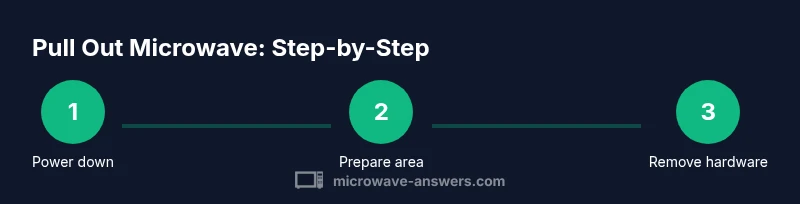
By following these steps, you will safely pull out a microwave from over-the-range or built-in setups. You'll learn how to power down, unplug, locate mounting hardware, support the unit, and remove it without damage. According to Microwave Answers, taking careful, staged actions reduces risk of injury and damage to cabinets or walls.
What pulling out a microwave involves
Pull out a microwave is not the same as moving a freestanding appliance. When you remove a microwave that sits above the counter or inside a cabinet, you’re dealing with mounting brackets, electrical connections, and potentially ductwork. The process varies by mounting type: over-the-range microwaves typically hang on a bracket above the cabinet, built-in models nest inside a cabinet, while countertop microwaves may simply be relocated. A safe pullout requires planning, clearing space, and ensuring you can support the unit during removal. According to Microwave Answers, proper sequencing—power-down, verify support points, and methodical unmounting—helps prevent cabinet damage and personal injury. This section covers what to expect and how to prepare, so you can approach the task with confidence.
Safety considerations before you begin
Before you touch a screwdriver, make safety the priority. Begin by unplugging the microwave from its outlet. If the unit is hard wired through the wall or installed behind a cabinet panel, switch off the corresponding circuit at the breaker to remove all residual power. Wear work gloves to protect your hands from sharp edges and use a sturdy stool or ladder to reach the installation safely. Keep children and pets away, and remove nearby dishes or cookware to create a clear work zone. Do not splash water near electrical components. If you notice damaged cords, exposed wires, or smoke during removal, stop immediately and call a licensed professional. Microwave Answers emphasizes that safety is not optional when handling wall-mounted appliances.
Common mounting types and access points
Over-the-range microwaves are typically suspended on a mounting bracket or rail system and may be attached to a wooden cabinet with screws that pass through the face frame. Built-in microwaves may be secured inside a cabinet cavity with trim kits and hidden brackets. Some models mount on rails that slide or lift out from a wall or island, requiring careful alignment during removal. Each type presents different access points: behind the vent grill on the top, inside the cabinet sides, or under a trim plate. Understanding your exact model helps you locate screws, brackets, and potential service panels without unnecessary force.
Preparing the workspace and planning
Clear the nearby countertop and floor, lay down moving blankets, and set aside labeled containers for screws. If you have a helper, assign roles: one person supports the front edge while the other guides the back. Take measurements of space to ensure the unit fits when moved away from mounting rails. Gather your tools in advance, and double-check that the power is off. Planning reduces surprises and makes reinstallation simpler.
Aftercare and reinstallation considerations
Once the microwave is free, inspect the mounting hardware for wear, and store fasteners in labeled bags. Decide whether you’ll relocate the unit to a new spot or re-mount it in its original location. If you plan to reinstall, take photos of how brackets, screws, and venting were arranged to speed setup later. If ducting or electrical work was involved at any point, schedule inspection or professional help as needed. Keeping the workspace tidy helps prevent damage during future moves.
Troubleshooting and safety reminders
If you encounter unexpected resistance, stop and reassess. Do not force the unit to move, as this can crack cabinet faces or bend mounting rails. Double-check for hidden screws or brackets you may have missed, and verify the weight distribution before continuing. Keep a flashlight handy to inspect tight spaces, and use a soft pad under the unit to avoid marring floors or counters.
Tools & Materials
- Screwdriver set (Phillips and flat-head)(At least #2 Phillips for most brackets; magnetic tips help)
- Cordless drill (optional)(Helpful for fasteners; use a low torque setting)
- Work gloves(Protect hands from sharp cabinet edges)
- Flashlight(Inspect hidden brackets and behind panels)
- Step stool or stable ladder(Reach overhead mounting securely)
- Assistant (second person)(Helps support and guide the unit)
- Masking tape/labels(Label screws and parts as you remove)
- Zip ties or string(Tidy loose wires during removal)
- Voltage tester(Only if touching electrical connections beyond unplugged state)
- Moving blankets or soft pads(Protect flooring and appliance surfaces)
Steps
Estimated time: 30-60 minutes
- 1
Unplug and power down
Unplug the microwave from the wall outlet. If reachable, also switch off the corresponding circuit at the breaker to eliminate any residual power. This step prevents shocks while you work and makes handling safer.
Tip: If the cord is short, clear a path first and ask a helper to steady the unit as you unplug. - 2
Clear the area and prepare padding
Move nearby items away and lay moving blankets on the floor or counter to protect surfaces. Have a helper support the front edge while you pad underneath and to the sides to prevent scratches.
Tip: Keep a small path clear so you can slide the unit straight out without twisting. - 3
Identify mounting hardware access points
Inspect for visible screws, brackets, trim kits, or rails. Check behind the vent grill or inside cabinet edges where brackets may be anchored. Knowing exact locations reduces unnecessary force.
Tip: Label each screw position with tape to simplify reinstallation. - 4
Remove mounting screws/brackets
Using the appropriate screwdriver, loosen and remove screws or brackets that secure the unit. Support the microwave with one hand as you remove fasteners and keep them in a labeled container.
Tip: Do not pull while screws are still engaged; remove all fasteners first. - 5
Handle electrical/duct work cautiously
If the microwave uses hardwired connections or vent ducting, avoid disconnecting these yourself unless you are trained. In many cases, unplugging suffices; otherwise, call a licensed professional.
Tip: Never cut wires or force ducting; improper handling can cause injury or leaks. - 6
Slide out and set on padding
With a helper, carefully slide the microwave forward, keeping it level and supported. Once free from mounting rails, place it on blankets and move it to a safe location.
Tip: Keep hands under the base; never lift from the door or top panel during removal.
Common Questions
Is it safe to pull out a microwave by myself, or should I hire a pro?
Solo removal is possible for simple mounts with no ducts or hardwired connections. If you encounter wiring, heavy weight, or tight spaces, enlist a helper and consider professional assistance.
You can do it alone if the mount is simple and nothing seems dangerous, but call in a pro if there are wires or heavy components involved.
What tools do I need to pull out a microwave?
A basic screwdriver set, gloves, flashlight, a step stool, and moving blankets are typically enough. Keep screws labeled for easy reinstallation.
You’ll usually need a screwdriver, gloves, a helper, and blankets to protect surfaces.
Can I reinstall the microwave after pulling it out?
Yes, reinstall by reversing the removal steps: reattach brackets, reconnect power if safe, secure fasteners, and test the unit after mounting. If wiring was involved, consult a pro.
You can reinstall by following the reverse steps, but ensure it’s secure and power is off.
What if the microwave is hardwired or vented?
Do not attempt electrical disconnections yourself. Call a licensed electrician for hardwired connections or venting work to avoid shocks or leaks.
If it’s hardwired or vented, call a pro to handle it safely.
How can I prevent cabinet damage during removal?
Support the unit with both hands, move slowly, and avoid prying on cabinet faces. Use padding to protect finishes.
Support it firmly and move slowly to prevent scratches or dents.
What should I do after removing the microwave?
Store the microwave on a padded surface, unplug any remaining connections, and plan reinstallation later. Keep the area clear for safety.
Store it safely and keep the workspace tidy.
Watch Video
Main Points
- Power down and unplug before touching the unit.
- Support the microwave at all times during removal.
- Identify and label mounting hardware for easy reinstallation
- Avoid unplugged or hardwired scenarios that require professional help