How to Remove an Over-the-Range Microwave Safely: A Step-by-Step Guide
Learn how to remove an over-the-range microwave safely with a practical, step-by-step method. This Microwave Answers guide covers powering down, mounting considerations, and safe disposal options.


Goal: safely remove an over-the-range microwave by confirming power is off, supporting the unit, detaching mounting screws, and carefully lowering it for removal or replacement. You’ll need basic hand tools, a helper, and a clear workspace. This quick answer introduces the safe steps and precautions you’ll follow in the full guide.
Why removing an over-the-range microwave might be necessary
Removing an over-the-range microwave is a practical project when upgrading venting, moving the unit to a different kitchen layout, or replacing a failing model. Although these units save counter space, they sit on cabinet brackets and connect to electrical wiring, which means removal requires care to avoid damage to cabinets, drywall, and wiring. The goal is to complete the job with minimal mess and no unnecessary risk. If you’re considering how to remove over the range microwave, you should plan for proper tools, a helper, and a safe workspace. In addition, be aware of any warranty or service requirements before you start, since some manufacturers place restrictions on DIY disassembly. With a clear plan, you can decide whether to reinstall the same unit, replace it with a different model, or relocate to a new mounting position. This section lays the groundwork for safe, efficient removal by highlighting the typical mounting configurations and the critical safety steps you’ll follow in the step-by-step instructions that follow.
Safety considerations before starting
Safety is the most important part of removing an over-the-range microwave. Start by unplugging the unit at the outlet, then switch off the circuit breaker serving the kitchen if you suspect a hidden feed or if the appliance is hard-wired. Use a stable ladder, wear eye protection and gloves, and keep a flashlight handy to inspect behind trim panels. Keep children and pets away from the work area. Before touching any wiring or connectors, confirm that no power is flowing to the circuit by testing for voltage with a tester. If the unit was previously mounted behind a vent hood, the surrounding vent ducting may shift when you remove the microwave, so plan to support or temporarily brace the duct. These precautions help prevent shocks, burns, or damage to cabinets.
Understanding mounting systems and electrical connections
Most over-the-range microwaves are held up by a mounting plate or brackets attached to wall studs. Some models use screws through the top trim, others rely on brackets anchored behind the cabinet face. You’ll often find a pair of screws at the bottom corners and a couple of brackets at the top or sides. Today’s models may include an electrical harness, a floating power cord, or a plug-in connection behind a trim panel. You’ll need to locate the screws that secure the unit to the cabinet and identify the type of fasteners used by your model. Understanding the mounting system makes the removal smoother and reduces the risk of bending cabinets or cracking drywall.
What to do with old microwave after removal
After you’ve safely removed the unit, decide whether you will reinstall it in the same position, place it elsewhere, or dispose of it. If you plan to reuse the same hardware, keep track of screws and brackets in labeled bags. If you’re upgrading, take pictures of the ventilation ducting and electrical connections to guide the new installer. For disposal, check local regulations on bulky appliance removal; many municipalities offer curbside pickup or drop-off at recycling centers. If the microwave still functions, consider donating it. If not, recycle the metal and plastic components where available. Properly cleaning and labeling your work area helps prevent confusion for anyone who returns to re-installation later.
Troubleshooting and next steps
Common issues during removal include stubborn fasteners, misaligned trim, or a squeaky ceiling hold. If you encounter resistance, pause to re-check that you have freed all mounting screws and that the unit is not still supported by a fragile bracket. Avoid forcing the unit, which can damage cabinets or the ceiling. If you cannot safely remove the unit by yourself, contact a professional. After removal, inspect the cabinet frame for cracks or loose screws and address them before re-installation or replacement. Finally, decide whether to proceed with a like-for-like replacement or a new configuration that may better suit your kitchen layout.
Tools & Materials
- Phillips head screwdriver #2(Most mounting screws use #2 Phillips; have both short and long bits)
- Flathead screwdriver(Useful for prying covers or anchors gently)
- Voltage tester or multimeter(Verify no live electrical connections before touching wires)
- Step ladder (2-4 feet)(Stable platform to reach cabinet height)
- Safety goggles(Protect eyes from dust and debris)
- Work gloves(Grip and hand protection)
- Helper (second person)(Assists with lifting and handling heavy unit)
- Cordless drill or driver (optional)(If your screws require a power driver; can speed removal)
- Marker and zip-top bags(Label wires and store mounting screws)
- Replacement mounting screws and washers(Have on hand in case new brackets are needed)
Steps
Estimated time: 60-90 minutes
- 1
Power down and unplug
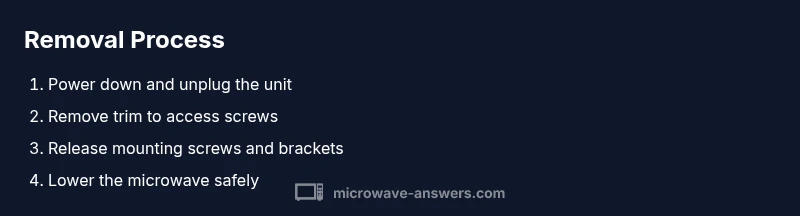
Unplug the unit from the wall outlet. If the circuit is suspect or if the microwave is hard-wired, switch off the kitchen circuit at the breaker and test for power before touching any wiring. This step protects you from shocks and prevents damage to the control panel during removal.
Tip: Use a voltage tester to confirm no power is present before proceeding. - 2
Clear the area and access trim
Move any items from the surrounding area and remove the vent hood or trim panels that conceal the mounting screws. This gives you clear access to the mounting hardware and helps prevent accidental dents to the cabinet face.
Tip: Have a second person hold the unit lightly while you remove trim pieces. - 3
Remove mounting screws and brackets
Locate and remove the screws securing the microwave to the cabinet brackets. Keep screws in a labeled container; some models have screws hidden behind trim or in the cabinet interior.
Tip: Take a photo of the bracket layout before removing screws for reference. - 4
Support and detach the microwave
With the screws removed, support the weight of the microwave using both hands and slowly detach it from the mounting brackets. The unit may slide slightly as the brackets release, so be prepared to control its descent.
Tip: Do not let the unit drop; keep your back straight and bend at the knees. - 5
Disconnect electrical connections
If a plug-in, gently disconnect the power cord from the outlet behind the trim. If a hard-wired connection exists, disconnect only after ensuring power is off and label any wires for future reference.
Tip: Label each wire and take a photo to guide reinstallation or replacement. - 6
Lower the unit to a safe surface
Carefully lower the microwave onto a padded surface or cart. Ensure the work area remains clear to avoid accidental bumps or further damage to the cabinet or ceiling.
Tip: Place a blanket or moving blanket on the floor to cushion the unit. - 7
Plan next steps
Decide whether to reinstall the same unit, swap to a new model, or dispose of the old microwave. If you’re replacing, account for venting connections and electrical supply in the new setup.
Tip: Check local disposal guidelines and prepare any required permits or appointments.
Common Questions
Do I need to unplug the microwave before removing it?
Yes. Always unplug the unit and, if needed, switch off the kitchen circuit at the breaker before touching any wiring or mounting hardware.
Yes, unplug the microwave and switch off the circuit breaker before starting.
Can I remove the microwave by myself?
If you are comfortable with basic hand tools and have a helper to assist with heavy lifting, you can remove it yourself. If the unit feels awkward or is hard-wired, seek professional help.
You can do it with help, but don’t hesitate to hire a pro if it feels heavy or unsafe.
What mounting types might I encounter?
Common setups use top/bottom screws and side brackets attached to wall studs. Some models hide fasteners behind trim. Identify the mounting system before prying anything.
Most folks see screws on brackets or hidden fasteners behind trim.
What should I do if the ceiling or cabinet is damaged during removal?
If you notice cracks or loose cabinet joints, stop and assess structural integrity. Repair the cabinet or call a professional to avoid further damage.
If you see damage, stop and fix it before continuing; consider a pro.
How do I dispose of an old microwave legally?
Check local e-waste rules. Many municipalities offer bulky item pickup or recycling centers that accept microwaves.
Look up your local e-waste rules and use approved disposal channels.
Will removing the microwave void the warranty?
DIY removal can affect warranty coverage depending on the manufacturer policy. Review your warranty terms and consider professional installation if still under warranty.
Warranties vary; read the terms and consider professional help if needed.
Can I reuse the same venting duct after removal?
Yes, if the venting system is compatible with your next installation. Inspect for damage and clean the duct before reuse.
Vent ducts can be reused if compatible and undamaged.
Main Points
- Power down before touching any wiring.
- Have a helper to safely support the unit.
- Label and store screws and brackets.
- Verify venting and wiring before reinstallation.
- Consult a professional if any step feels unsafe.