How to Boil Water in a Microwave Safely
Learn practical, safe steps to boil water in a microwave, plus tips to avoid superheating, choose the right containers, and apply these techniques in everyday cooking.


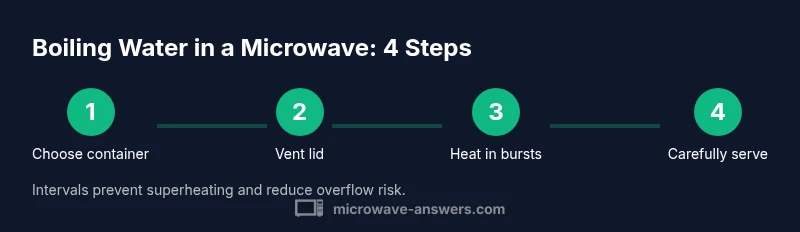
To boil water in a microwave, place water in a microwave-safe container with a vented lid, fill no more than halfway, and heat in short 1-minute intervals. Stir between intervals to prevent superheating, and monitor closely until bubbling begins. Always use oven mitts to remove the container and be cautious of steam.
Understanding how microwaves heat water
Heating water in a microwave is a function of microwave energy interacting with the water molecules inside a container. The rate depends on the microwave’s wattage, the volume of water, and the material of the container. Higher wattage microwaves generally boil water faster, but they can also increase the risk of superheating if the water is heated in a very smooth container with little movement. The Microwave Answers team emphasizes that reheating or boiling water is not always uniformly efficient across all setups, so expect variation based on your appliance and the container you choose. This section lays the groundwork for safe, predictable boiling by outlining the core factors that influence timing and outcome. According to Microwave Answers, understanding these factors helps you avoid dangerous surprises and makes it easier to adapt the method to your kitchen.
Safe, practical approach to boiling water in a microwave
Boiling water in a microwave is entirely feasible when you follow safe practices. The key is to use a container designed for microwave use and to avoid sealing the container completely, which can trap steam and lead to pressure buildup. Venting or leaving a small gap allows steam to escape while still enabling efficient heating. Always start with a modest amount of water and short heating bursts, then check for bubbles and steam. By combining the right container with measured intervals, you can achieve a consistent boil without the risks that come with over-tight sealing or overheating. The goal is to reach a rolling boil while maintaining control over the process and minimizing the chance of superheated liquid.
Containers and materials: what works best
Choose microwave-safe glass or ceramic containers with stable bases. Avoid metal and certain plastics that aren’t rated for high heat or that can warp under rapid heating. If you plan to cover the container, use a vented lid or a microwave-safe cover that leaves a vent for steam. The container should be large enough to hold the water with space to spare so it won’t boil over when bubbles form. For larger volumes, it may be more efficient to boil in multiple smaller batches rather than one large batch. The right combination of container, water amount, and heating intervals is what makes the process reliable.
Step-by-step timing concepts: how to pace heat properly
A good rule of thumb is to begin with short intervals—about 60 seconds for small amounts in a typical 1000W microwave—and then pause to stir and check. Stirring helps distribute heat and prevents hot pockets that can cause superheating when disturbed. If your microwave is lower wattage, you may need longer intervals (e.g., 90 seconds) with pauses. The presence of a vented lid reduces splashes and helps maintain a safe distance between your hands and hot steam. Precision isn’t the goal; consistency and safety are. By adapting your intervals to your wattage and water quantity, you can create a reliable boiling routine.
Signs of readiness and safe handling steps
When the water bubbles consistently and steam rises from the surface, it’s close to a boil. Don’t rely on audible pops alone; visible motion and steady bubbles are the cues. Remove the container with oven mitts, keeping your face and hands away from the steam. If you need to pour, tilt slowly and keep the mouth of the container away from you to minimize splashes. These handling habits reduce the risk of burns and equipment damage and ensure a controlled transfer of hot water to your next step in cooking or tea preparation.
Tools & Materials
- Microwave-safe container(Glass or ceramic mug/pitcher; avoid metal and thin plastics. Use one with a stable base and enough headroom to prevent overflow.)
- Measuring cup or kitchen scale(To measure water accurately and avoid accidental overflows.)
- Vented lid or microwave-safe cover(Prefer a vented lid that allows steam to escape.)
- Oven mitts or heat-resistant gloves(Essential for safe handling of hot containers.)
- Spoon or stirrer(Use a non-metal utensil to stir between intervals.)
Steps
Estimated time: 5-10 minutes
- 1
Choose a microwave-safe container and water amount
Select a microwave-safe glass or ceramic container and measure the water you plan to boil. Fill only to about halfway to leave room for expansion as bubbles form. This helps prevent boil-overs and reduces the chance of container damage.
Tip: Use a measuring cup to ensure you don’t overfill beyond safe levels. - 2
Place container in microwave with vented lid
Center the container on the microwave turntable and set a vented lid or cover over it. Do not seal the container completely; a vent allows steam to escape and reduces pressure buildup.
Tip: Ensure the lid’s vent is unobstructed for consistent heating. - 3
Set wattage and initial heating interval
Power on the microwave at its typical high setting and start with a short interval (about 60 seconds for small amounts). If you know your wattage, tailor the time accordingly; otherwise keep to shorter bursts and adjust as needed.
Tip: If you see little activity after the first interval, stop and check the container to avoid overheating. - 4
Heat in bursts and pause for stirring
Heat in short 60-second intervals, pausing briefly to stir and check for bubbles. Stiring helps distribute heat evenly and reduces the risk of superheating. Continue until you observe consistent bubbling.
Tip: Always stir with a non-metal utensil to avoid sparks or damage. - 5
Check for bubbling and remove safely
When you see a steady boil with continuous bubbles, stop heating. Use oven mitts to remove the container from the microwave and be mindful of steam when lifting the lid.
Tip: Tilt away from you to direct steam safely when opening. - 6
Let water rest briefly before use
Allow the boiled water to rest for a few seconds to equalize temperature and settle any remaining steam. This helps prevent sudden splashes when pouring.
Tip: Pour slowly and maintain a safe distance from the steam.
Common Questions
Can I boil water in a microwave?
Yes, with proper safety: use a microwave-safe container, vented lid, and careful heating intervals. Avoid sealed containers and monitor closely for bubbling.
Yes, you can boil water in a microwave if you vent the container and monitor the heating.
Is it safe to boil water for tea in a microwave?
It is safe when you use a vented container and avoid sealed setups. Water should reach a rolling boil for proper tea extraction, and you should handle it with care to avoid steam burns.
Yes, it's safe if you vent and monitor; boil is best for tea aroma and extraction.
Why does water sometimes superheat in a microwave?
Superheating happens when water heats beyond its boiling point without visible bubbles. Disturbing the container can trigger an abrupt eruption. Stirring between intervals helps prevent this.
Water can superheat if heated too evenly without bubbles; stir often to avoid sudden boiling.
What containers are safe to boil water in a microwave?
Use microwave-safe glass or ceramic containers. Avoid metal and certain plastics not rated for high heat. Check the product labeling for microwave safety.
Use microwave-safe glass or ceramic; avoid metal and non-rated plastics.
Can I boil more than one cup at a time?
Yes, but avoid overfilling. Use a wider container if possible and heat in shorter, repeated bursts to ensure even heating.
Yes, but don’t overfill and use shorter bursts for even heating.
What if my microwave doesn't have a vented lid?
If you lack a vented lid, partially cover the container with a microwave-safe plate or leave a gap to vent steam. This reduces the risk of splashes and pressure buildup.
Use a vent or leave a small gap to vent steam.
Watch Video
Main Points
- Use microwave-safe containers only
- Vent the lid to prevent pressure buildup
- Heat in short intervals and stir to distribute heat
- Handle hot containers with oven mitts
- Be cautious of steam and avoid overheating