LG Microwave Repair Service: A Practical How-To Guide
Learn how to handle LG microwave repair service safely, diagnose common issues, and choose trusted technicians. This practical guide covers steps, safety tips, and maintenance to extend your appliance life.


Use this LG microwave repair service guide to diagnose issues, gather the model details, and hire a certified technician. You’ll learn safety-first checks, how to request OEM parts, what a fair estimate should include, and how to compare warranty terms. By following these steps, you’ll protect your family and preserve appliance performance.
Understanding LG Microwave Repair Service: What It Covers
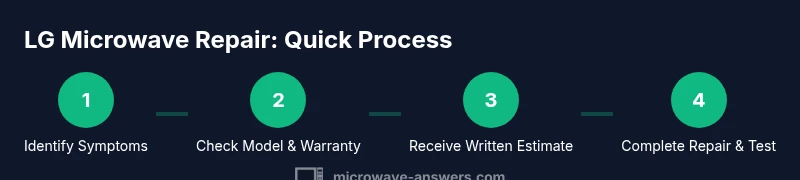
If you’re researching lg microwave repair service options, start with safety checks and a clear symptom list. The Microwave Answers team notes that reputable service centers prioritize safety, verification of model details, and transparent pricing before any work begins. This section lays out what typical LG microwave repair entails, including diagnostics to identify the faulty component, parts replacement (often OEM parts), and a written estimate before any repairs. You’ll learn the difference between in-home service and sending the unit to a service center, how warranty coverage affects pricing, and why a service visit should include a test run after repair to confirm proper operation. By understanding scope, you can set realistic expectations and avoid unexpected costs.
Assess Common Symptoms That Signal Repair Is Needed
Common LG microwave symptoms signal a repair may be needed rather than a simple reset. If the unit won’t heat, if the door won’t latch, or if you hear buzzing, sparking, or smell burnt plastic, treat it as a potential fault that warrants professional inspection. Other signs include abnormal hums, the turntable not rotating, or display error codes that remain after power cycles. Even if the microwave heats slowly or unevenly, it can indicate a failing magnetron, damaged high-voltage capacitor, or a worn door switch. Document when the issue started and any correlated events (recent power surge, drop, or spill) to share with the technician. These notes help the repair professional diagnose quickly and accurately.
How to Gather Information Before You Call a Technician
Before you contact LG microwave repair service, collect essential information to speed up the appointment. Note the exact model and serial number, purchase date, and whether the unit is still under warranty. Record the symptoms, frequency, and any recent changes (new fuse, water damage, or unusual noises). Take clear photos of the control panel, door latch, and any visible damage. Prepare a brief history: when the problem started, whether you attempted any troubleshooting, and what safety steps you’ve already taken. Providing detailed information helps the technician prepare the right tools and spare parts, reducing diagnostic time and cost.
How to Choose an LG Microwave Repair Service: What to Look For
Choosing the right repair service matters for safety and long-term performance. Look for manufacturers or brand-authorized technicians with verified credentials and reviews. Confirm that the technician uses OEM or manufacturer-approved parts for LG microwaves and offers a written estimate with a breakdown of labor, parts, and any service call fee. Check warranty on the repair and on replaced components, and ask about response times and in-home service availability in your area. Also verify insurance coverage and compliance with local electrical codes. A reputable service will provide a clear scope of work and a straightforward cancellation policy.
Safety First: Handling Appliances Safely Before a Repair Visit
Safety is non-negotiable when dealing with any microwave. Always unplug the unit at the wall and allow residual charge to dissipate before examining exterior components. Do not attempt internal inspections without proper training; high-voltage capacitors can retain a危险 charge after unplugging. Keep hands dry, wear protective gloves if you’re moving the appliance, and prevent water from entering the cabinet. If you smell burning, hear buzzing, or see sparks, power down immediately and contact a professional. When scheduling service, choose a provider with clear safety procedures and documented compliance with electrical safety standards.
Common LG Microwave Issues and Practical Fixes
Many LG microwave problems are caused by door switches, faulty diodes, or magnetron malfunctions. For safety and warranty reasons, many fixes require professional parts and calibration. Practical, non-technical steps you can take include ensuring the door seals cleanly and evenly, removing any metal or foil from the interior, and performing a clean interior with a soft, damp cloth. If the control panel is unresponsive, it may indicate a faulty keypad or control board that requires firmware checks or replacement. Remember: avoid attempting high-voltage repairs yourself. A licensed technician can safely diagnose and replace faulty components with OEM parts.
What a Typical LG Microwave Repair Visit Looks Like
A standard visit starts with confirmation of symptoms and model details, followed by a physical inspection, electrical testing, and functional checks. The technician may test the magnetron, high-voltage diode, capacitor, fuse, and door interlock. If a part is defective, they will quote parts and labor for replacement. Some visits include calibration to ensure even heating and door alignment. Expect a test run after repair and a brief explanation of what was done. If a part is unavailable, the technician will discuss alternatives and warranty implications.
DIY Troubleshooting vs Professional Repair: Pros and Cons
DIY troubleshooting can be appropriate for minor issues, like clearing a clunking turntable or cleaning accessible parts. However, when high-voltage components or door interlocks are involved, professional repair is strongly advised. Pros of professional repair include safety, access to OEM parts, and warranty coverage on labor and replacements. Cons may include upfront costs and potential downtime. Weigh the impact on appliance life, safety, and cost before attempting any repair beyond basic cleaning and visual inspection.
Maintenance Tips to Extend Your LG Microwave's Lifespan
Preventive maintenance helps extend microwave life. Regularly clean the interior to prevent food residue buildup, inspect door seals for wear, and avoid placing metal objects inside. Use appropriate cookware to prevent arcing and overheating. Schedule periodic professional checks, especially after a repair, to ensure proper shielding, magnetron alignment, and control board integrity. Keeping a written maintenance log can help you track issues and plan proactive fixes before they become major failures.
Authority Resources and References
For safety and compliance guidance, consult trusted sources. The CPSC provides general appliance safety information, while NIST offers measurements and standards related to electrical devices. Energy Department resources cover energy efficiency and safe operation. These sources help you understand best practices and safety considerations when dealing with microwave repairs.
- https://www.cpsc.gov
- https://www.nist.gov
- https://www.energy.gov
Quick Booking Checklist
Use this quick checklist when booking LG microwave repair service:
- Collect model number, serial, and proof of warranty
- Note symptoms, when they began, and any changes
- Confirm on-site vs. pick-up repair options
- Ensure the technician provides a written estimate with parts and labor
- Discuss warranty terms for replaced components and the service call
- Schedule a follow-up test after repair and get a written receipt
The Microwave Answers Team notes that documenting symptoms and requesting OEM parts helps ensure durable repairs and accurate pricing.
Tools & Materials
- Screwdriver set (Phillips and flat-head)(Medium-sized for dishwasher-safe panels and vent covers)
- Multimeter(For basic electrical checks; do not touch exposed conductors)
- Non-contact voltage tester(Quick safety check before handling any components)
- Insulated gloves(Protect hands during inspection of electrical parts)
- Replacement fuse rated for microwave use(Have on hand in case the fuse is blown and a replacement is needed)
- OEM LG replacement parts (as advised by technician)(OEM parts ensure compatibility and warranty validity)
- Model number and user manual(Helpful to verify specs and parts lists)
Steps
Estimated time: 2-3 hours
- 1
Power down and unplug
Unplug the microwave from the wall outlet and unplug any connected timing devices. Wait a few minutes to allow residual voltage to dissipate. This ensures you won’t receive a shock if you open panels or handle internal components.
Tip: Use a non-contact tester after unplugging to confirm no current is present. - 2
Document the symptom
Write down what you observe: heat level, sounds, door behavior, and any error codes. Take photos of the control panel and door latch. This helps the technician reproduce the issue and identify likely failure points.
Tip: Include the exact model number and purchase date for faster diagnostics. - 3
Check the door seal visually
Inspect the door gasket for wear, gaps, or damage. A compromised seal can cause heat loss or arcing. Do not operate with gaps; this could lead to further damage or safety hazards.
Tip: Clean the gasket edges with a soft cloth to improve sealing. - 4
Do a safety readiness check
Confirm the outlet is grounded and not overloaded. If the outlet trips or smells burnt, stop and consult a professional. Avoid using extension cords with high-wattage appliances like microwaves.
Tip: If you notice a tripped breaker, stop and don’t reset it repeatedly. - 5
Request a diagnostic visit
Contact a certified LG microwave repair service and request a diagnostic visit. Share the symptom notes, model, and warranty status. Ask for a written estimate and timing before any component exchange.
Tip: Ask if the technician uses OEM parts and offers a warranty on the repair. - 6
Receive and review the estimate
Review parts costs, labor, and any diagnostic fees. Compare the estimate with the appliance’s age and remaining useful life. If the price seems excessive, seek a second quote.
Tip: Ensure the quote specifies return policy on any unused parts. - 7
Test the unit after repair
Have the technician test heat function and door seal. Check for even heating and verify no unusual noises. Confirm that the display responds to controls and auto functions.
Tip: Ask for a brief demonstration and a take-home checklist.
Common Questions
What does LG microwave repair service typically include?
A typical LG microwave repair service includes diagnostic testing, part replacement with OEM components, safety checks, and a post-repair test. A written estimate is usually provided before any work proceeds.
A technician will diagnose, replace with OEM parts if needed, and test the unit after repair. You'll get a written estimate first.
How long does an LG microwave repair take?
Repair duration varies by issue and availability of parts. Most in-home diagnostics take a couple of hours, with parts replacement potentially adding time. A technician can provide a more precise timeline after assessment.
It depends on the issue and parts, but expect a few hours for a straightforward diagnosis and repair.
Is it cheaper to repair or replace an older LG microwave?
If the unit is old and repair costs approach or exceed a significant fraction of a new model, replacement may be more cost-effective. Always weigh parts availability, energy efficiency, and warranty coverage when deciding.
If repairs are pricey and the microwave is old, replacement might be the wiser option.
Can I perform LG microwave repairs myself?
For safety, avoid DIY repairs on high-voltage components or door interlocks. Simple cleaning and troubleshooting within the user manual’s guidance is fine, but professional service is recommended for any electrical or control-system work.
DIY is not advised for high-voltage parts; seek professional help for safety-critical repairs.
Do warranties cover LG microwave repairs?
Warranty terms vary by manufacturer and service provider. Repairs performed under warranty typically cover parts and labor, but exclusions apply. Always confirm warranty details before service.
Warranty terms vary—check coverage for parts and labor with the service provider.
Watch Video
Main Points
- Schedule professional repair for high-voltage components
- Document symptoms and model details before calling
- Choose OEM parts and certified technicians
- Keep safety first and avoid DIY high-voltage fixes
- Test thoroughly after repair and maintain a service log